Important Points
- Swing trainers for kids’ baseball can greatly enhance batting skills and hand-eye coordination.
- These trainers help build strength and flexibility, which are key for young athletes.
- Consistent use of swing trainers can increase a child’s confidence in their abilities.
- Different types of swing trainers include tethered ball trainers, batting tees, and resistance band systems.
- Choosing the right trainer depends on your child’s age, skill level, and available space.
Enhance Batting Skills with Kids Baseball Softball Swing Trainers
Every young athlete dreams of hitting the ball out of the park and making the game-winning play. To achieve these goals, they need to practice and improve their skills, and one of the most effective tools for this is the kids baseball swing trainer. These trainers are designed to improve various aspects of a player’s game, from their swing technique to their overall strength and confidence.
The Advantages of Swing Trainers for Young Athletes
Swing trainers are more than just a tool for swinging a bat; they’re a way to foster a lifelong passion for the sport. They offer a systematic approach for children to practice, honing in on particular skills that lead to improved performance during games.
Improving Hand-Eye Coordination
Using a swing trainer is beneficial in many ways, one of which is enhancing hand-eye coordination. This ability is crucial in sports like baseball and softball, where timing and precision are key. A swing trainer gives kids the opportunity to practice hitting the ball over and over, which helps them build the muscle memory they need to make accurate and powerful swings.
Developing Power and Agility
Not only do swing trainers enhance coordination, but they also assist young players in developing power and agility. The repetitive action of swinging a bat fortifies the muscles in the arms, shoulders, and core. This power is crucial for producing force in a swing. Furthermore, employing a swing trainer aids in boosting agility, which is vital for accomplishing the complete range of movement required in a correct swing.
Building Self-Assurance through Regular Training
Self-assurance is vital in every sport, including baseball. Regular training with a swing trainer enables young players to monitor their improvement over time. As they get more proficient and skilled at hitting, their self-assurance increases, resulting in improved performance in matches. The knowledge that they possess the necessary skills to excel can be crucial when they are at the plate.
Different Types of Swing Trainers and Hitting Aids for Kids
There are many swing trainers on the market, each offering unique advantages. The best choice depends on the individual needs and objectives of the young player.
Ball-on-a-Rope Trainers
Ball-on-a-rope trainers are a favorite for many budding athletes. These trainers are a ball that is attached to a string or pole, which lets kids practice their swing without needing a partner to throw the ball. They offer the benefit of repeated practice with little setup.

These swing trainers:
- Are simple to assemble and can be used in a variety of places.
- Enable continuous practice without the need to retrieve balls.
- Assist in the development of timing and rhythm in swings.
These trainers are perfect for kids who want to practice alone or in a small space because they don’t need a large field or backstop. For more on improving batting skills, explore youth baseball batting skills training aids.
Why Batting Tees Are Great
Another great option for kids is batting tees. These provide a stable platform for kids to practice hitting stationary balls. This allows kids to focus on their swing mechanics without the pressure of a moving target. Batting tees are also adjustable in height, so they can fit players of all sizes.
Considering Space and Portability
Choosing a swing trainer for your child requires some thought about where it will be used. If you have a backyard or a nearby park, a larger trainer might work. But, if space is tight, a compact or portable option might be a better fit. Portable swing trainers are easy to put up and take down, making them a good choice for families on the move or those with limited space. Plus, they can be stored away when not in use, so they don’t take up precious space in your home.
Considering Cost and Longevity
Price is a crucial factor. Swing trainers can be inexpensive or they can be top-of-the-line models with all the bells and whistles. While it might be tempting to buy the least expensive option, consider the longevity and quality of the trainer. Buying a quality trainer might be more expensive up front, but it can save you money in the long run because it will last longer and perform consistently. Look for trainers made from sturdy materials that can withstand the rigors of regular practice. For more information on enhancing your skills, explore youth baseball training aids.
Highly Suggested Swing Trainers and Hitting Aids for Kids
Choosing the perfect swing trainer can be daunting with all the choices out there. Here are some of the best options that have shown to work well for young players.
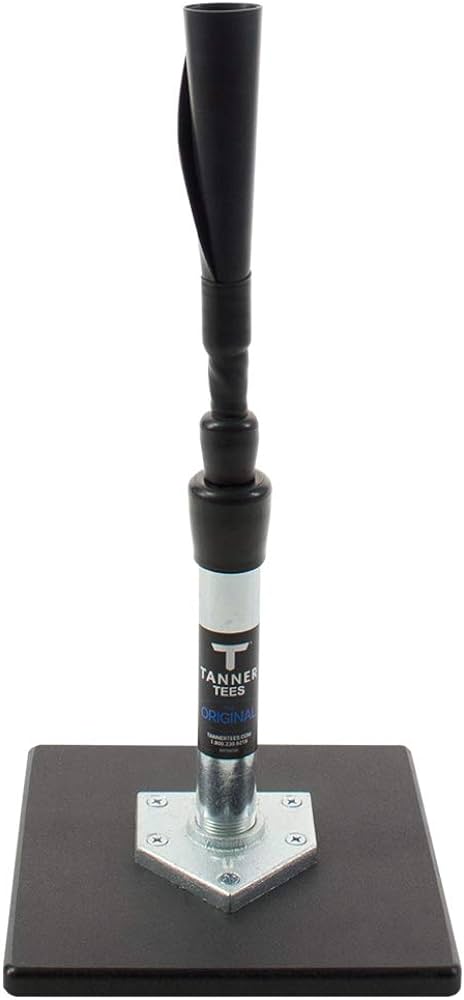
The Tanner Tee – Classic Batting Tee
A favorite among baseball and softball players, the Tanner Tee is renowned for its adjustability and durability. It’s a one-size-fits-all solution for players of all ages, with a sturdy base for stability during use and an adjustable height to suit different swings and player heights. The Tanner Tee is a great option for families who need a training aid that will stand the test of time.
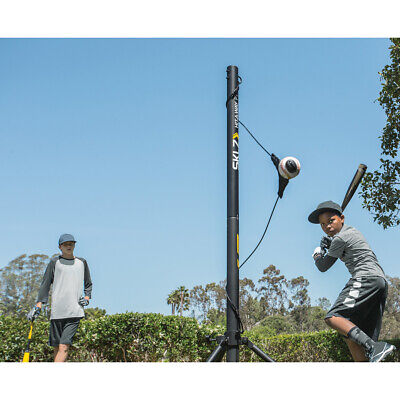
SKLZ Hit-A-Way Portable Baseball Trainer for Kids
The SKLZ Hit-A-Way is a portable baseball trainer that’s perfect for kids who want to practice their swing on their own. This trainer lets kids practice their swing without needing someone to pitch the ball to them. It’s easy to set up and can be used just about anywhere, making it a versatile training tool for young athletes.

Rukket Sports Baseball/Softball Swing Trainer
The Rukket Sports Swing Trainer is a multifunctional training tool that includes both a swing trainer and a practice net. This allows players to practice both their hitting and fielding skills all in one place. This is a great all-in-one solution for families who want a comprehensive training system that doesn’t take up a lot of space.
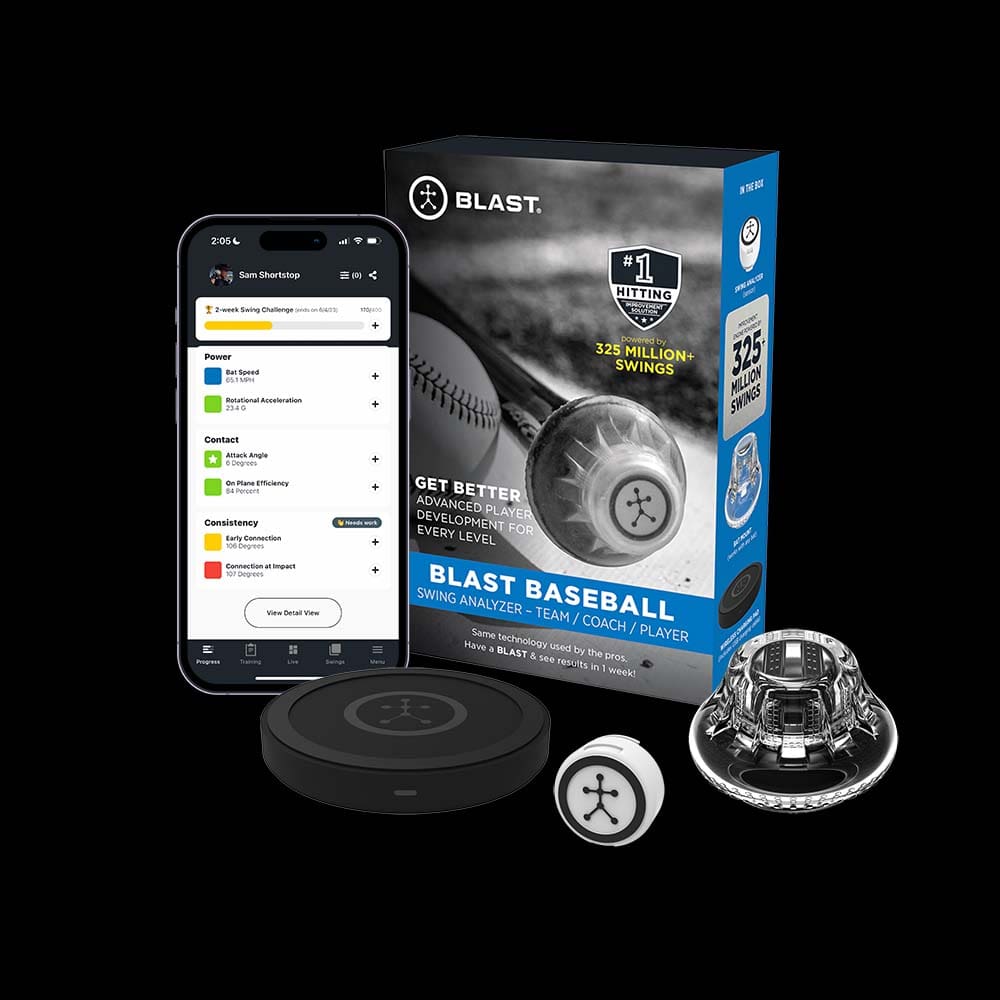
Blast Motion Baseball Swing Analyzer
- Monitors swing metrics such as speed and angle.
- Offers immediate feedback to assist players in enhancing their skills.
- Simple to operate and works with most bats.
The Blast Motion Baseball Swing Analyzer is a cutting-edge choice for athletes who want to step up their practice game. This gadget attaches to the end of a bat and gives comprehensive feedback on swing performance. It’s a fantastic instrument for athletes who want to scrutinize and perfect their method. For more on improving hitting skills, explore batting skills training aids.
How to Get the Most Out of Your Swing Trainer
If you want your child to get the most out of their swing trainer, you need to make sure they’re using it correctly. Here are some tips to help your child get the most out of their practice time and really improve their skills. For additional resources, consider exploring youth baseball training aids that can complement their practice sessions.
Establishing Objectives for Practice
Prior to every practice, establish tangible and attainable objectives. This might involve enhancing swing velocity, hitting precision, or learning a new skill. Having particular objectives aids in maintaining a focused and efficient practice. Encourage your child to monitor their improvement and rejoice in their accomplishments, regardless of how minor they may be. For more tips on improving hitting skills, check out our youth baseball hitting training videos.
Let’s say you’re working on increasing swing speed. You’d measure it at the beginning of practice and then again at the end to see how much it’s improved. Seeing this kind of concrete proof of progress can be a huge motivator for kids.
“The more you practice with a purpose, the better you get. Confidence comes from demonstrated ability.”
Maintaining a Regular Practice Routine
The only way to get better is to practice regularly. Find a practice routine that works with your family’s schedule and stick with it. It’s important to be consistent, so try to practice a little bit every day instead of doing one long practice session once in a while. This will keep the momentum going and prevent you from getting burned out. For more tips on effective practice, check out these home hitting drills for performance enhancement.
Making Training Fun
Practice is key, but it should also be fun. Add enjoyable aspects to training to keep your child focused and driven. This could be making practice a game or adding hurdles to keep things exciting. Don’t forget, the aim is to encourage a passion for the sport, so keep the environment upbeat and encouraging.
Real-life Experiences from Young Baseball Players and Their Families
- Victories from kids who improved their skills with hitting aids.
- Obstacles encountered by families and how they tackled them.
- Reviews from parents about the advantages of using hitting aids.
Real-life stories can provide valuable lessons and motivation for other families. Hearing how other young baseball players have triumphed with hitting aids can encourage your child and show them what’s achievable with commitment and effort.
Emily, a young player, told us that her batting average improved significantly after using a swing trainer. Her skills improved week by week as she practiced regularly with her trainer. Her parents also noticed that her confidence increased, both on the field and in her daily life.
Another family shared how they overcame the challenge of limited space by choosing a portable swing trainer. This allowed their son to practice in their small backyard, ensuring he could train consistently without needing a large field.
These testimonials show the significant influence that swing trainers can have on young athletes, demonstrating that with the right equipment and attitude, any child can improve their skills.
Victories and Praises
There is an uplifting victory from a young player named Jake who was having a hard time with his batting average for a number of seasons. His parents made the decision to buy a swing trainer with the hope that it would make a difference. After only a few months of practicing regularly, Jake’s batting average made a huge improvement and he even hit his first home run. His coach took note of the improvement and complimented Jake on his commitment to practice.
Sarah, a softball player, was initially reluctant to use a swing trainer. However, with some coaxing from her coach, she started using a resistance band system to improve her swing strength. Sarah quickly noticed that her hits were going further, and her newfound confidence was evident during games. Her parents were delighted to see her enthusiasm for the sport grow alongside her skills.
Obstacles and Their Solutions
Despite the advantages of swing trainers, some families struggle to incorporate them into their daily lives. A frequent problem is carving out practice time in the midst of a packed schedule. The Johnson family tackled this by earmarking short, specific practice times three times a week, allowing their son to practice without overloading their timetable. For more ideas on improving practice routines, check out these baseball drills for young players.
Space limitations is another challenge. The Lee family lived in an apartment with no backyard, making it difficult to find a suitable practice area. They overcame this by choosing a compact, portable swing trainer that could be used in a nearby park. This flexibility allowed their daughter to practice regularly and maintain her skills.
Final Thoughts: Swing Trainers Can Change the Game
Swing trainers and hitting aids for kids baseball are priceless resources for budding athletes. They offer a systematic approach to enhance abilities, develop power, and raise self-assurance. Selecting the appropriate trainer and integrating it into routine training, parents can assist their kids in achieving their maximum potential in baseball or softball. The advantages of these trainers go beyond the diamond, promoting discipline, commitment, and a passion for the game that can endure a lifetime. For some great options, check out MARKETTY Baseball Softball Equipment.
Common Questions
Many parents and young athletes have questions about how to use swing trainers. For more guidance, you can explore youth baseball hitting training videos that provide step-by-step instructions. Here are some typical questions and their answers.
When should a kid start using a swing trainer?
Kids can start using basic swing trainers as early as five or six years old. It’s crucial to select a trainer that is suitable for their size and skill level to ensure it’s safe and beneficial for their growth.
What is the best way to care for a swing trainer?
With proper care, a swing trainer can last a long time. Here are some suggestions:
- Check the trainer for any signs of damage after each use.
- Wipe it down with a damp cloth to remove any dirt or grime.
- Keep it in a dry place to avoid rust or other damage.
By doing these things, you can make sure your swing trainer stays in great shape for a long time. For more on maintaining your equipment, check out this guide on home hitting drills.
Can swing trainers be used indoors?
Yes, certain swing trainers are made for indoor use, but it’s important to take the following safety measures:
- Make sure there’s plenty of room to swing without hitting anything.
- Choose trainers that use soft balls or have padding to avoid causing any harm.
- Always keep an eye on little ones when they’re practicing indoors.
Indoor practice can be both safe and productive if you have the right setup.
Are swing trainers suitable for both baseball and softball?
Indeed, numerous swing trainers are adaptable and can be utilized for both sports. Nonetheless, it’s critical to check the product specifications to guarantee compatibility with both baseball and softball gear. For example, you can explore options like the MARKETTY Baseball Softball Equipment to ensure it meets your needs.
How frequently should my kid use a swing trainer?
Regular practice is crucial, so try to have practice sessions 2-3 times a week. Short, intense sessions are usually more beneficial than long, sporadic practices.
Are instructional materials included with swing trainers?
A lot of swing trainers come with guides or online resource access:
- How-to videos for setting up and using the product.
- Drills and practice routines for various levels of experience.
- Advice from professional coaches or athletes.
These tools can be very helpful in getting the most out of a swing trainer.
What benefits can kids gain from regular practice?
When kids practice regularly, they can improve their swing techniques, hand-eye coordination, and overall confidence. These improvements can lead to better performance during games and a greater love for the sport.
How can I tell if the swing trainer is benefiting my child?
Signs of improvement to look for include a faster swing, better accuracy, and more confidence on the field. Input from coaches and visible enhancements in their game performance are also good indicators that the swing trainer is having a positive effect.
In the end, the best gauge is your kid’s excitement and joy during training, as a passion for the sport is the most crucial result. For more on enhancing your child’s skills, consider exploring The Complete Hitter Program.

Leave a Reply