Key Takeaways
- Good bat grip and stance are the building blocks of successful hitting. Your hands should be aligned, and your stance should be balanced.
- Understanding the load and stride is key to generating power and ensuring a smooth swing.
- Visual tracking of the ball is crucial for good timing and coordination.
- Common mistakes include over-swinging and improper bat angle. These can be corrected with specific drills.
- Confidence and focus are important. Setting achievable goals can boost a young player’s performance.
Teaching How To Hit A Baseball Youth & Little League Fundamental Mechanics
Learning to hit a baseball well is not just about power. It’s about understanding the mechanics and developing the right techniques. The fundamentals of hitting in youth baseball are the building blocks for future success and enjoyment in the sport. Let’s take a closer look at these essential skills, starting with the grip and stance.

Why Hitting Fundamentals Matter
Any successful baseball player will tell you that hitting fundamentals are the key to their success. They lay the groundwork for a powerful, consistent swing. But, more than that, they help young players feel more confident and have more fun on the field.
Here’s why mastering the basics is important:
- They lay the groundwork for more complex skills.
- They stop poor habits that could negatively affect future play.
- They enhance a player’s capacity to adjust to various pitchers and pitches.
How to Hold and Stand
The way a player holds the bat and stands at the plate is the foundation of any swing. These two elements set the tone for all the actions that follow. A good hold and stance not only improve a player’s control over the bat but also allow for the greatest power and accuracy.
Correct Ways to Grip a Bat
The way you grip your bat can drastically affect your swing. Make sure your hands are positioned so that your knuckles create a straight line. This positioning encourages a natural swing path and stops the bat from rolling in your hands. If you need a crash course on how to teach good fundamentals, consider checking out this helpful resource.
Here’s an easy way to test your grip:
- Hold the bat with your fingers, not your palms, for better control.
- Keep a relaxed grip to allow for quick wrist movement.
- Ensure your top hand is not overpowering the bottom hand.
Stance Alignment and Balance
A balanced stance is crucial for maintaining stability throughout the swing. Your feet should be shoulder-width apart, with knees slightly bent to allow for movement. This position provides a solid base and helps maintain balance as you swing.
- Keep your weight evenly distributed between both feet.
- Ensure your head is level and eyes are focused on the pitcher.
- Your front foot should be slightly open to allow for hip rotation.
Foot Placement and Weight Distribution
Foot placement and weight distribution play a vital role in generating power. Your back foot should carry slightly more weight, which helps in the load and stride phase. As you swing, transfer your weight smoothly to your front foot, which aids in driving the ball. For more insights on improving your swing, check out these swing trainers and hitting aids.
“A good stance with the right weight distribution is like the base of a building. Without it, everything else falls apart.” – Baseball Coach
Keep in mind, the goal is to stay calm and not to overcomplicate your stance. With repetition, it will become automatic, freeing you to concentrate on other parts of your swing. If you’re looking for more tips on teaching good fundamentals, check out this crash course on fundamentals.
The Mechanics of a Swing
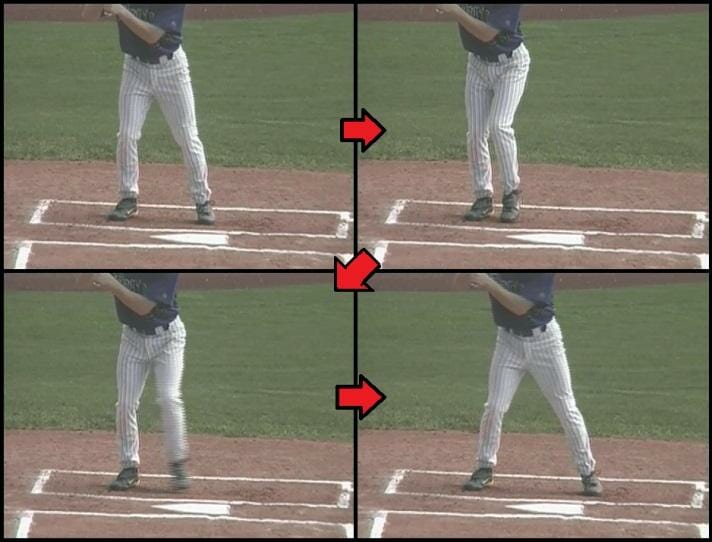
After the player has learned how to grip the bat and stand properly, they must then learn the mechanics of a swing. This includes the load and stride, rotating the hips, and the path of the bat. Each of these elements is vital for a swing that is both powerful and precise.
Getting Ready to Swing
Load and stride is the phase where you prepare yourself to swing. This is when you gather energy and get yourself ready to hit the ball. Start by shifting your weight a little bit to your back foot, but keep your hands back. As the ball is coming, take a small step forward with your front foot to start the stride.
This movement should be performed in a smooth and controlled manner to prevent loss of balance or timing. Repeat this phase over and over again to develop a rhythm that feels natural and efficient. For more insights, check out this crash course on teaching fundamentals.
Exercises to Improve Coordination and Swing Timing
Coordination is the key to a successful swing, tying together all the different components. A player’s ability to hit the ball can be greatly improved by enhancing swing timing through coordination exercises. These exercises are designed to align the body’s movements with the speed and path of the pitch. If you’re looking for a crash course on teaching good fundamentals, consider exploring different training methods that focus on timing and coordination.
“In baseball, timing is everything. Even a fraction of a second can mean the difference between a home run and a strikeout.” – Former MLB Player
One drill that can be very effective is the “Shadow Swing.” In this drill, players practice their swing without a ball, focusing only on timing and body movement. This drill helps players to visualize the path of the swing and adjust their timing without the pressure of hitting a ball.
A different drill uses a metronome to assist players in establishing a regular rhythm. Have the players swing in time with the metronome’s steady beat. This enables them to maintain a consistent tempo and enhances their ability to adapt to varying pitch speeds.
Typical Errors and How to Fix Them
Even the most gifted young athletes can succumb to typical batting errors. Identifying and rectifying these problems early on is key for their long-term growth and achievement. For a deeper understanding, you might find this crash course on teaching good fundamentals helpful.
Problems with Over-swinging and Balance
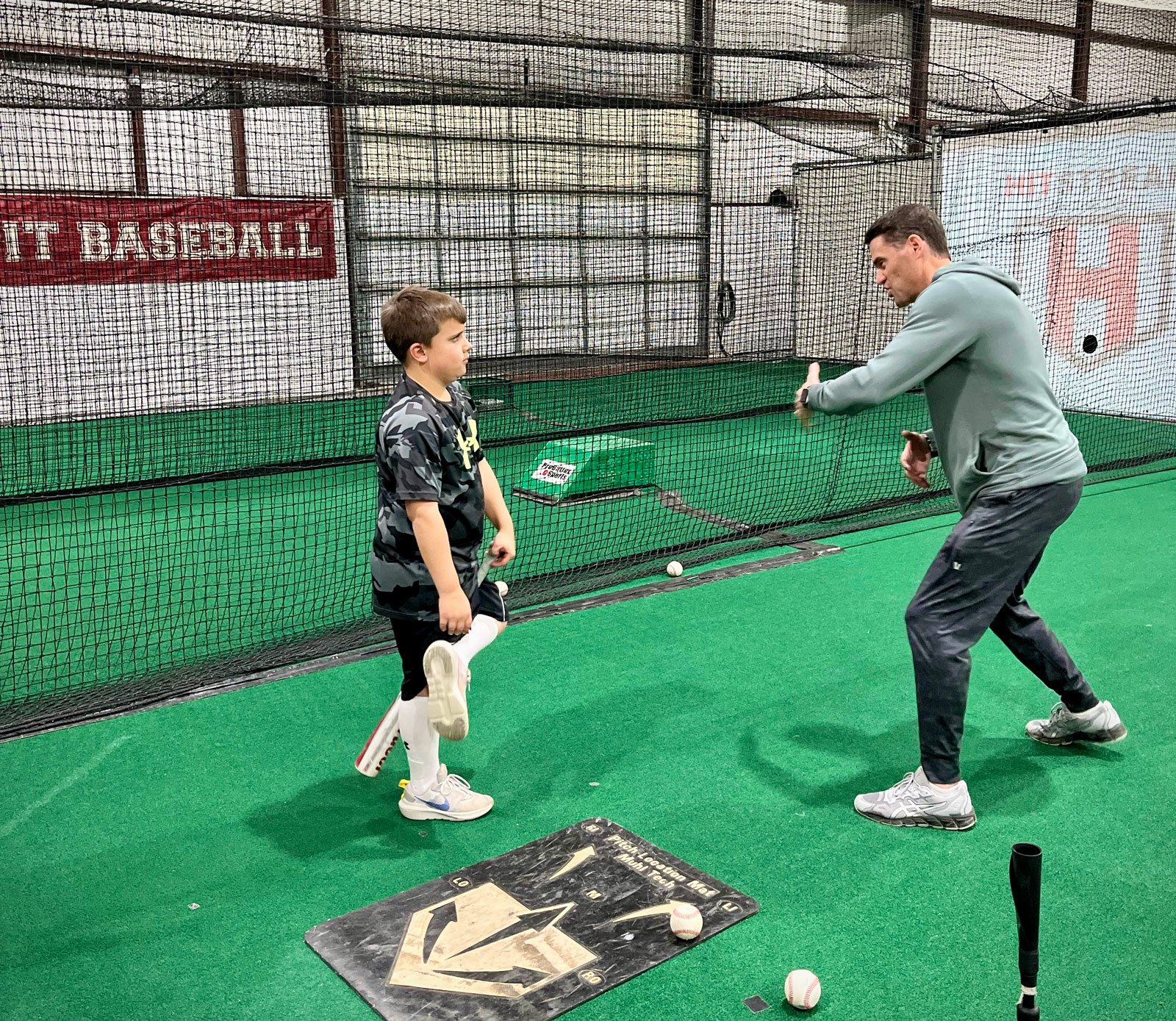
Swinging too hard can cause you to lose your balance, leading to missed swings or weak hits. The solution is to concentrate on keeping your swing under control and maintaining your balance from start to finish.
- Urge players to prioritize making contact over hitting with force.
- Have players swing with one hand during practice to improve control.
- Use a balance board to help players keep their balance while swinging.
Balance is critical for a successful swing. If a player is constantly losing their balance, make them practice hitting off a tee with their feet closer together. This will force them to stay centered and improve their balance.
Another suggestion is to encourage players to keep their head steady and their eyes even. This will help them maintain their balance and increase their ability to follow the ball.
Wrong Bat Angle and Overstretching
Wrong bat angle and overstretched swings can result in weak contact or missing the ball. It’s better for players to keep their bat level throughout the hitting zone, which provides better contact and control. For more tips on improving your swing, check out these online hitting programs.
For bat angle problems, you can try practicing by hitting off a tee at various heights. This allows players to adjust their swing path and keep a consistent bat angle. Also, try to keep your hands inside the ball, as this prevents reaching and encourages solid contact. Consider using swing trainers and hitting aids to further improve your technique.
Not Following Through
For maximum power and accuracy, a complete follow-through is necessary. If you don’t follow through, you often lose power and control. Encourage players to end their swing with their hands high and their back shoulder pointing towards the pitcher.
Reinforce this by using a simple drill: have players swing and hold their follow-through position for a few seconds. This helps them develop muscle memory and ensures they complete their swing.
Useful Training Exercises
Utilizing a diverse range of training exercises can assist young athletes in enhancing their hitting mechanics. These exercises concentrate on various components of the swing, enabling athletes to cultivate a comprehensive range of abilities. For more tips, explore top hitting and fielding coaching tips.

Practicing Tee Drills for Accuracy and Technique
Practicing tee drills is a common baseball training method because it allows the player to concentrate on accuracy and technique without the distraction of a moving ball. Adjust the tee to various heights and positions to mimic different pitch situations.
Players should be motivated to concentrate on solidly connecting with the ball and keeping a consistent swing path. This aids in the development of muscle memory and enhances their adaptability to various pitches.
Use Soft Toss to Enhance Reflexes
Soft toss exercises can enhance reflexes and hand-eye coordination. Position yourself to the side of the player and softly throw balls into the strike zone, which lets them concentrate on making contact.
- Begin with gentle, slow throws and slowly increase the pace.
- Mix up the placement of the throws to mimic various pitch positions.
- Urge players to concentrate on swift, precise swings.
These exercises not only enhance reaction speed but also assist players in gaining a better grasp of pitch identification and adaptation.
Don’t forget, repetition is crucial. Continual practice of these exercises will result in a notable enhancement in a player’s batting skills.
Drills for Bat Control
Being able to control your bat is key to hitting the ball consistently. Drills that focus on controlling the movement of the bat can help players improve their accuracy and precision.
The “Two-Strike Drill” is a great practice method. It involves practicing hitting with two strikes, which encourages players to prioritize making contact over hitting for power. This helps improve bat control and precision.
Promoting A Positive Attitude and Concentration
Having a positive attitude and being able to concentrate are just as crucial as physical abilities in baseball. Encouraging young players to build mental resilience and focus can improve their overall performance and love for the game.
Boosting Self-Esteem in Little Leaguers
Self-esteem is the backbone of a triumphant sportsman. Support little leaguers in building self-esteem by establishing attainable objectives and applauding their improvement, regardless of its size.
Ways to Boost Focus
Keeping focused is essential during a match. Inspire athletes to use mindfulness techniques, like deep breathing or visualization, to enhance their focus and decrease stress.
With the right attitude and concentration, young players can conquer obstacles and reach their full potential on the field. If you’re looking for guidance on teaching good fundamentals, check out this crash course on coaching.
Establishing Attainable Objectives for Advancement
Establishing attainable objectives is critical for sustaining enthusiasm and monitoring advancement. Inspire players to establish precise, quantifiable objectives for their hitting performance, such as enhancing their batting average or hitting a certain number of line drives in practice. For more insights, you can check out this crash course on teaching fundamentals.
Young players can maintain their motivation and steadily enhance their skills by setting and achieving goals.
Establishing a Regular Practice Routine
For young players, it’s essential to establish a routine to develop consistency in their hitting mechanics. Regular practice allows for the reinforcement of skills and steady improvement over time. With a routine in place, players can focus on the specific areas of their game that need work.
Establishing a consistent routine also aids in the development of discipline and time management skills in players. It instills in them the significance of frequent practice and the advantages of effort and commitment. For more tips on improving your practice sessions, check out these beginner drills and training tips.
Crucially, regular practice instills self-assurance. As young athletes see their abilities developing, they acquire the certainty to perform well in high-stress game situations.
Establishing Pre-Swing Habits
Pre-swing habits can assist players in achieving the correct mindset before each at-bat. These habits can be as straightforward as inhaling deeply, altering their grip, or envisioning a successful hit. By establishing a consistent pre-swing routine, players can concentrate their thoughts and alleviate anxiety before approaching the plate. For more on enhancing your swing, check out these swing trainers and hitting aids.
Players should try out various pre-swing routines to discover what suits them best. The main goal is to establish a routine that helps them stay calm, focused, and prepared to hit.
The Significance of Consistent Training Sessions
Consistent training sessions are key to developing uniformity and enhancing abilities. Motivate players to train consistently, even when not in team training sessions, to strengthen their abilities and focus on particular aspects of their game.
Make sure to dedicate some time every week to practice on your own. Concentrate on different parts of hitting, like the grip, stance, swing mechanics, and timing. If players stick to a regular practice schedule, they will be able to continue to get better and develop their skills over time.
Monitoring Progress and Recognizing Achievements
It’s important to monitor progress and recognize achievements to keep motivation high and build confidence. Players should be encouraged to keep a record of their practice sessions, noting what they’ve improved on and what they still need to work on.
Applaud small wins, like achieving a new personal record or learning a new technique. Acknowledging and celebrating improvements can help players stay driven and focused on their objectives. For young hitters, exploring increased power techniques can be a rewarding achievement.
Commonly Asked Questions
Getting a handle on the basics of hitting can be a tall order for players and coaches alike. Here are some frequently asked questions and their responses to assist young players and their supporters. For more advanced techniques, check out these increased power techniques for young hitters.
What is the most crucial part of hitting for young players?
The most crucial part of hitting for young players is establishing a strong foundation of basics. This involves correct grip, posture, swing mechanics, and timing. Perfecting these fundamentals will pave the way for future victories and enable players to enhance their abilities as they advance.
What can I do to help my child hit the ball harder?
To help your child hit the ball harder, you can encourage them to work on their strength, mechanics, and timing. Your child should focus on using their legs and core to generate power, rotating their hips and shifting their weight to hit the ball. You can also suggest strength training exercises like squats and lunges to help them build the muscles they need for a strong swing.
Moreover, training with a bat that is heavier or utilizing resistance bands can aid in enhancing the power and speed of your swing.
What are the typical indicators of bad hitting techniques?
Over-swinging, incorrect bat angle, poor balance, and not following through are all typical indicators of bad hitting techniques. Players who consistently miss or make weak contact with the ball may need to concentrate on improving their techniques and developing better control and precision.
How frequently should young players practice hitting?
Young players should try to practice hitting at least 2-3 times per week, in addition to team practices. Regular practice aids in reinforcing skills and guarantees steady improvement over time. Encourage players to concentrate on different aspects of hitting during each practice session, such as grip, stance, swing mechanics, and timing.
What kind of bat should Little League players use?
Little League players should use a bat that is the right size and weight for their age and abilities. In general, the bat should be light enough for the player to swing easily but heavy enough to hit the ball hard. Think about things like the player’s height, weight, and strength when you’re picking out a bat.
How do I fix a player’s habit of swinging too hard?
If a player has a habit of swinging too hard, you can help them improve their control and balance to fix this. You should encourage the player to concentrate on hitting the ball, not on hitting it as hard as they can. They can practice with one hand or use a lighter bat to help them focus on control and accuracy.
Do particular drills exist for enhancing hand-eye coordination?
Indeed, there are numerous drills that can aid in the improvement of hand-eye coordination. Soft toss drills, reaction ball drills, and the use of a small ball or bat can all assist players in improving their coordination and increasing their ability to track and hit the ball.
What strategies can coaches use to make hitting practice fun for young players?
Coaches can make hitting practice fun by including a range of drills and activities that push players and keep them interested. Incorporate games and competitions to make practice more enjoyable and promote healthy competition. Offer positive reinforcement and encouragement to boost confidence and keep players motivated.
- Change up drills often to keep things exciting and ensure players are paying attention.
- Employ tools like video analysis to help players better grasp their mechanics.
- Establish reachable goals and celebrate when they are met to keep motivation high.
Emphasizing the basics and promoting a positive attitude can help young players build the skills and self-assurance they need to excel at baseball. With consistent practice and a dedication to getting better, they can have fun playing the game and reach their highest potential on the diamond.
Keep in mind, the path to becoming a great hitter is a long race, not a short one. Stay patient, stay focused, and above all, enjoy yourself! If you need a crash course on how to teach good fundamentals, check out this discussion on teaching techniques.

Leave a Reply