What You Need to Know
- Hitting drills can drastically improve a young player’s power, contact, and batting average when done consistently.
- Exercises that increase bat speed and strengthen the core are essential for boosting power.
- Understanding important metrics like power, contact, and average is useful in goal setting for improvement.
- Consistent practice and incorporating drills into a routine are crucial for ongoing improvement.
- Coaches and parents have a big role to play in inspiring and directing young athletes.
Getting Started with Youth Baseball Hitting
In youth baseball, hitting is one of the most thrilling and satisfying skills a player can learn. It’s more than just swinging the bat; it’s about making contact with the ball in a way that sends it soaring across the field. To reach that point, young athletes need the right coaching and practice. That’s where hitting drills come into play.
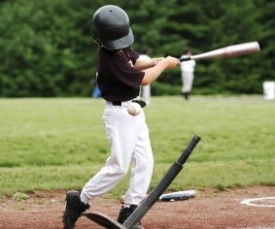
Drills for hitting are made to help players get better at their technique, power, and consistency. They concentrate on different parts of hitting like timing, strength, and coordination. With the correct drills, young players can see a big improvement in their game.
Why Hitting Skills Matter
“Hitting is not about brute strength; it’s about rhythm, timing, and coordination.” – Ted Williams
Being able to hit well in baseball is a game changer, literally. It can mean the difference between winning and losing a game. A player who knows how to hit effectively can be a game changer for their team. Plus, being able to hit well can boost a player’s confidence and make the game more enjoyable for them.
Building batting abilities is a process that requires patience and hard work. Young players need to know that they won’t see results immediately. However, with regular training and proper methods, they can gradually improve their hitting skills.
Getting to Know the Main Stats: Power, Contact, Average
There are several stats in baseball that are used to assess a player’s ability to hit. The three most critical ones are power, contact, and average. Each of these stats gives a different perspective on a player’s performance.
Power is the term used to describe a player’s capacity to hit the ball with a lot of force. It’s usually gauged by how far the ball goes once it’s been hit. Players with a lot of power can hit the ball out of the park for a home run and can bring runners home from far away.
Contact refers to the frequency at which a player hits the ball. If a player has a high contact rate, it means they’re regularly hitting the ball, an essential skill for getting on base and contributing to the team’s run total.
Average is calculated by dividing the number of hits a player has by the total number of at-bats they’ve had. A high batting average means a player is very good at getting on base, which is crucial for helping the team win. To improve their plate coverage, players can practice specific hitting drills designed for youth baseball.
Why Hitting Drills Are Beneficial
Hitting drills provide a wealth of benefits for youth players. Most importantly, they help enhance players’ technique. When players concentrate on individual elements of their swing, they can make changes that result in improved field performance.
Additionally, hitting drills help to establish muscle memory. By repeating the same movements again and again, players can develop a swing that feels natural and instinctive. This is especially important during games when players need to respond rapidly to pitches. For more insights, check out these youth baseball hitting drills that focus on improving plate coverage.
Lastly, hitting drills can boost a player’s confidence. As they see their hitting improving, they gain the confidence necessary to perform under pressure. This confidence can carry over into other areas of their game, making them more well-rounded athletes.

Exercises for Boosting Power
Techniques for Accelerating the Bat
Boosting power is best achieved by improving the acceleration of the bat. This means increasing the speed of the player’s swing. The faster the swing, the more force there is behind the ball, and the further the hit. For more on improving your swing, check out our article on hitting balance and weight transfer.
Players can develop their bat acceleration by participating in drills that emphasize rapid hand movements and sturdy wrists. The “Quick Hands Drill” is an example of such a drill where players swing a bat that is lighter than usual as quickly as possible. This drill aids in strengthening the muscles required for faster swings with a standard bat.
Boosting Core Strength with Medicine Ball Toss
The core plays a crucial role in a baseball player’s swing. A robust core offers stability and power, enabling players to produce more force when striking the ball. Medicine ball toss exercises are one method to boost core strength.
For this exercise, athletes position themselves with their feet aligned with their shoulders and a medicine ball held at the level of their chest. They then rotate their upper body and throw the ball to a teammate or against a wall. This action is similar to the rotational motion of a baseball swing, which helps to develop strength and power in the core. For more on improving your swing, explore these youth baseball hitting drills.
Drills for Transferring Weight
Another key component of hitting power is weight transfer. When a player swings, they need to move their weight from their back foot to their front foot. This transfer creates momentum and gives the hit more force.
Players can use the “Step and Swing Drill” to practice weight transfer. This drill involves players taking a small step forward with their front foot before they swing. This action helps them concentrate on shifting their weight correctly, which can result in more powerful hits.
Enhancing Ball Contact
Although power is significant, it is just as vital to make consistent contact with the ball. A player who can consistently hit the ball will have more chances to reach base and score runs.
Getting better at making contact with the ball is all about honing your hand-eye coordination and timing. It’s crucial to learn how to follow the ball all the way from the pitcher’s hand to the plate, and adapt based on how fast it’s going and how it moves.
Exercises for Vision and Focus
Boosting a player’s capacity to make contact with the ball begins by improving their vision and focus. These exercises assist players in better tracking the ball and enhancing their reaction time. The “Colored Ball Drill” is one effective exercise. During this drill, a coach or partner tosses balls of various colors, and the player has to identify the color before they swing. This not only hones focus but also aids in faster pitch recognition.
Practicing with a Tee for Regular Contact
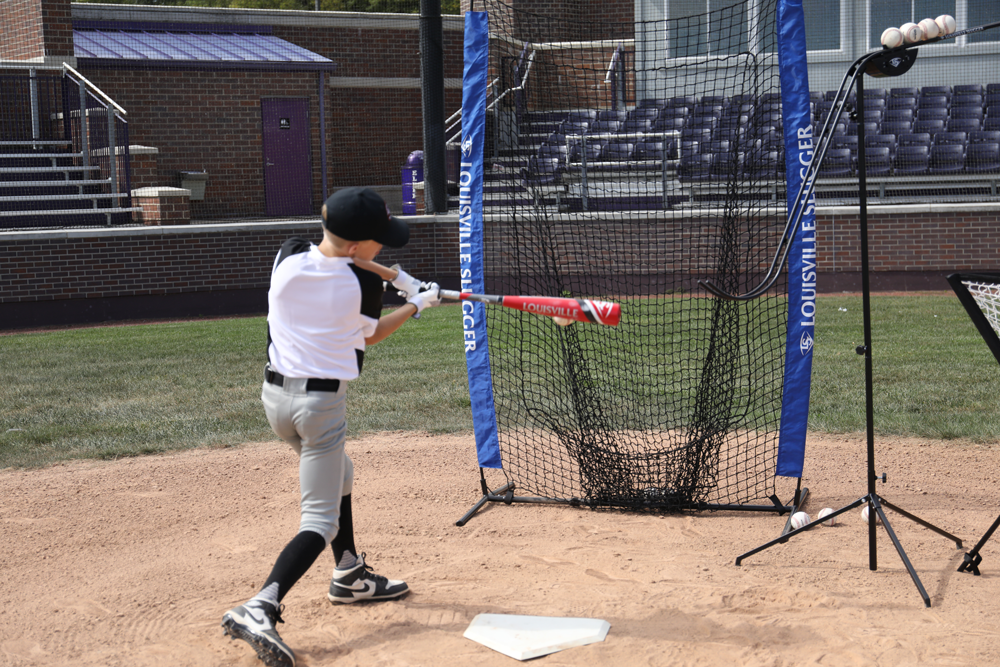
Practicing with a tee is a basic drill for developing regular contact. It lets players pay attention to their swing techniques without the stress of a moving pitch. By setting the ball on a tee, players can focus on keeping a balanced stance, correct grip, and even swing path. Regular practice with a tee aids in building muscle memory and enhancing precision.
“Don’t underestimate the power of the tee; it’s a tool that pros use too.” – Baseball Coach
The tee isn’t just for hitting balls straight down the middle. To get the most out of it, players should move the tee around to mimic different pitch locations. This will help them learn how to adjust their swing for any pitch. The more they practice with the tee, the better their contact will be, and the more hits they’ll get in games.
Soft Toss Exercises
Soft toss exercises are another great method for improving contact. In this exercise, a coach or partner gently tosses the ball underhand to the player from the side. This simulates a slow pitch, allowing players to focus on their swing mechanics and timing. Soft toss exercises are especially helpful for correcting swing flaws and developing a smooth, controlled swing.
Not only that, these exercises assist athletes in practicing hitting various pitch locations. By changing the toss’s angle and height, athletes can practice hitting inside, outside, high, and low pitches. This flexibility makes soft toss exercises a crucial component of any hitting practice regimen.

Ways to Boost Batting Average
Raising a player’s batting average is more than just hitting the ball. It takes a tactical approach to hitting, focusing on consistency and accuracy. By using certain techniques and drills, players can increase their batting average and become more dependable hitters.
A crucial strategy involves concentrating on hitting line drives instead of home runs. Line drives have a higher probability of turning into base hits, which boosts a player’s odds of reaching base. Players should strive for a level swing that propels the ball directly rather than attempting to knock it out of the park on every occasion.
“A good hitter is one who consistently gets on base, not just one who hits the occasional home run.” – Baseball Analyst
Controlled Fall Drill for Balance
Balance is critical for maintaining a consistent swing and increasing batting average. The controlled fall drill helps players develop better balance and stability during their swing. In this drill, players start in their batting stance and slowly lean forward, allowing their front foot to fall naturally towards the pitcher. As they do this, they focus on keeping their head still and maintaining a balanced posture. For more on the importance of balance and weight transfer, check out this article on hitting balance.
With the controlled fall drill, players get to practice staying balanced throughout their swing. This helps to reduce the chances of off-balance swings that can lead to weak contact. It’s a great drill for young players who are still working on their coordination and balance.
Line Drive Hitting Drills
Line drive hitting practice is crucial for improving a player’s batting average. Line drives are more likely to result in hits because they are harder for fielders to catch due to their straight trajectory. The “Line Drive Drill” is a great way for players to practice this. The goal of this drill is to hit the ball on a line, with a focus on maintaining a level swing and making solid contact with the ball. For more tips, check out these youth baseball hitting drills.
In this exercise, players need to focus on keeping their hands inside the ball and using their lower body to create power. This will result in more line drives and increase the likelihood of getting on base. Regularly doing this exercise can significantly improve a player’s batting average.
Approach for Two Strikes
It’s important to have a good approach when you have two strikes against you to keep your batting average high. When a player has two strikes, they should be more defensive and concentrate on making contact instead of trying to hit a home run. A popular strategy is to make the swing shorter, move your hands up on the bat, and focus on getting the ball into play.
Young athletes should also practice extending their strike zone a bit, ready to swing at pitches that are close to avoid striking out. By taking a more disciplined approach when they have two strikes, they can boost their likelihood of making contact and getting on base.
Creating a Training Regimen
In order to make steady progress, athletes must create a regimented training routine that includes a variety of batting drills. A comprehensive routine should concentrate on various elements of batting, such as power, contact, and average. By allotting time to each component, athletes can become more well-rounded batters.
Incorporating Drills into Everyday Training
It’s crucial to incorporate drills into everyday training to strengthen skills and develop muscle memory. Athletes should begin with a warm-up that consists of stretching and light workouts to ready their bodies for the drills. Once they’ve warmed up, they can progress to particular drills that focus on various parts of their hitting.
Imagine this: a standard training session could consist of 10 minutes of tee work, 15 minutes of soft toss drills, and 20 minutes of live batting practice. Players can see a gradual increase in their hitting skills if they consistently include these drills in their routine.
First and foremost, players need to have distinct objectives for each practice. This could be enhancing bat speed, hitting the ball more consistently, or increasing the number of line drives. Clear goals help players maintain concentration and motivation.
Keeping Score and Making Changes
Keeping score is an essential part of any practice routine. It lets players and coaches see how much better they are getting and pinpoint areas that need more attention. Keeping track of important metrics like batting average, number of hits, and strikeouts can give a good idea of a player’s growth.
In addition to that, it’s crucial to continuously evaluate and modify training regimens based on these statistics. If a player is having difficulty making contact, additional time may be required for tee work or soft toss drills. Conversely, if power is an issue, concentrating on bat speed and core strengthening exercises may be advantageous.
Keeping track of progress doesn’t have to be a complex process. You can use a basic notebook or a digital app to jot down daily or weekly stats. This not only aids in tracking improvement, but it also provides motivation to players by showing them how much they’ve improved.
- Keep a regular log of batting averages and other important statistics.
- Modify practice routines in response to progress that has been tracked.
- Utilize basic tools such as notebooks or applications for tracking purposes.
By regularly monitoring progress and making the necessary adjustments, players can ensure they are on the right track to improving their hitting skills.
Advocating for Regular Practice
Like any skill, baseball hitting requires regular practice to improve. Players should strive to practice every day, even if it’s only for a little while. Regular practice reinforces skills and builds muscle memory, which can help players perform better during games.
For players to keep practicing, they can establish a schedule that suits their daily activities. They could practice after school or on the weekends. Having a specific time for practice assists players in staying dedicated and concentrated on their improvement objectives.
Useful Advice for Youthful Batters
While youthful batters are honing their hitting abilities, there are numerous useful pieces of advice they can adhere to that will boost their game. These pieces of advice concentrate on attitude, method, and the importance of support networks such as mentors and parents.
Firstly, maintaining an optimistic attitude is crucial. Baseball can be tough, and it’s essential to stay driven even when improvements seem to take forever. A little support from coaches and team members can significantly increase a player’s self-esteem. For coaches looking to enhance their team’s performance, The Complete Hitter Program offers valuable insights and strategies.
Maximizing the Use of Feedback
Feedback is a powerful tool for growth. Players are encouraged to actively ask for feedback from their coaches and teammates and use it to make the necessary changes. Constructive feedback can help pinpoint areas of weakness and identify which areas need more attention.
Players need to be receptive to feedback and open to experimenting with new techniques. If they don’t understand something, they should feel comfortable asking questions to make sure they fully comprehend the advice they’ve been given. For more on how to adapt effectively, explore these growth mindset tips for young baseball and softball players.
Building Self-Belief and a Positive Attitude
It’s essential for young hitters to develop a strong mindset. They need to concentrate on the things they have control over, like their effort and their attitude, instead of obsessing over the results. This mindset will help them stay strong, even when they’re dealing with setbacks. For more insights, check out the Complete Hitter Program for team coaches.
Preparation and practice are the keys to confidence. The more players practice, the more they believe in their abilities. Confidence can also be improved by setting small, achievable goals that players can see themselves achieving over time. For additional techniques, consider exploring mental toughness strategies for youth players.
Importance of Coaches and Parents
Coaches and parents are vital in the development of a young athlete. They offer direction, encouragement, and inspiration, aiding athletes in remaining concentrated on their objectives. Coaches ought to establish an encouraging learning atmosphere where athletes are at ease making errors and learning from them.
Parents can be there for their kids by encouraging them to practice, showing up to their games, and celebrating their victories, no matter how minor. Parents should be patient and understanding, knowing that getting better takes time and hard work.
Wrapping Up on Hitting Drills
Hitting drills are a crucial component of a youth baseball player’s growth. They lay the groundwork for enhancing power, contact, and batting average, assisting players in becoming more versatile hitters. With regular practice and appropriate instruction, young athletes can make substantial strides in their game. For more insights, check out these youth baseball hitting drills to improve plate coverage.
By concentrating on certain drills and methods, players can tackle their shortcomings and enhance their strengths. It’s crucial to bear in mind that progress is a process, not an end point. Patience, determination, and a positive outlook are essential for sustained success.
First and foremost, players should enjoy the process. Baseball is a game, after all, and it should be fun. By keeping their love for the game alive, players can stay motivated and continue to improve as athletes. For coaches looking to enhance their team’s skills, The Complete Hitter Program offers valuable insights.
“The only way to prove that you’re a good sport is to lose.” – Ernie Banks
Key Benefits Overview
Hitting drills practice provides a multitude of benefits for youth baseball players. It enhances their technique, establishes muscle memory, and raises their confidence. By concentrating on individual hitting components, players can make substantial enhancements in their power, contact, and batting average.
Consistency and regular practice are key to improvement. With the encouragement and support of coaches and parents, young athletes can stay driven and committed to their development. For additional resources, consider exploring virtual youth baseball training programs that offer flexibility and innovative training methods.
Keep Getting Better with Drills
If players want to keep getting better, they need to include a range of drills in their practice routine. This means drills to boost power, drills to improve contact, and drills to raise batting average. By setting clear goals and keeping track of progress, players can stay on track as they work to get better.
In addition to that, players need to be open to feedback and ready to make changes when necessary. By keeping a positive attitude and taking on challenges, they can become stronger and more flexible athletes.
Ultimately, the secret to victory is regular training, commitment, and a passion for baseball. With these components, young baseball players can achieve their best and have a satisfying and enjoyable sports experience. For more insights, check out The Complete Hitter Program.

Leave a Reply