In the world of little league baseball, it’s always thrilling to see a young pitcher confidently and skillfully dominate the game. However, every outstanding pitch is built on the bedrock of solid mechanics. If you’re a young pitcher in training, a coach, or a parent cheering on a young athlete, it’s vital to understand the basics of pitching. This knowledge is key to success on the mound and to ensuring the health of those young arms.
Let’s explore the realm of pitching mechanics for children ages 8-12, making sure we touch on everything to enhance techniques and avoid injuries. Prepare to learn, train, and play ball!
Key Takeaways
Learning the fundamentals of pitching mechanics is vital for young athletes to enhance their game and prevent injuries.
The right grip and stance are the foundation of effective pitching.
Sequential movements from wind-up to delivery are crucial for a strong and accurate pitch.
Regular drills can improve a pitcher’s balance, control, and strength.
Monitoring pitch counts and incorporating rest days are important to safeguard young arms.
The Winning Pitch: Optimizing Techniques for Young Athletes
Understanding the Fundamentals of Pitching
Before a young pitcher can consistently throw strikes, they need to understand the basics. Pitching is more than just throwing a ball; it’s a complex action that involves the entire body. From the tips of their toes to the tips of their fingers, every movement counts. The aim is to create a smooth, repeatable motion that maximizes power and minimizes the risk of injury.
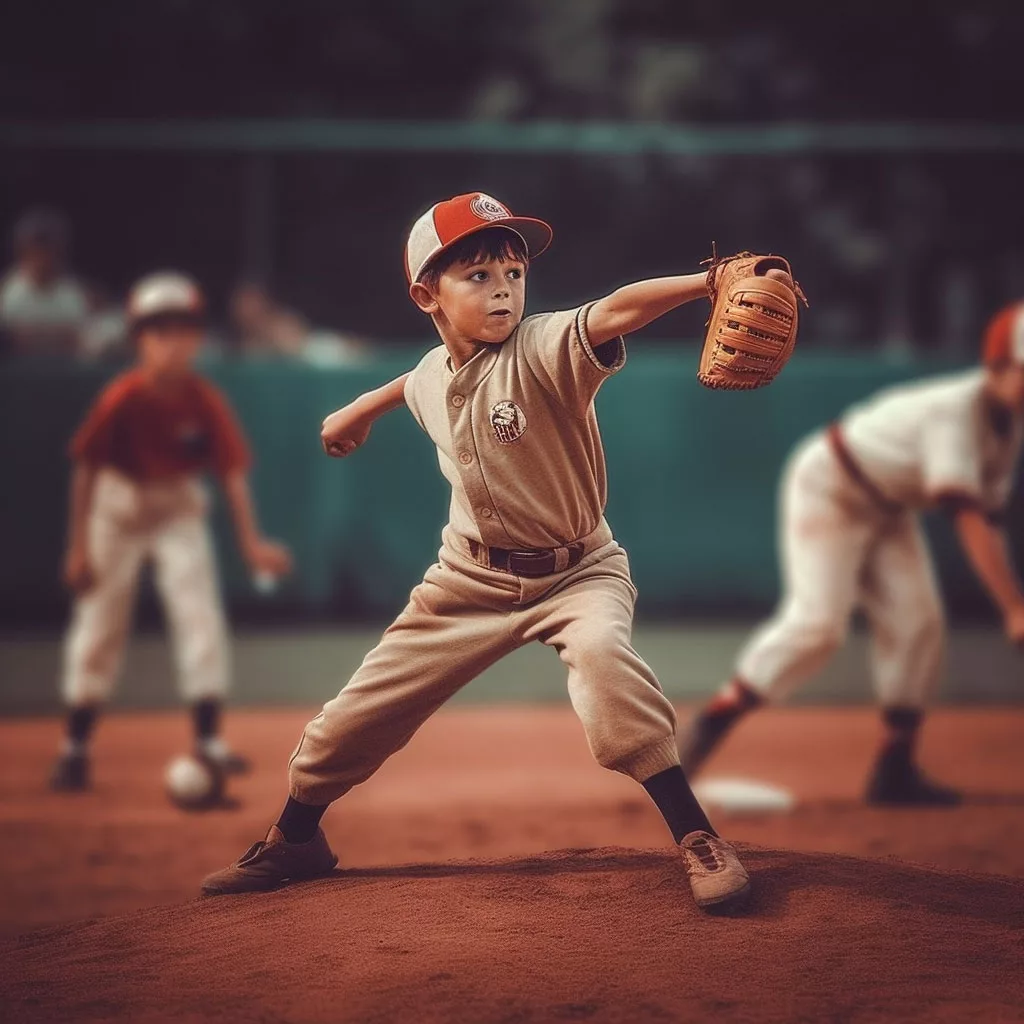
Why should we emphasize mechanics, particularly with children? The answer is straightforward: habits formed at a young age can last a lifetime. And in pitching, good habits result in improved performance and less injuries.
Essential Components of Successful Pitching Methods
Successful pitching methods for young players are built on several fundamental components. To ensure these young athletes are on the right track, it’s crucial to focus on proper pitching techniques that are appropriate for their age group and physical development.
How to Hold the Ball: The first step to a successful pitch is holding the ball correctly.
Positioning: A solid position is the foundation for the entire pitching movement.
The Initial Movement: This beginning movement helps build momentum for the pitch.
Step and Release: Shifting body weight and letting go of the ball with accuracy.
Completion of the Movement: Finishing the movement to ensure speed and lessen strain on the arm.
By paying attention to these components, young pitchers can cultivate a technique that’s not only efficient but also safe for their growing bodies.
Exercises to Perfect Techniques and Improve Skills
Repetition is key to mastering any skill, and pitching is no exception. There are a variety of exercises aimed at helping young pitchers perfect their techniques and improve their skills:
The Balance Drill: This drill helps to enhance stability and control during the pitching motion.
The Wall Drill: This drill assists pitchers in improving their stride and body alignment.
The Towel Drill: This drill helps in achieving the proper arm path and extension.
By consistently incorporating these drills into their practice sessions, young pitchers can develop muscle memory and gain confidence. For more detailed guidance, check out our youth baseball development metrics and video analysis guide.
How to Safeguard Young Pitchers from Injuries
Injuries can put a young pitcher on the bench, sometimes with lasting effects. That’s why it’s crucial to take measures to safeguard those young arms:
Follow pitch count rules to avoid overworking.
Make sure to have adequate rest between pitching.
Promote a holistic approach to physical growth, including workouts that enhance the entire body, not just the arm.
By sticking to these rules, young pitchers can continue to play the game they love while maintaining their arm strength and health.
Stepping Up to the Mound: Building Solid Foundations
The Right Start: Grip and Stance
Every great pitch starts with the right grip and stance. For young pitchers, they need to understand how to hold the baseball and how to position their feet. The grip should be firm but not too tight, with the fingers positioned along the seams. This will allow for better control and spin.
Regarding the stance, pitchers ought to stand upright on the mound with their feet spread apart the width of their shoulders. The front foot should be slightly open, prepared to step in the direction of home plate. This stance offers stability and balance, which are crucial for a forceful pitch.
Here’s the breakdown:
Grasp the ball using your fingertips, not the palm of your hand.
Place your thumb directly under the ball for added support.
Stand with your feet at shoulder width, and angle your front foot slightly outward.
Mastering these fundamental skills is crucial for the rest of the pitching motion.
Breaking Down the Pitch: From the Wind-Up to the Delivery
The wind-up is the initial movement a pitcher performs to commence their pitch. The primary goal here is to generate momentum. The pitcher must begin by holding their hands together in front of their torso, then raise their leading leg while lifting their hands. This leg lift isn’t merely for appearances; it aids in maintaining balance and primes the body for a forceful forward movement.
Following the wind-up, the pitcher strides forward, stepping toward home plate with their lead leg. The pitcher’s hips and shoulders should be aligned. This is a critical step as it establishes the foundation for the rest of the pitch. If the pitcher is off-balance during this step, it will affect the entire pitch.
Last but not least, we have the delivery. When the pitcher moves their arm forward, they need to turn their hips and shoulders to face home plate. The arm should move in a whip-like motion to release the ball in the direction of the catcher. It’s crucial to ensure the movement is smooth and in control. Abrupt movements can result in off-target pitches and, even worse, injuries.
The follow-through is the most important part. After the ball is thrown, the pitcher should continue the motion, allowing their arm to naturally come down and across their body. This helps to slow down the arm safely and reduces the strain on the shoulder and elbow.

Mastering the Motion: Building Steadiness and Precision
For a budding pitcher, mastering a steady pitching motion is crucial. It’s not just about throwing with power; it’s about throwing accurately, every single time. That means focusing on the specifics of their motion.
Drills are a fantastic way to create consistency because they help to instill the right mechanics until they become automatic. However, it’s crucial to not just do the drills but to do them right. This is where input from coaches, parents, or even video analysis can make a big difference.
Another crucial aspect is control. A pitcher with control can deliver their pitches exactly where they want, making it difficult for batters to hit the ball. Control is achieved through good mechanics, and it is also a product of practice. The more a pitcher practices, the more accurately they can throw their pitches.
Technique Enhancement: Advancing Skills Past the Fundamentals
Mastering Correct Arm Movement and Release Locations
Arm movement and release locations are akin to a pitcher’s handwriting – each pitcher’s is slightly unique, but there are some shared components that all effective pitchers possess. For youth pitchers, grasping these components is crucial.
Arm action refers to the route the arm takes when moving forward to let go of the ball. It needs to be steady and even, with the elbow guiding the motion. The release point is the precise instant when the ball leaves the hand of the pitcher. It’s crucial because it impacts the pitch’s velocity, precision, and motion.
Young pitchers can improve their arm action by keeping their elbow up and throwing through the ball, not just to it. This will help them release the ball with more power and accuracy.
Keeping Your Balance: Maintaining Stability and Power Through Good Posture
Posture is another crucial component of pitching mechanics. A pitcher who has good posture will have a straight back and a slight bend at the waist, which helps them keep their balance throughout their pitching motion.
Power comes from stability. With a solid foundation, a pitcher can use their legs to create energy, move it through their body, into their arm, and ultimately to the ball. If they lack stability, a lot of that energy is wasted, and their arm has to do more of the work, which can result in injuries.
Kids who are pitchers can better their balance and stance by working on their core strength. Doing exercises like planks and leg lifts can help build a strong core, which can then help with a stronger and more stable pitching movement.
Perfecting the Art of Fast and Accurate Pitching
Every pitcher dreams of throwing fast and hitting the strike zone every time. To achieve this, they need to perfect their pitching mechanics.
Young pitchers should know that speed comes as much from the legs as it does from the arm. Working on leg strength and explosive movements, such as jumping and sprinting, can help build the power that can be transferred into the pitch.
Getting the accuracy right can be a bit more difficult. It comes down to muscle memory and repetition. Pitchers need to focus on their release points, ensuring that they’re letting go of the ball at the same point each time. A useful exercise for this is the target practice drill, where pitchers aim at a particular point or target to improve their accuracy.
Keeping Young Pitchers Safe: An Injury Prevention Guide
Typical Pitching Injuries and How to Prevent Them
Regrettably, pitching can result in injuries, especially if young players are not cautious. The most frequent injuries are to the shoulder and elbow, such as rotator cuff tears or Little League elbow.
In order to prevent these injuries, young pitchers must concentrate on the right mechanics, prevent overuse, and get enough rest. It’s also important to pay attention to their bodies. Pain is an indication that something is not right, and ignoring it can result in more severe injuries.
It’s important for coaches and parents to be vigilant when it comes to young pitchers. They must ensure these kids aren’t pushing themselves too hard. Additionally, they should foster an environment where pitchers feel comfortable expressing when they’re in pain.
Getting Your Arm Ready: The Importance of Warming Up and Cooling Down
You wouldn’t run a marathon without stretching first, right? The same principle applies to pitching. Warming up properly gets your blood pumping and readies your muscles for the task at hand.
Begin with a bit of easy cardio, such as running or star jumps, then progress to dynamic stretches that replicate the pitching action. Arm rotations, shoulder stretches, and wrist flicks are all excellent options.
Don’t forget to cool down. After a pitching session, it’s important for kids to stretch their arms and shoulders. This can help prevent them from getting stiff or sore, and it can also help reduce the risk of injuries.

Keeping Track: How to Manage Pitching Workloads
One of the most effective methods to safeguard young pitchers is to manage their pitching workloads. This entails monitoring pitch counts and ensuring they’re not overworking themselves.
Little League Baseball and similar organizations have created particular rules for the number of pitches and rest days depending on the age of the player. These rules are crucial to follow to ensure the health of the young player’s arm.
It’s also important for parents and coaches to be adaptable. If a pitcher appears to be fatigued or having difficulty, it’s perfectly fine to remove them from the game, even if they haven’t hit their pitch count limit. The priority should be safeguarding the pitcher, not winning at any cost.
Drills to Improve Performance: Practice is Key
The Towel Drill: Achieving Balance
The towel drill is one of the most effective drills for young pitchers. It improves balance, timing, and arm path.
This is how it’s done: The player grasps a small towel in their throwing hand and performs their pitching motion, halting just before the point where they would usually let go of the ball. Rather than throwing a ball, they whip the towel down, trying to strike a target or the coach’s hand. This technique is part of a broader set of youth baseball pitching strategies aimed at enhancing command and control.
The towel drill is a wonderful tool because it can be done anywhere and it’s not hard on the arm. It’s an excellent method for working on pitching mechanics without the stress of throwing a ball.
Accuracy Exercise: The Target Drill
The target drill is a great method for young pitchers to improve their precision. The pitcher puts a target in place, such as a glove or a strike zone net, and practices landing their pitches on it.
The key to this drill is consistency and building muscle memory. The more a pitcher works on hitting the target, the better they’ll be able to do it during a game.
Developing Power: Resistance Band Workouts
Power is key for pitchers, but it needs to be the correct type of power. Muscles that are too large can in fact be a disadvantage, causing the pitching action to be slower and less smooth.
Young pitchers can use resistance band exercises to get stronger without getting too muscular. Exercises such as band pull-aparts and external rotations help to build up the muscles in the shoulder and arm that are used for pitching.
Developing a Pitching Mindset: Psychological and Tactical Considerations
The Psychological Aspect: Concentration, Self-Belief, and Poise
Pitching is as much a psychological sport as it is a physical one. Young pitchers need to learn how to concentrate, maintain self-belief, and remain poised on the mound.
Focus is the ability to ignore distractions and concentrate on what you’re doing. Confidence is built through preparation and achieving success. Composure is the ability to remain calm and composed, even when things are going wrong.
Just as physical skills can be honed through practice, so can mental skills. Visualization, breathing exercises, and positive self-talk are all effective methods for young pitchers.
Planning the Pitch: Learning to Read Batters and Understand the Game
Lastly, it’s crucial for young pitchers to understand the strategic elements of the game. This involves reading the batters, understanding the game’s situation, and knowing which pitch to throw at the right time.
Understanding the game is key here. Pitchers should watch baseball, both as a fan and as a student of the game. They should take note of how pitchers handle batters and their actions in different situations.
Learning how to pitch well is a process that takes time and experience. Even so, young pitchers can start learning the basics, setting them up for success as they grow and develop.
Keep in mind, the path of a young pitcher is a long-distance race, not a quick dash. By concentrating on the right mechanics, constant practice, and clever workload management, young pitchers can safely and effectively develop their skills, laying the groundwork for a lifetime of baseball fun. Keep going, stay patient, and above all, enjoy yourself out there on the diamond!
FAQ
As we conclude our detailed guide to pitching mechanics for young players, let’s answer some commonly asked questions that can provide further understanding for young pitchers, their coaches, and parents.
When should kids begin to learn pitching?
Usually, kids are ready to start learning the basics of pitching around the age of 7 or 8. This is the time when they usually have the necessary coordination and attention span to understand the basics. However, it is important to focus on the right mechanics and not to overwork their still developing arms. Keeping track of pitch counts and having rest days are important at this stage.
How many pitches should a kid make in a game?
The number of pitches a kid should make in a game varies with their age. Bodies like Little League Baseball offer particular pitch count rules. For instance, players aged 7-8 should restrict to 50 pitches each day, while those aged 11-12 can make up to 85 pitches. The kid’s health should always come before the result of the game.
What are the symptoms of pitching injuries?
Typical symptoms of pitching injuries include elbow or shoulder pain, a drop in pitching performance, tiredness, and any alterations in the way a pitcher throws. If a young pitcher reports arm pain or appears to be in pain, they should rest and get medical attention.
Does weight training aid in better pitching for kids?
Weight training can indeed be useful for young pitchers, but it needs to be suitable for their age and should concentrate on general body strength and stability, not heavy lifting. Exercises with resistance bands and body-weight exercises such as push-ups, squats, and planks are excellent for developing the fundamental strength required for pitching. For more detailed guidance, parents and coaches can refer to tips to prevent arm injuries in youth baseball and softball pitchers.
Which pitches should young pitchers learn first?
Young pitchers should start by learning the fastball, concentrating on control and speed. After they have mastered the fastball, they can slowly start to learn the changeup, which is less strenuous on the arm than breaking pitches like curveballs or sliders. These should be introduced at a later stage.
How can I tell if my kid is pitching correctly?
Good pitching mechanics include a mix of balance, fluid motions, and the right arm positions. Checking for these can help you figure out if your kid’s mechanics are good. Also, getting tips from seasoned coaches and using video analysis can be a great way to spot and fix any mechanical problems.
Remember, a young pitcher’s mechanics can change as they get older and stronger. Keeping an eye on their form will make sure they keep pitching well and without injury.
How frequently should kid pitchers train?
Kid pitchers should train 2-3 times every week, with enough rest days in between to avoid overuse injuries. Training sessions should include a variety of drills, pitching from the mound, and general physical conditioning. Quality is more crucial than quantity; concentrate on good mechanics rather than a large number of pitches.
How important is nutrition in the development of a young pitcher?
Nutrition is key in the development and performance of a young athlete. A balanced diet filled with a variety of nutrients will help maintain their energy levels, muscle development, and recovery. Encourage young pitchers to consume a lot of fruits, vegetables, lean proteins, and whole grains, and to keep themselves hydrated, especially during game days.

Leave a Reply