Important Points
- Practicing youth baseball defensive drills is an effective way to enhance fielding abilities and overall game performance.
- Emphasize the basics: correct stance, using both hands, and efficient footwork.
- Top drills to try are rapid-fire grounders, barehand drills, and drop step and go drills.
- Coaches should stress the importance of communication and teamwork during practice sessions.
- Independent practice with wall tosses and cone circuits can also help improve fielding skills.
Getting Started with Youth Baseball Defensive Skills
Starting youth baseball defensive drills is not as hard as it may appear. By focusing on the right drills and fundamental skills, young players can greatly enhance their fielding skills. Most importantly, these drills help to build confidence and improve their overall performance on the field.

The Importance of Defensive Drills in Youth Baseball
Defensive drills are the heart and soul of a strong baseball team. They train players to react quickly, enhance their coordination, and enable them to execute the plays that determine the outcome of games. In youth baseball, these drills are particularly vital as they establish the groundwork for a player’s upcoming abilities. If young players don’t receive the right defensive instruction, they might find it difficult to adapt as the game becomes quicker and more challenging.
Building Confidence and Skill on the Baseball Field
In baseball, confidence is everything, and there’s no better way to build it than through defensive drills. When young players know they can field ground balls, catch pop flies, and throw with accuracy, they play with a level of certainty that can’t be matched. This confidence carries over into games, where it’s needed most. That’s why defensive drills should be a regular part of any youth baseball team’s practice routine.
Basic Fielding Skills for Kids
Before we go into the specifics of each drill, it’s important to discuss the basic skills that every young baseball player should have. These skills are the foundation of effective fielding and will make sure players are ready for anything that happens on the field. For coaches looking to enhance these foundational skills, exploring youth baseball coaching tips can be incredibly beneficial.

The Correct Stance and Ready Position
Young players need to learn the correct stance and ready position as one of the first things. This position allows them to respond to the ball quickly, whether it’s a grounder or a pop fly. Players should stand with their feet shoulder-width apart, knees slightly bent, and weight on the balls of their feet. Their glove should be open and ready to field the ball, with their throwing hand nearby to secure it quickly.
Mastering the Two-Handed Catch
One of the most basic skills in baseball, catching the ball with two hands, is often neglected. However, it offers more control and lessens the likelihood of the ball being dropped. Young players should practice this skill by moving their throwing hand over to their glove to secure the ball. This skill is particularly crucial for infielders who need to transition quickly from catching to throwing.
Let’s say a ground ball is hit in the direction of an infielder during a game. Fielding the ball with both hands makes it secure, and allows the player to quickly make an accurate throw to first base. For more tips on improving fielding skills, check out these youth baseball coaching tips.
Mastering the Fundamentals of Footwork and Speed
Footwork is a key part of successful fielding. It’s important for players to move swiftly and smoothly to position themselves in front of the ball. Proper footwork gives players the balance and control they need, particularly when they’re dealing with difficult ground balls or throwing while running. To help players improve their agility and speed, coaches should focus on drills that improve footwork, such as ladder drills or cone drills.
In addition to this, players should also practice turning and moving their feet quickly to get into the best position for catching the ball. This skill is especially important for infielders who need to cover a lot of ground quickly. For more tips, check out this guide to becoming a coach.
Maintaining a Low Glove and Gentle Hands
For efficient ground ball fielding, maintaining a low glove is crucial. Players should practice lowering their glove sooner and using gentle hands to cushion the ball’s impact. This method stops the ball from bouncing out of the glove and enables smoother throwing transitions. This skill’s practice will make young players more dependable and steady in their fielding.
Best Youth Baseball Defensive Drills
Now that we’ve gone over the basics, let’s take a look at some of the best defensive drills that will help young players get better at fielding. These drills are designed to be fun and effective, giving players the practice they need to be the best they can be on the field.
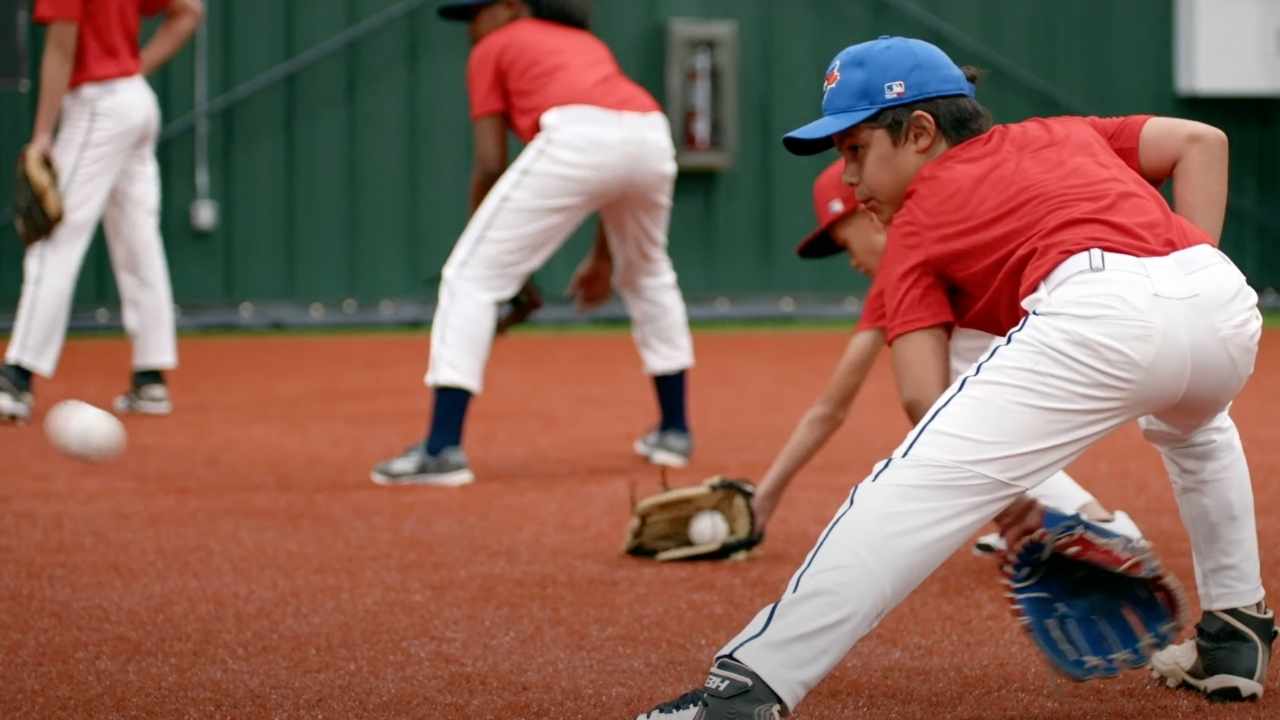
Quick Succession Grounders
Quick Succession Grounders is a great drill to improve reaction time and consistency in fielding. In this drill, a coach or teammate hits or rolls a series of ground balls one after another. Players must quickly field each ball and make a throw to a designated target.
This exercise not only improves footwork and glove handling, but it also helps players develop the mental acuity needed to make split-second decisions during games. It’s a great exercise for infielders who need to be prepared for anything that comes their way.
Drills for Barehand and Glove Control
Drills for barehand and glove control are crucial for instilling confidence and accuracy in young players. These drills aim to enhance hand-eye coordination and the capacity to field balls cleanly. One basic drill is to have players field ground balls with their bare hand. This drill compels them to keep a close eye on the ball and use the correct technique. As they gain confidence, they can transition to using their glove, concentrating on keeping control and making smooth transitions.
Outfielder’s Drop Step and Go Drill
Outfielders need to be able to move quickly and efficiently to cover large parts of the field. The Drop Step and Go drill is a great way to teach young players how to respond to fly balls that are hit over their heads. In this drill, players start in a ready position. A coach then points in a direction, and the player must quickly take a drop step with the foot on that side, turn their body, and sprint to catch an imaginary ball. For more coaching tips, check out this guide to becoming a coach.
This drill is designed to help outfielders develop their instinct and speed to get under the ball. It also stresses the importance of that first quick step, which can be the difference between catching the ball and it falling for a hit.
Charge Drill for Slow Rollers
This drill is great for infielders who need to learn how to handle softly hit balls. The coach hits slow rollers towards the players, who then need to charge the ball, field it cleanly and make a quick throw to first base. This drill helps players learn to approach the ball confidently, use the correct footwork and make accurate throws while running.
This drill is an excellent way for young players to get better at fielding difficult balls and making quick decisions, both of which are crucial during games. It’s also a great drill for teaching players how to deal with high-pressure situations.
Practicing Forehand and Backhand Drills
Forehand and backhand drills are specifically designed to help players get used to fielding balls hit to their left and right. In these drills, players practice fielding ground balls using both forehand and backhand methods. A coach or teammate will hit balls alternately to the left and right side, giving players the opportunity to concentrate on their footwork, glove placement, and overall body control. For additional guidance, check out these training methods for youth baseball coaches.
These exercises are key to developing adaptability and self-assuredness in young athletes. By becoming proficient in both forehand and backhand tactics, athletes can enhance their overall fielding skills and be prepared for any scenario that may occur during a match.
Advice for Coaching Youth Fielding Techniques
When coaching young players, it’s important to be patient, understanding, and strategic. Here are some pieces of advice for coaches to help them teach fielding techniques effectively and ensure their players are developing the skills they need to excel on the field. For more insights, check out these Little League baseball coaching tips.

Focus on Communication and Teamwork
Effective communication and teamwork are critical to a successful baseball team. Coaches should encourage players to communicate with each other during drills and games. This could include calling for fly balls, signaling plays, and cheering on their teammates. By creating a team-oriented atmosphere, players learn to depend on each other and work together to reach their goals.
Make it Fun and Positive
It’s important to keep practices fun and engaging to hold players’ interest and motivation. Coaches can do this by adding games and challenges to their drills to keep things exciting. Also, providing positive feedback and encouragement can help build players’ confidence and make them more eager to learn and improve.
For example, making a fielding drill into a fun game can encourage players to give their all while having a good time. This method improves abilities and also helps to build team unity. For more tips on improving defensive skills, check out these baseball fielding drills.
Use Real-World Situations and Difficulties
Using real-world situations and difficulties in practice sessions can help players use their skills in actual game situations. Coaches can make conditions similar to a game by setting up particular situations, such as runners on base or a crucial play in the last inning. This helps players build their decision-making skills and gets them ready for the pressures of real games. For more coaching strategies, check out these Little League baseball coaching tips.
Coaches can prepare their players for any on-field situation by fostering a lively and engaging practice atmosphere.
Independent Baseball Fielding Practice
Team practices are crucial, but players can also improve their fielding skills through independent practice. Here are some drills that players can do on their own to build their skills and increase their confidence in fielding.

Using a Wall Toss for Consistent Practice
The Wall Toss drill is a basic but useful way for players to practice their throwing and catching skills. By tossing a ball against a wall and catching it as it bounces back, players can work on their hand-eye coordination, reaction time, and glove work. This drill is easy to set up and can be done almost anywhere, making it a convenient option for solo practice.
Catching and Fast Hands Exercises
The purpose of catching and fast hands exercises is to enhance the players’ skills in cleanly catching ground balls and swiftly changing to throwing. Players can train to catch balls from the ground using both their glove and naked hand, concentrating on retaining control and using gentle hands. For more techniques, explore these youth baseball coaching tips to improve eye-hand coordination.
These drills assist players in honing their agility and accuracy, which are essential skills for dealing with tough plays during games. Players can become more dependable and efficient fielders by integrating these drills into their routine.
Enhancing Agility with a Cone Circuit
Agility is a vital skill in baseball, particularly for fielders who must be able to move swiftly to cover their territory. A cone circuit is a superb method for enhancing agility and footwork. Arrange cones in a zigzag formation and instruct players to weave through them as rapidly as they can. This drill aids in the development of rapid directional changes and increased overall speed.
For a more challenging drill, you can include a ball. Players can field a ground ball or catch a throw at each cone, adding a level of difficulty and simulating game situations. This variation makes the drill more fun and helps players develop their ability to multitask on the field.
Common Questions
Parents and coaches often wonder how they can best help young baseball players improve their defensive skills. For those looking to enhance their training methods, consider exploring baseball fielding drills that are designed to sharpen defensive skills. Here are some frequently asked questions and answers to help guide you.
At what age should children begin practicing defensive drills?
Children can begin learning fundamental defensive drills as early as five or six years old. At this age, the emphasis should be on basic skills such as catching, throwing, and footwork. As they get older and gain more experience, you can introduce more complicated drills and techniques to continue honing their skills.
How frequently should young players practice fielding drills?
Young players should engage in fielding drills a minimum of two to three times weekly to develop consistency and muscle memory. For more comprehensive training, check out these youth baseball coach training tips. However, it’s crucial to strike a balance between practice and rest to avoid burnout and keep players excited about the game.
What gear is necessary for fielding drills?
The essential gear for fielding drills are a baseball mitt, several baseballs, and cones for drill setup. A batting tee and a net may also be useful for certain drills. For team practices, it’s beneficial to have a bat and a set of bases to increase the range of drills you can do. For more ideas, check out these baseball fielding drills to sharpen defensive skills.
What can I do to help my child get better at catching?
Getting better at catching is all about practice and patience. Have your child practice catching with two hands and using soft hands to cushion the ball. You can also use a wall or another person to throw balls at different speeds and angles to help them improve their reaction time and hand-eye coordination.
Also, think about adding fun games and challenges to practice sessions to keep your child interested and motivated. Applaud their hard work and acknowledge their improvement to boost their self-esteem and love of the game. For more ideas, explore youth baseball coach training techniques.
- Consistently practice but don’t overdo it.
- Use a combination of structured drills and free play.
- Promote teamwork and communication.
- Ensure practices are fun and engaging.
- Offer positive feedback and support.
Do specific drills exist for infield vs outfield positions?
Indeed, there are specific drills designed for infield and outfield positions. Infield drills usually concentrate on quick footwork, rapid-fire grounders, and making precise throws. Outfield drills, meanwhile, stress the importance of covering ground, catching fly balls, and making long throws.
How can I teach footwork in baseball effectively?
Repetition and specific drills are the most effective ways to teach footwork. Ladder drills can help improve agility and speed, while cone drills can help improve quick changes in direction. Regular practice of these drills will help players develop the muscle memory they need to have effective footwork in games.
Adding game-like scenarios can also help players understand how to apply their footwork skills in real situations. Encourage players to think about their footwork during every play to build awareness and proficiency.
“Being great at fielding starts with having excellent footwork. Once you’ve got that down, everything else will follow.”
Can practicing fielding drills also improve my batting skills?
Yes, practicing fielding drills can also indirectly improve your batting skills. Many of the skills that you develop during fielding drills, like hand-eye coordination and quick reflexes, can also help you when you’re batting. Plus, understanding how the defense works can make you a more aware and strategic batter.
How can parents support their young athletes?
Parents can support their young athletes by cheering them on, going to their games, and making sure they have the right equipment and chances to practice. They should help them have a good attitude about the sport and help them make goals that they can reach.
One of the most important things parents can do is to stress the importance of effort and improvement, rather than winning. By focusing on personal growth and development, parents can help their children enjoy the sport and build skills and values that will last a lifetime. For those interested in enhancing their coaching skills, this guide to becoming a coach can be a valuable resource.
To sum up, defensive drills in youth baseball are crucial for honing the skills and boosting the confidence of young players. By emphasizing basic techniques, using fun drills, and offering encouraging coaching, we can assist our young sportspeople in realizing their maximum potential on the field.

Leave a Reply