Key Takeaways
- Eye-hand coordination is a critical skill in youth baseball, influencing both batting and fielding skills.
- Simple drills like tee hitting and reaction ball exercises can greatly enhance coordination skills.
- Consistent practice is key to developing and maintaining strong eye-hand coordination.
- Technology, such as video analysis, can help identify areas of improvement and track progress.
- Incorporating fun activities and complementary sports can help improve coordination outside of regular baseball practice.
The Importance of Eye-Hand Coordination in Youth Baseball
Eye-hand coordination is the ability to synchronize what you see with how your hand moves, which is critical in baseball. Imagine trying to hit a fastball without being able to track its movement accurately. It’s a difficult task that becomes nearly impossible without good coordination.

Young baseball players often find this skill challenging because their bodies and brains are still growing. However, the silver lining is that with regular practice, they can make substantial progress. Here’s why it’s crucial:
- Hitting: Young athletes need to keep their eye on the ball and adjust their swing based on where the ball is.
- Catching: Fast reactions are needed to catch or stop a ball in play.
- Pitching: To make an accurate throw, a player needs to be able to coordinate their hand movements with what they see.
So, working on eye-hand coordination can make a big impact on a young player’s overall game.
How Eye-Hand Coordination Contributes to Baseball Success
Let’s take a closer look at how this skill plays a part in success on the baseball field. Eye-hand coordination isn’t just about seeing the ball and swinging the bat. It involves timing, precision, and quick reaction skills. A player who has good coordination can mean the difference between a swing and a miss and a home run, or between a missed catch and a game-saving play.
Imagine a young player named Jake. He had a hard time with batting at the start of the season, usually swinging too early or too late. His coach taught him some specific drills to enhance his eye-hand coordination. As time went by, Jake’s batting average improved a lot, and he became one of the team’s best hitters. This change shows how important coordination is to baseball success.
How Better Coordination Boosts Performance
Players who enhance their eye-hand coordination often experience a variety of improvements in their performance. These include:
- Improved Hitting: Better timing and precision result in more consistent hits.
- Better Fielding: Rapid reflexes assist players in responding to rapidly moving balls.
- Precise Throwing: Players can aim and throw with more accuracy.
Most significantly, these enhancements increase players’ self-assurance, making them more involved and eager to train and perform. For more on building confidence through practice, explore these youth baseball batting drills.
Typical Problems Encountered by Youth Players
Despite the advantages, a number of youth players encounter difficulties in enhancing their eye-hand coordination. Some of these problems are:
- Novice: Young players often lack the experience to judge the speed and trajectory of the ball.
- Physical Growth: Coordination can be affected by physical growth spurts, which are common in young athletes.
- Distraction: Maintaining concentration during practice can be difficult for some players.
By recognizing these challenges, coaches can tailor their training to address specific needs, helping players overcome these obstacles effectively.
Effective Drills for Boosting Eye-Hand Coordination
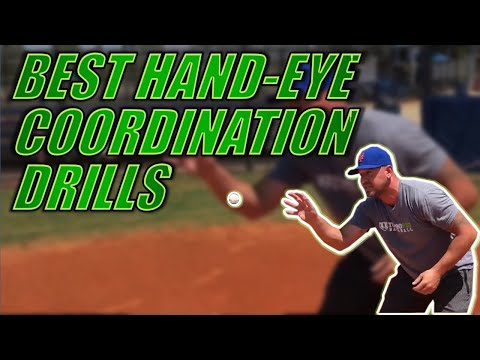
For boosting eye-hand coordination, it is crucial to include particular drills in practice. These drills aim to develop and enhance the skills required for superior performance on the field. Check out these best hand-eye coordination drills to incorporate into your training sessions.
Swinging at a Stationary Ball
One of the easiest and most beneficial drills is hitting a ball off a tee. This drill allows players to concentrate on their swing mechanics without the stress of a moving ball. It helps players improve their timing, control, and accuracy.
Here’s how to do this drill:
- Adjust the tee to the player’s ideal height.
- Help the player concentrate on their stance and how they hold the bat.
- Urge them to swing in a fluid motion, making an effort to consistently hit the ball.
Continual practice of this drill can greatly improve a player’s batting abilities.
Realistic Drills for Game-Like Practice
Realistic drills are key to getting youth players ready for actual games. These drills replicate the tension and dynamics of a real game, allowing players to work on their skills in a more true-to-life setting. For instance, creating a situation where players have to respond to various pitch types or field a series of random ground balls can significantly improve their eye-hand coordination.
A great exercise to try out is the “live pitcher” drill. In this drill, either a coach or a pitching machine throws a variety of pitches. The players must adjust their stance and timing in order to hit the ball, imitating the unpredictability of a real game. This drill helps the players practice making decisions and reacting quickly under pressure.
The Role of Regular Practice and Consistency
In baseball, skill development hinges on repetition and consistency. By practicing regularly, players can commit the required movements and responses to muscle memory, so they become automatic during a game. Consistently practicing the same drills also enables players to establish a solid foundation that can improve their performance in the long run.
Furthermore, maintaining regularity in practice sessions guarantees that players are always getting better and not forgetting the skills they’ve acquired. This is particularly crucial in youth sports, where players are still in the process of learning and developing. Coaches need to stress the importance of adhering to a practice routine and motivate players to approach their drills with a serious attitude.
Setting Up a Consistent Practice Schedule
It’s crucial for young athletes to have a consistent practice schedule. A well-organized schedule lets players know what’s coming and enables them to concentrate on individual skills every day. Coaches can create a weekly agenda that incorporates a combination of drills, practice games, and fitness workouts to make practices diverse and interesting.
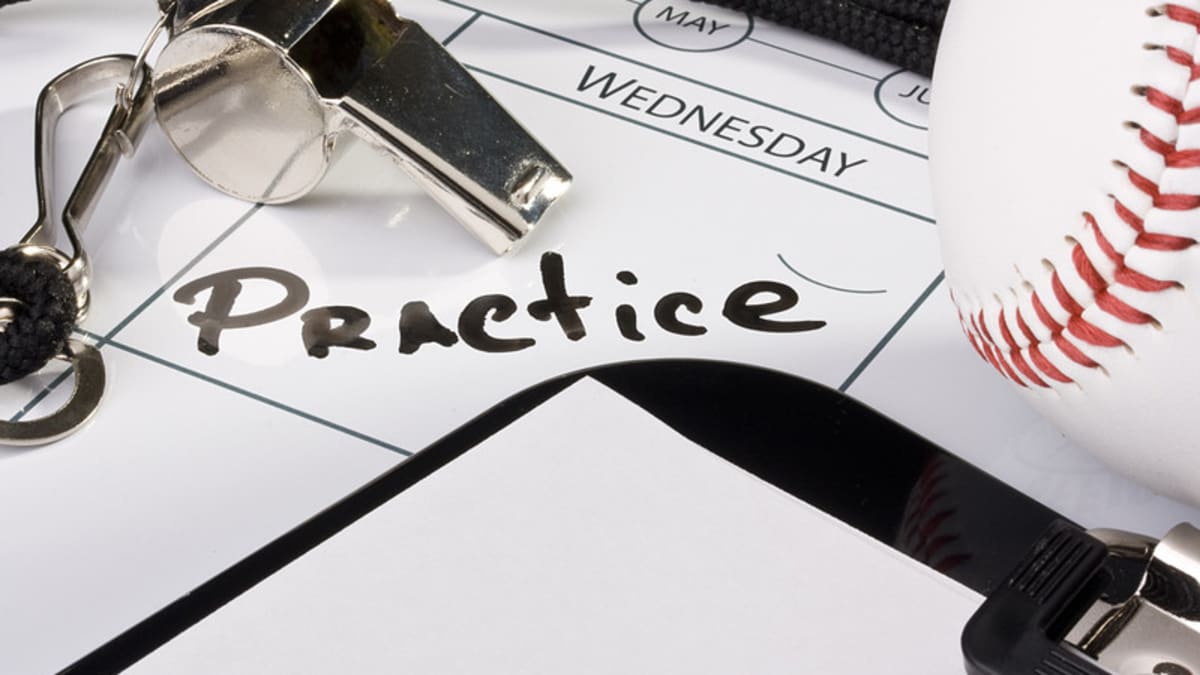
For instance, a typical week might look like tee work on Monday, fielding drills on Wednesday, and scrimmage games on Friday. By setting up this kind of routine, players get into the habit of practicing consistently, which leads to a steady increase in their skills. For more ideas on structuring practice sessions, check out these youth baseball coach training tips.
Keeping an Eye on Progress and Establishing Objectives
It’s important to keep an eye on progress and establish objectives in order to have a successful training program. Players can see the fruits of their labor by monitoring their progress, which boosts their motivation and confidence. Coaches should encourage players to establish specific, achievable objectives for each practice or week.
For example, a player could aim to raise their batting average by a specific percentage or better their fielding precision. Coaches can assist by giving feedback and monitoring each player’s advancement, providing advice and motivation throughout the process. For more insights, explore youth baseball coach training resources to enhance game skills.
Leveraging Technology to Boost Eye-Hand Coordination
Integrating technology into practice sessions can offer beneficial perspectives and strengthen skill growth. Resources like video analysis and training applications can aid players and coaches in pinpointing areas that need improvement and monitoring advancement over time.
Apps to Improve Your Game
There are many apps out there that provide a wealth of resources for improving eye-hand coordination. These apps often have instructional videos, virtual drills, and feedback on performance. This makes it easier for players to practice on their own. Coaches can recommend specific apps that align with their training goals and encourage players to use them regularly.
Consider this, an application that measures the speed and accuracy of a swing can assist a player in identifying their batting strengths and weaknesses. With the help of this tech, players can make knowledgeable changes to their method and see quantifiable progress.
Using Wearable Technology to Track Player Movements
With wearable technology like fitness trackers or motion sensors, coaches can get live data on a player’s movements. This data can help coaches understand a player’s form and find what needs to be improved. Wearable tech can measure things like how fast a player swings, how quickly they react, and even their heart rate during practice.
Coaches can utilize wearable technology to customize their training programs to fit the needs of each player. This ensures that each athlete is developing the appropriate skills to enhance their performance. It’s a creative method to incorporate a data-driven approach into youth baseball training.
Typical Errors and How to Evade Them
Although enhancing eye-hand coordination is crucial, it’s vital to understand typical errors that can obstruct improvement. By identifying and dealing with these problems, coaches can assist players in avoiding difficulties and persisting in their skill development.
For instance: One frequent error is concentrating excessively on power instead of technique during batting practice. This could result in bad form and inconsistent outcomes.
Coaches can help prevent this by stressing the importance of good form and making sure players are using the correct technique during drills. Regular feedback and corrections can help players keep up good habits and not pick up bad ones. For more on developing these skills, check out hand-eye coordination drills.
The Danger of Overdoing It
One thing to be mindful of in youth sports is the risk of over-training. Yes, practice is essential, but there is such a thing as too much of a good thing. Over-training can result in fatigue, burnout, and even injuries. Coaches need to keep an eye on how much their players are working and make sure they’re getting enough rest and recovery.
It’s important to find the right balance between training and rest. Urge your players to listen to their bodies and speak up if they feel overly fatigued or are in pain. A well-rested player is more likely to perform at their best and avoid long-term problems.
Overlooking Fundamental Techniques
A frequent error is disregarding the fundamental techniques of baseball. Players tend to concentrate on advanced skills while forgetting about the basics, like correct stance, grip, and posture. These basics are the building blocks of all other skills and should be emphasized repeatedly. For more tips on coaching young players, check out these practice drills and guides.
Every practice session should include drills that emphasize mechanics. Coaches should stress the importance of these skills to help players build a strong foundation for more advanced techniques. For more guidance, check out these hand-eye coordination drills that can enhance player performance.
Improving Eye-Hand Coordination Beyond the Diamond
Improving eye-hand coordination isn’t just for the baseball diamond. Participating in other sports and activities can help improve these skills and provide a well-rounded athletic experience. Sports like tennis, basketball, or even video games that require quick reflexes can be helpful. For baseball-specific drills, check out best hand-eye coordination drills that can enhance your performance on the field.

Additional Sports and Activities
Joining other sports can enhance agility and coordination. For example, playing tennis can increase a player’s precision and reaction time, whereas basketball can improve their capacity to follow moving objects and make immediate decisions. For more on improving these skills, explore hand-eye coordination drills that can be beneficial across various sports.
Urge your players to try out a variety of sports and activities that pique their interest. This will not only enhance their coordination, but it will also keep them interested and eager to remain active.
Engaging Games for Skill Enhancement
Games can serve as a fun and potent method of improving eye-hand coordination outside of regular practice. These activities not only boost abilities but also keep players interested and driven. For example, games such as “catch and throw” with a partner, where players have to respond swiftly to catch a ball thrown at varying speeds and angles, can be both demanding and entertaining.
A fun game to play is “reaction ball.” In this game, players bounce a small, oddly shaped ball against a wall and attempt to catch it as it bounces in unpredictable directions. This game aids in the improvement of reaction time and hand-eye coordination in a fun and playful environment.
Wrap-up: Laying the Groundwork for Future Victories
Boosting eye-hand coordination is a key part of youth baseball that can greatly affect a player’s game. By concentrating on certain drills, keeping practice routines regular, and bringing technology into the mix, coaches can assist players in honing this vital ability.
Furthermore, pushing kids to try other sports and engage in enjoyable activities can also boost their coordination. By tackling typical issues and steering clear of blunders, coaches can lead their players to lasting victory on the baseball diamond. For more insights, explore our youth baseball coach training resources.
Common Questions
Many coaches and parents who are helping young players to enhance their eye-hand coordination often have the same questions. We have provided answers to some of these common questions to help guide you.
When is the best time to start training eye-hand coordination?
You can start training as early as 5 or 6 years old when kids begin to develop the motor skills they need. At this age, simple activities like catching and throwing can help lay the groundwork for more advanced coordination exercises.
What is the recommended frequency for drill practice?
Regular practice is crucial. For optimal results, drills should be practiced 3-4 times a week. But remember, it’s equally important to balance practice with rest to avoid overexertion and burnout. For more information on effective drills, check out these youth baseball batting drills.
Adding short, focused sessions to a normal practice routine can produce the best results. This method ensures that players stay involved and motivated without feeling overwhelmed.
Is it possible for parents to help enhance coordination outside of practice?
Definitely! Parents can make a big difference by involving their kids in enjoyable activities that enhance coordination, like playing catch, hitting off a tee, or even playing video games that demand fast reflexes.
Moreover, parents can promote involvement in other sports or activities that improve coordination, like swimming or martial arts. These activities offer a comprehensive approach to skill development.
How can you tell if eye-hand coordination has improved?
There are several ways to tell if coordination has improved:
- Better consistency in hitting and fielding during games.
- Faster reaction times and improved accuracy in throws.
- Boosted confidence and participation during practice and games.
These signs indicate that a player is improving their eye-hand coordination, which can lead to better performance on the field.
Are there any games that can specifically help to improve these skills?
Yes, there are a number of games that are especially good at improving eye-hand coordination. “Reaction ball” and “catch and throw” are two examples that test players’ reflexes and timing.
Moreover, sports such as tennis and basketball can help to improve coordination due to their focus on rapid movements and accurate control. These activities offer a fun and interesting method to build necessary skills.
What impact does eye-hand coordination have on pitching?
Eye-hand coordination is crucial for pitchers because it helps them control the speed and trajectory of the ball. It allows them to aim precisely and make rapid changes in their delivery. For more on improving pitching skills, check out these youth baseball pitching machines that can aid in consistent training.
Boosting coordination can result in more regular pitches and enhanced performance on the mound. As a result, pitchers should include drills and activities that improve this ability into their training routines.
Do we need technology to improve coordination?
It’s not a must-have, but technology can be a great asset in improving eye-hand coordination. Video analysis and training apps can give feedback that can help players fine-tune their skills and monitor their improvement.
Yet, tried-and-true drills and activities are still efficient ways to improve coordination. Coaches should see technology as an addition to, not a substitute for, these time-tested methods.
How can you tell if a young athlete is overdoing it?
Overdoing it can result in tiredness, losing interest in the sport, and getting hurt. Here are some signs to look out for, along with tips on maintaining hand-eye coordination:
- Feeling tired or low energy during practice.
- Drop in performance or interest.
- Regular injuries or muscle pain.
If these symptoms occur, it’s important to decrease the intensity of training and make sure to rest and recover enough. A balanced approach to training can help avoid these problems and support long-term growth.

Leave a Reply