In a Nutshell
Understanding swing mechanics and pitch speed is crucial for improving your contact rate.
Recording and analyzing your swings can help identify areas for improvement.
Practical tips like keeping your hands back and adjusting your stride can make a big difference.
Specific drills, such as tee drills and live pitching practice, are essential for refining your swing.
Learning from professional hitters can provide valuable insights and techniques.
Why Swing Mechanics and Pitch Speed Matter
When it comes to baseball, the way you swing the bat can make all the difference. Your swing mechanics and how you adjust to pitch speed can greatly impact your ability to make contact with the ball. Understanding these elements is the first step to becoming a better hitter.

Why Swing Mechanics Matter
Swing mechanics is the term used to describe the movements of your body when you swing the bat. If your mechanics are good, you’ll be able to hit the ball harder and more consistently. But if your mechanics are poor, you’ll likely hit weakly or miss the ball altogether. So, working on your swing mechanics is definitely worth your time.
How Pitch Speed Affects Your Contact Rate
The speed of the pitch is a major factor in your ability to make contact with the ball. Faster pitches demand faster reactions and good timing. Slower pitches, such as off-speed and breaking balls, require you to modify your swing to keep in time. Learning how to adjust your swing depending on the speed of the pitch can help you improve your contact rate.
Understanding Your Current Swing Mechanics
Before you can make any changes, you need to understand your current swing mechanics. This involves recording and reviewing your swings, identifying what you’re doing well and what needs improvement, and using data to get a clear picture of your performance.
Capturing and Analyzing Your Swings
Begin by capturing your swings during practice. Utilize a smartphone or a video camera to record from various angles. Watch the footage to observe how you progress through each stage of your swing. Keep an eye on your stance, grip, and follow-through. For an in-depth analysis, you can refer to this swing analysis.
Spotting Your Strengths and Weaknesses
After you’ve recorded yourself, take some time to figure out what you’re doing right and what needs to be corrected. Are you holding your hands back? Is your stride too long or too short? Are you hitting the ball solidly? Knowing these things can help you pinpoint the areas you need to work on. For a deeper analysis, you can refer to Ted Williams’ swing analysis.
Understanding Performance through Data
Video analysis is great, but data can also provide a clear understanding of your performance. By keeping track of metrics such as bat speed, exit velocity, and launch angle, you can better understand the effectiveness of your swing and identify areas for improvement.
Useful Suggestions for Modifying Swing Mechanics
Now that you’re more familiar with your existing swing mechanics, it’s time to make some changes. Here are a few useful suggestions to assist you in improving.
Hold Your Hands Back
One of the most critical components of a successful swing is holding your hands back. This allows you to produce more force and remain in sync with the pitch. Concentrate on keeping your hands near your body as you initiate your swing. This will assist you in maintaining balance and making firm contact with the ball.
Keeping your hands back is crucial to a good swing. This helps you generate more power and stay on time with the pitch. Try to keep your hands close to your body as you start your swing. This will help you maintain your balance and make good contact with the ball. For a deeper understanding, check out this Ted Williams swing analysis.
Responding to Varying Pitch Speeds
Modifying your swing in response to different pitch speeds is key to consistently hitting the ball. You’ll need to react faster and shorten your swing for faster pitches, while slower pitches require a bit more patience before you take your swing. Training with a variety of pitch speeds can help you improve your ability to adjust your timing as needed.
Exercises to Enhance Contact Rate
By doing certain exercises, you can fine-tune your swing mechanics and enhance your contact rate. Below are some exercises that can greatly improve your performance.
Practice with a Tee
Using a tee is a fantastic method to practice your swing mechanics without worrying about hitting a moving ball. Place a tee at various heights and spots to simulate hitting pitches in different parts of the strike zone. Concentrate on keeping good form and making solid contact with each swing. For more tips on improving your batting, check out these coaching tips.
Another great tee drill is the two-tee drill. You’ll want to line up two tees, one slightly in front of the other. This is a great way to practice hitting through the ball and keeping your swing path consistent.
Practice with Soft Toss and Front Toss Drills
When practicing with soft toss and front toss drills, you’ll have a coach or partner toss balls to you from a short distance. This is a great way to improve your timing and hand-eye coordination. Remember to stay balanced and aim to make solid contact with each pitch. For more tips on improving your batting skills, check out these youth baseball coaching tips.
When practicing soft toss drills, ask your partner to throw the ball from the side. For front toss drills, they should throw the ball from in front of you. Change up the speed and location of the tosses to mimic different types of pitches.
Practice with Live Pitching
Practicing with live pitching is crucial to acclimate to game-like conditions. Have a coach or teammate pitch to you from the mound. Concentrate on adjusting your timing depending on the speed and kind of pitch. This will aid you in developing the ability to respond to different pitches in actual game circumstances.
Moreover, a pitching machine can be a great tool for practicing with consistent pitch speeds. It can allow you to focus on your timing and make adjustments according to the speed of the pitch. For more tips on improving your swing, check out these youth tips for mastering the perfect baseball swing timing.
Take a Page from the Pros
Pro hitters have spent years fine-tuning their swing mechanics and adapting to a variety of pitch speeds. By observing their techniques, you can gain useful knowledge and enhance your own swing.
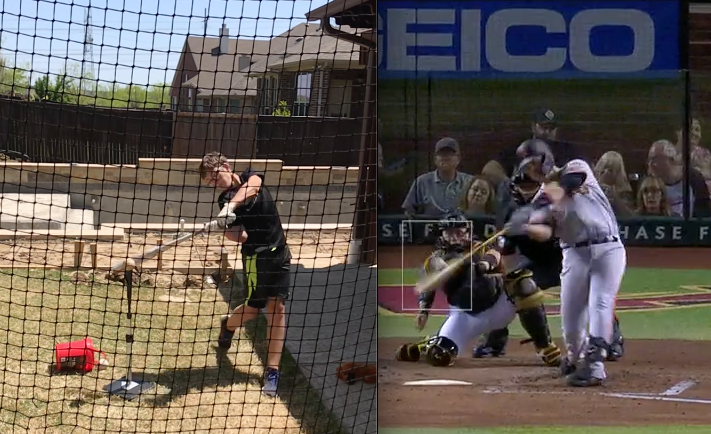
Examples of Successful Batters
We can learn a lot by studying successful batters and their swing mechanics. Take Mike Trout, for instance. He’s famous for his fast hands and his skill at adjusting to various pitch speeds. By keeping his hands back and staying balanced, he’s able to hit the ball solidly on a regular basis.
Let’s take Miguel Cabrera as an example. He has a swing that is both smooth and powerful. He uses a slight leg kick to time his swing and generates a lot of power from his lower body. By studying these hitters, we can gain valuable insights into what makes their swing mechanics effective.
Popular Methods Used by Pro Players
Pro batters often employ certain methods to enhance their swing mechanics. These involve holding their hands back, keeping a balanced stance, and altering their timing depending on the speed of the pitch. By practicing these methods, you can better your own swing and make more regular contact with the ball. For more tips, check out this guide on mastering the perfect baseball swing timing.
Tracking Your Progress
It’s important to keep an eye on how you’re doing so you can see where you’re getting better and where you need to put in more work. Here are some ways you can track your progress.
Keeping an Eye on Your Contact Rate
Your contact rate is a key metric to keep an eye on. This is the percentage of pitches you hit during practice or games. Keep a record of your contact rate over time to see if it’s getting better. This can help you spot trends and areas where you need to put in more work, such as improving ball vision and tracking.
Not only can you monitor your contact rate, but you can also keep an eye on other statistics such as exit velocity and launch angle. These figures can offer further understanding of how well your swing mechanics are working.
How Technology Helps in Measuring Success
Technology can be a great asset in measuring your progress. Devices such as swing analyzers and radar guns can be used to track metrics such as bat speed, exit velocity, and launch angle. These tools can give you a detailed analysis of your swing mechanics and help you make more educated adjustments. For more tips, check out our guide on swing plane tips for better hits.
In addition, you can use video analysis software to closely examine your swings and find areas that need improvement. Use this technology to monitor your progress and make changes based on the data.
Wrapping Up: Boosting Your Baseball Performance
Working on your swing mechanics and adapting to varying pitch speeds can greatly enhance your contact rate and overall game. By examining your existing mechanics, doing targeted drills, and studying professional hitters, you can make substantial improvements to your swing.
Summary of Main Takeaways
Grasping the significance of swing mechanics and pitch speed is vital for achieving regular contact.
By recording and scrutinizing your swings, you can pinpoint both your strong and weak points.
Handy advice such as holding your hands back and altering your stride can enhance your swing.
Drills such as tee drills, soft toss, and live pitching practice are indispensable for polishing your mechanics.
Studying professional hitters can offer valuable insights and techniques.
Further Steps for Ongoing Improvement
To keep on improving, ensure to practice frequently and monitor your progress. Utilize technology to gauge your improvement and make adjustments to your swing based on data. Above all, remain focused and keep refining your mechanics to become a superior hitter. For more insights, consider reading this article on the future of hitting.
Commonly Asked Questions
How can I get better at reacting to different speeds of pitches?
Getting better at reacting to different pitch speeds involves practicing with different speeds of pitches. Do drills like soft toss and live pitching practice to work on your timing and hand-eye coordination. Keep your balance and make quick adjustments based on how fast the pitch is going. For more tips, check out these youth tips for mastering swing timing.
What are some frequent errors batters make with swing mechanics?
Typical errors include not holding hands back, having an inconsistent stride, and not staying balanced. These problems can result in weak hits or missed swings. Concentrate on keeping good form and making solid contact with each swing to prevent these errors.
How often should I practice these drills to see improvement?
Consistency is key to improvement. Aim to practice these drills at least a few times a week. The more you practice, the more you will develop muscle memory and improve your swing mechanics.
Are these tips only for advanced players, or can beginners benefit from them as well?
Players of all skill levels can benefit from these tips. Beginners can use them to develop good swing mechanics from the start, while advanced players can use them to fine-tune their skills and adjust based on pitch speed.
How can I tell if I’m getting better at making contact?
Monitor your contact rate over time to see if you’re getting better. Keep track of your contact rate during both practice and games. You can also use tools like swing analyzers and radar guns to measure things like bat speed and exit velocity. This information can help you understand how you’re doing and make smart adjustments.
For those who are searching for an all-in-one method to get batters on-time without sacrificing swing performance, the On-Time Hitter 2.0: Engineering The Alpha online video mini-course is a great option. This course offers easy-to-follow instructions and tested methods to enhance your swing mechanics and contact rate.

Leave a Reply