Baseball is more than a game of bat and ball. It’s a game of skill and technique. For young players, learning the right drills can make all the difference. It can set them up for a lifetime of success in the game.
Important Points
Hitting drills can greatly enhance a young player’s abilities and self-assurance.
Drills suitable for their age can help players hone their skills in a systematic manner.
The most effective drills blend fun and education to maintain children’s interest.
Regular practice and positive feedback are essential for skill improvement.
Drills should be flexible to suit each player’s individual requirements and level of skill.
Getting the Ball Right: The Significance of Appropriate Baseball Hitting Drills for Youngsters
Baseball is a game that requires accuracy, timing, and talent. For young players, mastering the correct way to hit can be a game-changer. The appropriate drills can assist them in enhancing their hand-eye coordination, timing, and power. Most importantly, they make the game more fun and satisfying.
Why are Hitting Drills Important for Young Players?
It is essential to do hitting drills as they assist young players in developing the basic skills necessary for playing baseball. These drills concentrate on elements such as stance, grip, swing mechanics, and follow-through. By practicing these drills on a regular basis, players can enhance their precision and power, making them more self-assured when they’re at the plate.
Furthermore, drills teach discipline and a good work ethic. Kids learn that practice makes perfect, which is a valuable lesson in life and in baseball. Drills can also be a fun way to bond with teammates and coaches, building a sense of camaraderie and teamwork.
Choosing the Right Drills: Tailoring Training to Age and Experience
When selecting drills, it’s crucial to consider both the age and the skill level of the player. A beginner who is 8 years old, for instance, might start with the basics, like tee work and soft toss drills. A 12-year-old with more experience, on the other hand, might be ready for more complex drills, such as the controlled fall drill or track and catch.
Drills that are suitable for the player’s age ensure that they are pushed, but not to the point of being overwhelmed. They allow for skills to be developed gradually and help to prevent the player from becoming frustrated. By making sure that drills are adapted to suit the needs of the player, coaches can ensure that each child progresses at a pace that is suitable for them and that they remain motivated to improve.
For the little ones (8-9 years old): Stick to the basics like tee work and soft toss.
For those in the middle (10-11 years old): Start to incorporate more dynamic drills like controlled fall and track and catch.
For the older kids (12 years old): Concentrate on refining techniques and adding complexity to drills.
The Top 4 Youth Baseball Hitting Drills
Now that we know how important hitting drills are, let’s get into some of the top ones for youth players. These drills are designed to be effective and fun, helping young athletes to build their skills while enjoying themselves.
Working with the Tee
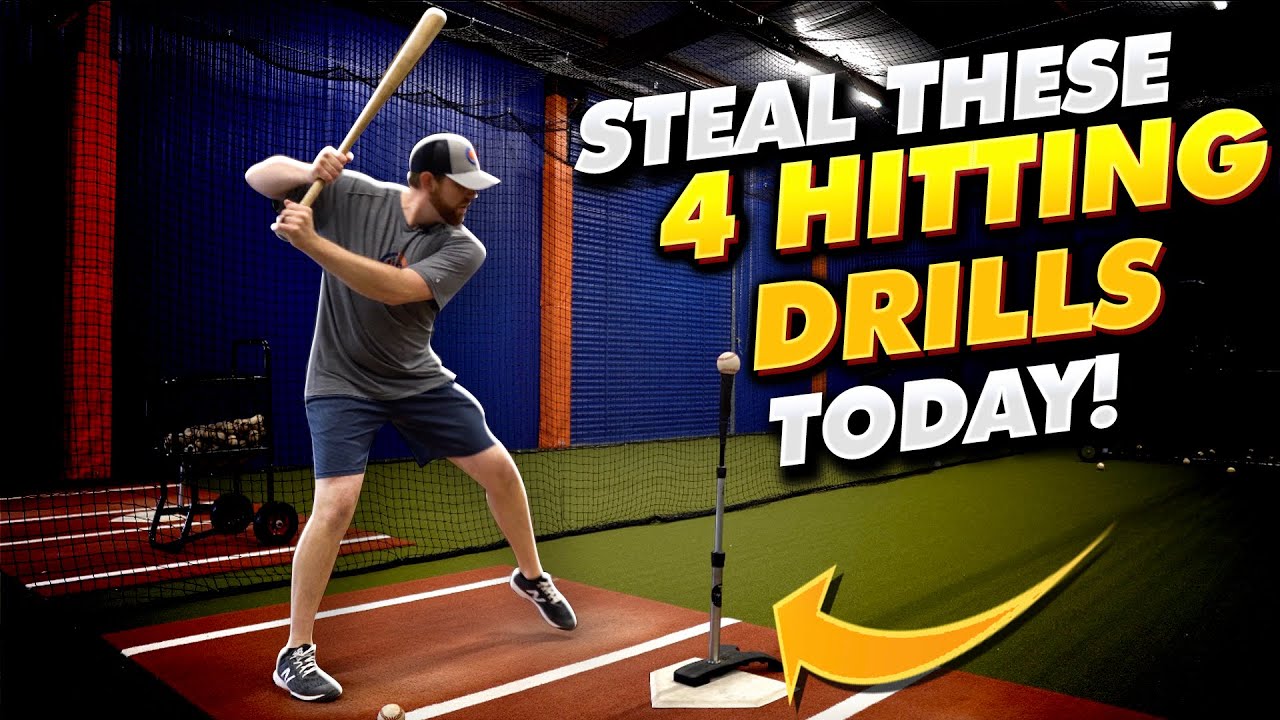
Working with the tee is among the most basic drills in baseball. It allows players to pay attention to their stance, grip, and swing mechanics without the confusion of a moving ball. When players hit a still ball off a tee, they can focus on making good contact and creating a reliable swing. For coaches looking to enhance their team’s performance, the Complete Hitter Program offers valuable insights.
Easy Toss
Easy Toss is a basic but efficient drill that aids players in improving their timing and hand-eye coordination. A coach or teammate tosses the ball to the hitter from a close range, enabling them to practice their swing in a controlled setting.
Guided Fall Drill
The guided fall drill is a training method that teaches players how to utilize their body mass and momentum to produce power in their swing. By doing this drill, players can learn how to distribute their weight effectively and make more forceful, significant hits. For more advanced techniques, check out these powerful hitting techniques to further enhance your game.
This drill requires players to start in their batting stance and take a small step forward as they swing. The focus is on maintaining balance and using their lower body to hit the ball. For more powerful hitting techniques, players can explore additional drills and exercises.
Follow and Catch
The follow and catch drill is designed to enhance a player’s capacity to follow the ball with their eyes and make precise contact. In this exercise, a coach or fellow player throws a series of pitches, and the player must concentrate on tracking the ball from the moment it leaves the pitcher’s hand to the point of contact.
This drill is especially beneficial for assisting players in improving their timing and focus, which are critical skills for effective hitting.
Hit the Square: A Fun Drill for Accuracy
The Hit the Square drill is a fun exercise that helps improve accuracy and focus. In this drill, players are tasked with hitting a specific target that’s marked on a fence or net. The objective is to consistently hit the “square” with the ball, which aids in refining the player’s swing mechanics and precision.
This drill not only hones precision but also introduces a competitive aspect. Players can compete to see who hits the target most often, injecting a dose of thrill and incentive to training sessions.
“Hit the Square is an excellent drill to ensure your swing is on target. It’s like aiming for the bullseye, and when you hit it, it’s a great feeling!”
Players can learn to better control their swings and make necessary adjustments by focusing on a target. This drill is great for developing the accuracy needed for consistent hitting.
Hitting to the Opposite Field for Flexibility
Hitting to the opposite field is a crucial skill that allows players to be more flexible at the plate. By learning to hit to the opposite field, players can adjust to various pitch locations and become less predictable to the other team.
Fast Bat Drill for Enhanced Speed
The Fast Bat Drill is meant to aid players in boosting their bat speed, a critical component for making solid contact with fast pitches. This drill requires players to concentrate on making fast, controlled swings while keeping their balance and form.
For this drill, players can use a bat that is lighter than what they usually use or even a broomstick to practice their swings. The aim is to swing as fast as they can while still using the correct technique.
Upper-Body Strength with the Top Hand Drill
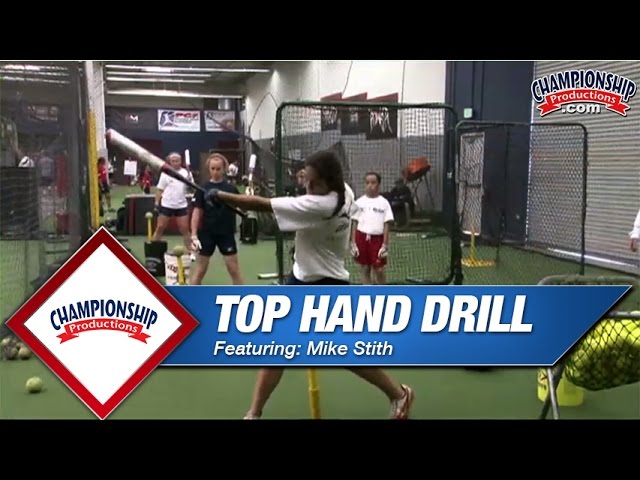
Looking to build upper-body strength and improve bat control? The Top Hand Drill is perfect for that. It isolates the top hand so players can concentrate on generating power and keeping a consistent swing path.
Setting Hitting Goals with Line Drive Charting
Line Drive Charting is a way to set and keep track of hitting goals. During practice, players record their line drives with the goal of increasing the number over time. This drill promotes consistency and helps players concentrate on making solid contact. For those looking to enhance their skills further, exploring powerful hitting techniques can be beneficial.
Dance and Hit: Groovy Baseball Drills
Adding a little rhythm to your baseball practice can make hitting drills more fun and interesting. Dance and Hit lets players groove to a beat or rhythm while they practice their swings, which can help improve their timing and coordination.
Arm Batting Practice: Perfecting Your Swing
Arm Batting Practice is all about perfecting the swing mechanics by focusing solely on the arm movements. This drill is designed to make players more conscious of their swing path and to enable them to make the necessary tweaks for improved contact. For more tips on enhancing your swing, explore these powerful hitting techniques.
Beat the Coach: A Friendly Rivalry
Beat the Coach is a competitive drill that motivates players to surpass their coach in hitting challenges. This friendly rivalry encourages players to strive for improvement and develop their skills in an enjoyable way.
Advice for Coaches for Successful Execution
For these drills to be effective, coaches need to be strategic in their approach. It’s crucial to foster a supportive and encouraging atmosphere where players are motivated to get better. Here are a few suggestions to help coaches maximize these drills.
Tailoring Drills to Each Player
Each player is different, with their own strengths and areas that need improvement. Tailoring drills to fit each player’s needs can help them advance more efficiently. Coaches should watch their players closely and provide individualized feedback and corrections.
For instance, if a player has trouble with timing, concentrate on drills that stress rhythm and coordination. Coaches can assist players in achieving their maximum potential by customizing drills to their specific needs. For more insights on enhancing player focus, check out these vision training tips.
Striking a Balance Between Basics and Enjoyment
While honing in on the basics is key, it’s just as important to make practice sessions enjoyable and engaging. If players find the drills fun, they’re more likely to stay motivated and committed. Adding in games and friendly competitions can make practice sessions a lot more fun. For more ideas on how to enhance your sessions, explore these coaching tips for young hitters.
For example, you can make a hitting drill more fun and competitive by turning it into a game where players earn points for hitting certain targets.
Encouragement and Constructive Criticism
Encouragement and constructive criticism are crucial to helping players enhance their skills. Coaches should put an emphasis on recognizing the players’ strengths and providing advice on areas that need improvement.
Supportive words and commendation for exertion can elevate players’ assurance and excitement. Keep in mind, the objective is to establish a helpful climate where players feel motivated to learn and develop.
Creating Skills That Last Beyond Drills
Inspire players to practice consistently, with an emphasis on quality rather than quantity.
Assist players in setting achievable goals and monitoring their improvement over time.
Guide players in adjusting their skills to suit a variety of game scenarios.
Instill a growth mindset by placing a premium on effort and development.
Guarantee that players have a comprehensive understanding of the game.
Developing enduring skills in baseball is about more than just doing drills. It’s about establishing a solid foundation that players can fall back on throughout their baseball career. By emphasizing consistency, flexibility, and a growth mindset, young athletes can develop into well-rounded players who are ready for any obstacle on the field.
Building skills that will last a lifetime can be achieved by motivating players to practice consistently. The secret to developing skills lies in consistency. The focus should be on practicing effectively, not just spending a lot of time on drills. This involves focusing on the technique and making necessary changes.
Promoting Regularity in Training
For promoting regularity, establish a fixed training schedule that the players can adhere to. Motivate them to practice diverse drills to maintain the interest and challenge. Moreover, assist players in setting achievable objectives and monitor their growth over time. This will provide them a feeling of achievement and inspire them to continue enhancing. For additional guidance, consider exploring online training programs designed specifically for young players.
Translating Skills to Real-Game Scenarios
Skills developed during drills should translate to real-game scenarios. Teach players how to use what they’ve practiced in real games. This involves understanding a variety of game situations and making quick decisions on the field. Encourage players to think both critically and creatively during games, using their skills to navigate through challenges.
A player who has practiced hitting to the opposite field, for instance, should be able to identify when it’s beneficial to use that skill in a game. This ability to adapt is what distinguishes exceptional players and enables them to perform well under pressure.
Fostering a Developmental Attitude in Youth Athletics
It’s critical to foster a developmental attitude in young sportsmen and women. This entails prioritizing effort, progress, and resilience over just outcomes. Motivate athletes to see errors as chances to learn and to continually strive for improvement.
Coaches who foster a growth mindset in their players can instill a passion for the game and a readiness to put in the effort to reach their objectives. This way of thinking will benefit them not only in baseball but in every area of life.
How can drills enhance my child’s batting abilities?
Drills offer a systematic approach to practice and perfect certain skills. By concentrating on elements such as timing, coordination, and swinging techniques, drills enable players to build regularity and self-assurance when batting. Frequent practice with drills can result in visible enhancements in a player’s batting skills.
When is the right time for my kid to start these drills?
Kids can begin basic hitting drills around the ages of 7 or 8. It’s crucial to select drills that are suitable for their age and keep them interested. As they get older and improve, they can start doing more advanced drills to push their abilities even more.
What do I do if my kid finds the drills either too simple or too challenging?
If the drills seem too simple, try to incorporate more challenging aspects, such as increasing the speed or complexity of the drill. If they seem too difficult, break the drill down into smaller parts and focus on mastering each part before moving on. The goal is to keep the drills challenging but attainable to keep motivation high.
How often should hitting drills be practiced each week?
It’s typically advised to work on hitting drills 2-3 times a week, for roughly 30-45 minutes each time. This gives enough time for consistent practice without tiring out the player. The emphasis should be on effective practice, where players are actively involved and dedicated to enhancing their abilities. For more tips on improving young hitters, check out our guide on increasing line drives.
What equipment will I need to perform these drills?
You will need some basic equipment such as a bat, ball, tee, and net for most of these drills. Other equipment like a soft toss machine or practice balls can be useful but aren’t required. The aim is to create a safe and effective practice space where players can concentrate on improving their skills. For more comprehensive training, consider exploring The Complete Hitter Program.
Can you adjust these drills for different skill levels?
Of course, these drills can and should be adjusted to fit each player’s skill level. By modifying the speed, distance, or complexity of the drill, it can be customized to a player’s abilities. Coaches should watch their players and offer individualized feedback and adjustments to make sure they’re being challenged at the right level. For more ideas, consider exploring online training programs for kids that provide structured guidance tailored to different skill levels.


Leave a Reply