In the world of little league baseball, there’s nothing more thrilling than hitting a ball with such force that it flies across the field. Mastering powerful hitting techniques not only improves game play, but also instills a sense of self-assurance in young athletes. In this article, we’ll delve into how to increase distance in kids’ baseball by concentrating on potent hitting techniques and growth.
Overview
For a strong swing, the right grip and stance are necessary.
Regular practice and drills can improve hitting strength and precision.
Core strength and agility workouts are essential for young athletes.
Mental resilience is a significant factor in successful hitting.
Adjusting techniques to suit individual strengths can lead to improved outcomes.
Learn About the Key Factors in Building Powerful Hitting for Children’s Baseball
Before delving into the techniques, it’s important to understand the basic factors that contribute to powerful hitting. These include the player’s physical condition, their mental state, and the regularity of their practice. Let’s delve deeper into these.
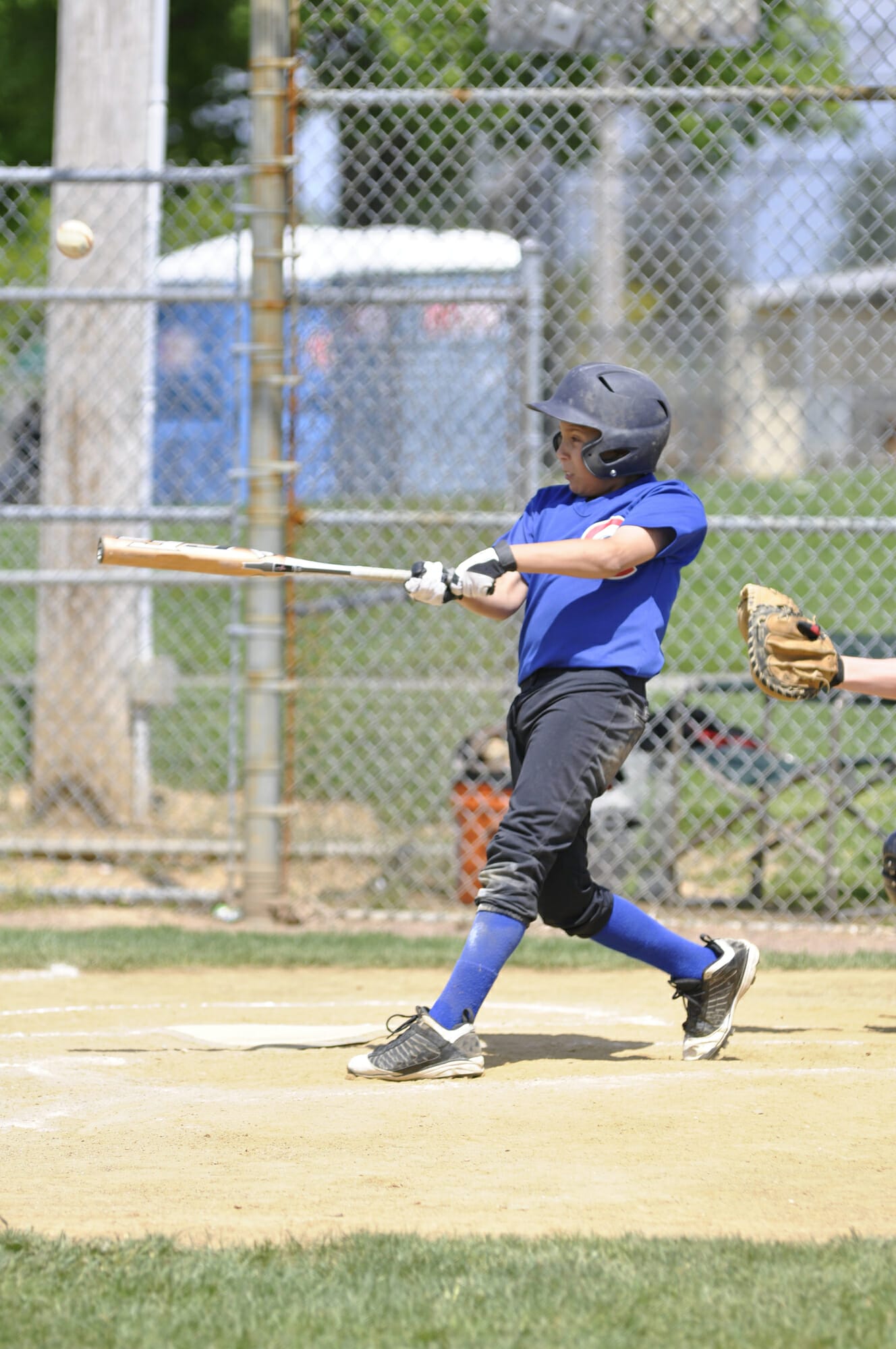
“Coaching Youth Baseball …” from coachingyouthbaseball.com and used with no modifications.
The Importance of a Powerful Swing
A powerful swing is the cornerstone of successful hitting. It’s not just about power; it’s about how you use it. A properly performed swing can lead to improved ball contact, leading to more distance and precision. For children, learning the fundamentals of a powerful swing early can set them up for a lifetime of success in baseball.
The grip is a crucial part of a powerful swing. The way a player holds the bat can be a game-changer. A grip that is firm but not too tight gives the player better control and speed. The stance is just as critical. When a player has a balanced stance, they have stability and can generate power from their legs and hips.
Importance of Regularity and Self-belief
Regularity in practice is another key factor. Regular practice enables young players to develop muscle memory, which makes their swings more natural and fluid. This regularity also builds self-belief, as players become more at ease and familiar with their technique.
While it’s often overlooked, confidence is a crucial factor in sports. If players have faith in their skills, they’re more likely to excel when the stakes are high. Coaches and parents can foster this confidence by giving positive reinforcement and support.
Key Hitting Techniques to Increase Distance
Increasing the distance a ball travels isn’t about swinging harder, it’s about improving your hitting techniques. This involves a mixture of skill, timing, and mechanics.
Improving Bat Grip and Stance
As previously discussed, the grip and stance are fundamental components of a powerful swing. Let’s explore further on how to enhance these elements with tailored training for different age groups.
When it comes to gripping the bat, it’s best to hold it with your fingers rather than your palms. This gives you more control and flexibility. The knuckles of your top hand should line up with the knuckles of your bottom hand. This keeps the bat level throughout the swing.
Adopt a balanced and athletic stance. Keep your feet shoulder-width apart and slightly bend your knees. Distribute your weight evenly and be ready to shift it forward when you swing. This stance is stable and can generate power.
Mastering Timing and Rhythm
Timing and rhythm are key to a great swing. It’s important for players to learn how to sync their movements to hit the ball at just the right time.
Players can improve their ability to predict where the ball is going and adjust their swing through drills that focus on different pitches. These drills expose them to various speeds and angles.
Swing fluidity is part of rhythm. A swing that is smooth and continuous is better than one that is rushed and jerky. To develop a steady rhythm, players can practice with a metronome or to music.
Strength Building with Weighted Bat Drills
Weighted bat drills are a great way to build strength in young hitters. They help players develop the muscles they need for a powerful swing. The idea is to practice swinging with a bat that’s a little heavier than usual to increase muscle endurance and strength.
Begin by adding these exercises to your routine training sessions. Let your players take a few hits with a heavy bat, while concentrating on keeping the right form and balance. Then, have them switch back to their usual bat. This change can enable them to notice the difference in speed and control, thus making their swing more forceful. For more insights, check out how to hit for power in youth baseball.
Make sure the bat isn’t too heavy, which can cause bad form and even injuries. Usually, a bat that’s about 10% heavier than their regular one is enough.
Drills for Better Reaction Time to Improve Timing
For young players to hit the ball solidly, it’s important to work on their reaction time. Drills to improve reaction time are specifically created to help players quickly identify and react to various types of pitches.
One basic exercise includes using a pitching machine set at a variety of speeds and angles. Players should concentrate on identifying the type of pitch and responding appropriately. Another valuable exercise is the “soft toss” drill, where a coach or teammate softly tosses balls at different speeds for the player to hit.
These exercises are designed to help young players improve their reaction times and hand-eye coordination, both of which are crucial for becoming a good hitter. With regular practice, they’ll see a marked improvement in their timing and feel more confident when they step up to the plate.
Why Physical Conditioning is Important for Young Athletes
Physical conditioning is an important part of a young athlete’s development. It can help improve their overall performance and reduce their risk of injury. For baseball players, there are specific exercises that can help improve the muscles and movements that are needed for hitting.
Building a strong core is essential for producing power in a swing. Incorporating exercises such as planks, sit-ups, and Russian twists into regular training routines can help build this strength and maximize the power of the swing. For more tailored training, check out coaching tailored for different age groups.
Not only is core strength important, but so is agility and coordination. Drills that improve agility, like ladder and cone drills, can help a player move more quickly and efficiently. Coordination can be improved with exercises like juggling or dribbling a soccer ball, which can improve hand-eye coordination.
Exercises to Strengthen the Core
It’s crucial for young baseball players to build a strong core. The core muscles are important for stabilizing the body during a swing and transferring energy from the legs to the upper body.
Core-strengthening exercises like planks, side planks, and bicycle crunches can be done anywhere, whether at home or at the gym, and don’t require much equipment. The most important thing is to keep at it, so encourage your young athletes to make these exercises a part of their everyday routine. For additional tips on improving athletic performance, check out this guide on how to increase your exit velocity.
Training for Flexibility and Coordination
Flexibility and coordination are essential for achieving success in baseball. Flexibility drills assist players in moving swiftly and altering direction effectively, while coordination activities enhance their capability to follow and strike the ball. For more tips, explore these quick reflexes training methods.
Cones or markers can be used to set up agility drills such as shuttle runs and ladder drills. These drills should emphasize rapid foot movements and directional changes. Hand-eye coordination can be improved with coordination exercises like playing catch or using a reaction ball.
The Role of Attitude in Kids Baseball
Although physical abilities are crucial, the psychological side of baseball is equally significant. A good attitude and concentration can have a huge impact on a player’s game.
Teaching young athletes to build mental resilience can aid them in dealing with high-stress scenarios and recovering from errors. Techniques such as visualization, where players envision their own success, can increase self-assurance and lessen nervousness.

Developing Mental Strength When Batting
It’s vital for budding hitters to have mental strength, particularly when they’re up against tough pitchers or in high-stress scenarios. To build this strength, they need to cultivate resilience and the skill to remain concentrated despite pressure.
An efficient method is to instruct players to concentrate on the process rather than the result. Encourage them to focus on their swing techniques and strategy, instead of being concerned about getting a hit. This change in focus can lower stress and enhance performance.
Furthermore, it’s important for players to see failure as a chance to grow. Let them know that even the best in the game face obstacles, and it’s their reaction that counts.
Promoting a Positive Attitude and Adaptability
Keeping a positive attitude is crucial for sustaining enthusiasm and joy in the game. Coaches and parents need to give constructive criticism and applaud minor victories to keep young players interested.
It’s also crucial to be flexible, both in body and mind. Athletes should be willing to experiment with new strategies and modify their game plan as necessary. This adaptability can result in progress and enhancement over time.
Wrapping Up: Creating a Well-Rounded Batting Strategy
To wrap up, cultivating potent batting methods in kids’ baseball necessitates a well-rounded strategy that merges physical training, technical abilities, and a resilient mentality. By concentrating on these aspects, young athletes can tap into their potential and relish the sport to the utmost. For more insights on improving young hitters, check out these coaching tips for better hits.
Customizing Techniques to Match Each Player’s Abilities
Each player brings something different to the table, with a variety of skills and areas where they could improve. Coaches need to adapt their techniques to each player’s specific needs, allowing them to enhance their skills while also working on any areas where they might be lacking.
Creating a fun and supportive learning environment is the key to helping young athletes excel and develop a lifelong love for baseball. Remember, the ultimate goal isn’t just to win games, it’s to inspire a passion for baseball and teach valuable life skills along the way. For more insights, explore these youth sports coaching tips.
Creating a Fun Learning Atmosphere
It’s essential to create a fun learning atmosphere for young baseball players. It’s not just about teaching skills but also about instilling a passion for the game. This can be done by making practices enjoyable and interactive, where players feel inspired and driven to get better.
Making practice sessions fun by adding games and challenges can make learning more engaging. Friendly competitions between players can be a great way to help them improve their skills while enjoying themselves. Coaches should focus on positive reinforcement, recognising improvements and promoting team spirit.
Common Questions and Answers
Many parents and coaches have questions about how to best help their young baseball players. Here are some of the most frequently asked questions and their answers to help you out. For more insights, check out these youth sports coaching tips.
This FAQ section is designed to offer helpful tips and insights to assist young athletes in achieving their maximum potential on the field.
How can I assist my child in developing a powerful swing?
If you want your child to develop a powerful swing, concentrate on the fundamentals: grip, stance, and swing mechanics. Encourage them to practice regularly, emphasizing technique over simply hitting the ball hard. To emphasize these basics, use drills like tee work and soft toss drills.
Furthermore, think about adding strength training routines that focus on the core and upper body. Having a strong core is key for creating power in a swing. Workouts like planks and medicine ball throws can be helpful.
What are some typical errors to avoid during batting practice?
A frequent error during batting practice is placing too much emphasis on power and not enough on method. Encourage players to focus on making solid contact with the ball rather than attempting to hit a home run. This will assist them in developing a consistent and dependable swing.
One common error is not taking the time to practice hitting various kinds of pitches. Players should work on hitting fastballs, curveballs, and change-ups to enhance their versatility and timing. This kind of variety will help them be ready for anything that comes their way during a game.
Can certain drills increase my kid’s hitting power?
Absolutely, there are a variety of drills that can boost hitting power. One such drill is the “heavy bat” drill. In this drill, players practice their swing with a bat that is slightly heavier than what they’re used to. This helps build strength and endurance, which in turn can lead to increased bat speed and power.
Yet another drill is the “tee drill,” which emphasizes hitting the ball off a stationary tee. This drill gives players the chance to focus on their swing mechanics and adjust their stance and grip for maximum power. For additional tips on improving focus and watching the ball, check out these vision training exercises.
Does the bat size matter for young players?
It is essential for young players to have the correct bat size. A bat that is too heavy or too long can affect a player’s swing and result in bad mechanics. On the other hand, a bat that is too light may not offer enough power.
When it comes to picking a bat, the player’s height, weight, and strength should be taken into account. A useful guideline is to go for a bat that the player can comfortably grip with one arm outstretched. This guarantees they have the necessary control and power for successful hitting.
Does mindset impact how well you hit?
Without a doubt, mindset is a major factor in how well you hit. Being positive and focused can improve a player’s ability to concentrate and deliver when it counts. Encourage players to imagine doing well and practice positive self-talk.
It’s also crucial to instill mental strength. Teaching kids how to manage disappointments and stay on track with their objectives is important. By fostering a tough mental attitude, young ball players can enhance their game and have more fun while playing.
How can you easily teach children about swing timing?
For teaching children about swing timing, it’s beneficial to use drills that focus on rhythm and coordination. The “pitch recognition” drill is a great one to use, as it allows players to practice recognizing different pitches and timing their swings correctly.
Example: “Use a pitching machine or have a coach throw a variety of pitches. Prompt the player to concentrate on the ball’s path and time their swing to make a solid connection. For more insights, explore these pitch recognition strategies to enhance their skills.”
A different technique is to use a metronome or music during practice to assist players in establishing a steady rhythm in their swing. This can enhance timing and make their swing smoother and more successful.
How frequently should kids work on their hitting?
Regular practice is the secret to improving hitting abilities. In an ideal world, kids should work on their hitting several times a week, concentrating on different parts of their swing during each session. This guarantees that they acquire a diverse range of skills, including vision training and focus.
Nevertheless, it’s crucial to strike a balance between practice and relaxation, as well as other activities. Overdoing it on the practice can lead to burnout and exhaustion, so it’s important to schedule in days off and promote involvement in other sports or activities for well-rounded growth.
It’s common for young baseball players to have difficulty hitting the ball with strength and distance. This can be discouraging and can affect their self-esteem and love for the sport. Nevertheless, there are a number of methods and growth tactics that can assist young players in enhancing their hitting strength and maximizing their baseball distance.

Leave a Reply