Main Points
Balance, stability, and control in baseball pitching are significantly influenced by the lead arm.
Accuracy can be improved and injuries prevented with correct lead arm mechanics.
Young pitchers can master lead arm action through interactive drills and visual aids.
Common errors include over-rotating the upper body and incorrect arm angles.
Building trust, providing individualized feedback, and maintaining a positive environment are all necessary for effective coaching.
The Importance of the Lead Arm in Pitching
The lead arm is critical in baseball pitching. It’s not just the throwing arm that matters; the lead arm is essential for balance, stability, and control. If the lead arm isn’t used correctly, young pitchers may have difficulty with accuracy and could even be injured. As a result, understanding and mastering the lead arm’s mechanics is critical.
Step-by-Step Breakdown of Lead Arm Mechanics
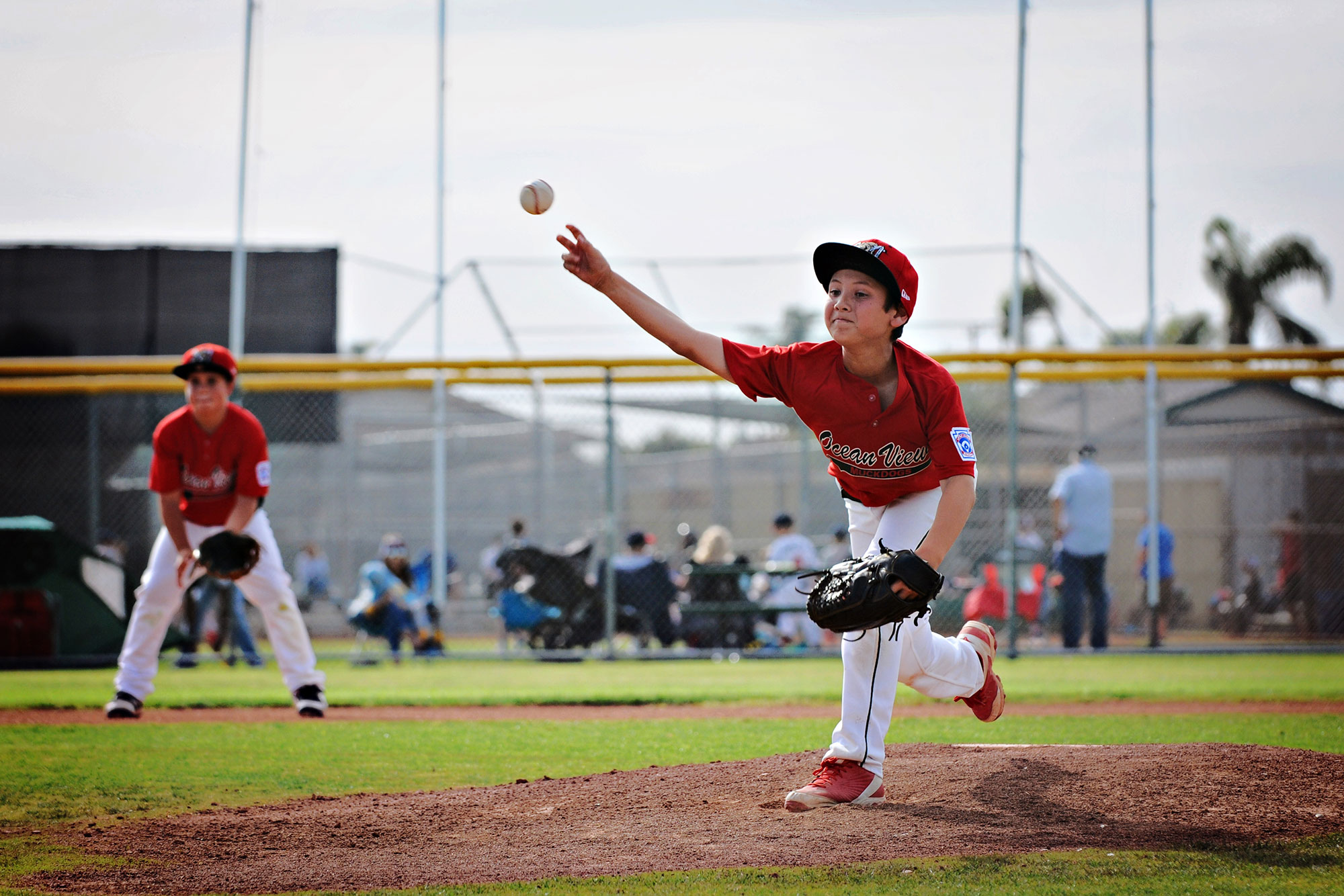
Let’s break down the mechanics of the lead arm step-by-step. First, when a pitcher starts their motion, the lead arm should be aligned with the target. As they move through their wind-up, the lead arm needs to stay strong and pointed towards the plate. This helps maintain balance and ensures the pitch is directed accurately.
Then, when the throwing arm is moving forward, the lead arm should start pulling back towards the body. This action creates power and keeps the pitcher’s body in line. Lastly, the lead arm should end up near the pitcher’s side, finishing the movement smoothly.
Why the Lead Arm Matters in Pitching
Keeping Your Balance and Staying Stable
When it comes to balance and stability during a pitch, the lead arm plays a crucial role. If a pitcher uses their lead arm the right way, it helps them stay in a straight line towards their target. This is key for making consistent pitches and avoiding falling off to the side, which can result in throws that are off target.
Precision and Management
Not only does the lead arm provide balance, but it also plays a crucial role in precision and management. When pitchers point their lead arm towards the target and pull it back at the right moment, they can make their throws more accurate. This method helps them hit the corners of the strike zone and avoid wild throws. For more tips on improving accuracy, check out these youth baseball training exercises.
Teaching Kids the Role of the Lead Arm
Showing Them the Right Way
When it comes to teaching kids the right way to use their lead arm when pitching, it’s best to start with demonstrations. Show them how to line up their lead arm with the target and keep it there throughout the wind-up. You can use slow-motion videos or demonstrate it to them in person to really drive home the key points of the motion.
Engaging Practice for Perfection
Engaging practice sessions are an excellent method to assist young pitchers in perfecting their lead arm action. The “mirror drill” is a highly effective practice method. Instruct the pitcher to stand in front of a mirror and practice their motion while observing their lead arm. This visual feedback can assist them in making adjustments and comprehending the correct mechanics.
Implementing Visual Aids and Tools
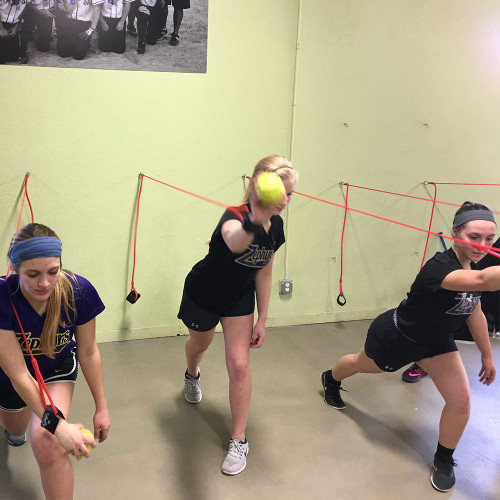
Visual aids and tools are also a great help. For instance, colored tape or markers can be used to emphasize the target area. This can assist pitchers in concentrating on their lead arm alignment. Furthermore, resistance bands can be utilized to fortify the lead arm and support the right pulling motion.
Fixing Frequent Errors
Upper Body Over-Rotation
A frequent error young pitchers make is over-rotating their upper body. This occurs when the lead arm swings too far back, causing the pitcher’s body to twist excessively. To fix this, stress the importance of keeping the lead arm aligned with the target and pulling it back in a controlled manner.
Incorrect Arm Positions
Another common error is incorrect arm positions. Pitchers may lower their lead arm too much or lift it excessively, which can throw off their balance and precision. Remind them to hold their lead arm at the height of their shoulder and to keep the same angle throughout the entire motion.
Incorrect Arm Positions
One common error is incorrect arm positions. Pitchers may sometimes lower their lead arm too much or lift it excessively, which can throw off their balance and precision. Remind them to keep their lead arm at the same height as their shoulder and to keep the angle consistent throughout the action.
If a pitcher’s arm angle is off, it can lead to a domino effect of problems, messing up their whole technique. One way to correct this is by showing young pitchers videos of their pitching and pointing out where their arm position needs improvement. Show them the right angle and have them practice it over and over until it’s automatic.
Using video analysis to spot incorrect angles
Showing the right way to position the arm
Practicing with an emphasis on keeping the shoulder at the correct height
Problems with Timing
Timing is essential in pitching. If the lead arm and the throwing arm aren’t working together, it can result in bad pitches and even injuries. Timing problems usually happen when pitchers hurry their motion or don’t pull back their lead arm at the correct time.
If a pitcher is having trouble with timing, it can be helpful to break the pitching motion down into smaller parts. Practice each part slowly, making sure that the lead arm and the throwing arm are moving together. A metronome or counting out loud can help pitchers keep a steady rhythm.
Break down the pitching motion into segments
Practice slowly to ensure synchronization
Use a metronome or counting for consistent rhythm
Coaching Tips for Effective Training
Building Trust and Communication
Effective coaching starts with building trust and open communication. Kids need to feel comfortable with their coach to absorb feedback and improve. Always be patient and positive, focusing on constructive criticism.
Young pitchers should be encouraged to ask questions and express any concerns. This dialogue can help you understand their perspective and adapt your coaching methods to meet their needs. Trust and communication are the foundation of a successful coach-player relationship.
Personalized Tips and Tweaks
Each little pitcher is different, and so are their requirements. Give personalized tips to address specific areas that need to be improved. Don’t give generic advice; instead, concentrate on the specific parts of their lead arm mechanics that need to be worked on. For additional guidance, check out these fun baseball coaching tips.
Pay attention to each pitcher’s individual mechanics
Give clear, practical advice
Modify coaching techniques to fit each player’s needs
For example, if a pitcher has trouble maintaining their lead arm at shoulder level, concentrate on exercises that stress this point. Tailored coaching greatly impacts their growth.
Keeping the Learning Atmosphere Positive
It’s essential to keep the learning atmosphere positive for young athletes. Even the smallest progress and victories should be celebrated. This kind of support will help increase their confidence and inspire them to continue to get better.
Moreover, foster a supportive atmosphere where mistakes are seen as opportunities for learning. Encourage teamwork and camaraderie among the players. A positive environment promotes growth and enjoyment in the sport.
Expert Exercises to Refine Lead Arm Techniques
After children pitchers have understood the fundamentals, it’s appropriate to bring in expert exercises to refine their lead arm techniques. These exercises concentrate on honing their abilities and guaranteeing uniformity in their pitching motion.
Although more complex drills can be more difficult, they are crucial for continued progress. Regular practice with these drills will allow pitchers to develop muscle memory and improve their overall performance.
Strength and stability exercises using resistance bands
Mirror drills for visual self-correction and feedback
Interactive learning through partner-assisted drills
Resistance Band Exercises
Resistance band exercises are a great way to build strength and stability in the lead arm. They target the muscles used in the pitching motion, helping to enhance endurance and lower the chance of injury. For more tips on youth baseball training, check out this guide on youth baseball training exercises.
For resistance band workouts, connect the band to a secure object and take the opposite end in your lead arm. Do a variety of movements that imitate the throwing motion, like pulling the band back towards your body. Do these workouts often to gain strength. For more tips on improving your training, check out these youth baseball training exercises.
Visual Feedback Through Mirror Drills
When a pitcher practices in front of a mirror, they can see their lead arm mechanics and make adjustments in real-time. This immediate visual feedback is the benefit of mirror drills. The pitcher should stand in front of a mirror and go through their pitching motion while watching their reflection.
This exercise helps pitchers become more conscious of their arm positioning and motion. It also enables them to make immediate corrections, reinforcing the proper mechanics through repetition.
Drills With a Buddy
Drills with a buddy involve another person, such as a coach or teammate, to provide feedback and assistance. These drills can be highly effective in correcting lead arm mechanics and improving overall performance.
A great drill that can be done with a partner is the “target drill.” The partner will hold a target, this can be a glove or a piece of colored tape, at the desired height and location. The pitcher will aim their lead arm towards the target, making sure to keep the proper alignment and angle.
A great example of a partner-assisted drill is what we call the “target drill.” In this drill, the partner holds a target, like a glove or a piece of colored tape, at the desired height and location. The pitcher then aims their lead arm towards the target, making sure to maintain the correct alignment and angle. For more youth baseball training exercises, visit our guide.
Combining with General Pitching Techniques
Learning the lead arm mechanics is crucial, but it’s just as vital to combine these techniques with the general pitching motion. This guarantees that the lead arm coordinates well with the throwing arm and the rest of the body.
When you put all these pieces together, you get a smooth, strong, and precise pitching motion. Let’s take a look at how to coordinate the lead arm with the throwing arm, keep the body moving in sync, and keep things consistent from one pitch to the next.
Coordinating the Lead Arm with the Throwing Arm
It’s important for the lead arm and throwing arm to work in harmony. As the lead arm pulls back, it should aid in propelling the throwing arm forward. This coordination creates strength and helps keep the pitcher’s body on target.
Have your child engage in practice drills that emphasize the timing and coordination of both arms to achieve this. For instance, a two-ball drill where the pitcher holds a ball in each hand and practices the motion without releasing the balls can be used. This allows them to concentrate on the movement and synchronization of both arms. For more ideas, check out these youth baseball training exercises.
Coordinating Body Movements
In addition to the arms, the entire body must move in sync. The lead arm must direct the body’s movement, making sure the pitcher remains balanced and aligned. The legs, hips, and torso all contribute to a fluid and forceful pitching motion.
For balanced body movement, try full-body exercises that focus on coordination. The “shadow pitching” exercise is a good one, where the pitcher goes through their pitching motion without a ball, concentrating on the smooth movement of their whole body.
Practice Makes Perfect
The old saying is true: practice really does make perfect. In pitching, repetition is key to mastering the skill and developing muscle memory. This makes the correct movements feel natural and effortless. The more a pitcher practices, the more their lead arm mechanics and overall pitching motion will become second nature.
Young pitchers should be urged to practice on a regular basis, with an emphasis on the quality of each repetition. Drills that emphasize repetition, such as the “wall drill,” where the pitcher practices their motion against a wall to ensure proper alignment and mechanics, should be used.
Conclusion and Motivation
Perfecting the lead arm techniques in baseball pitching is a journey that calls for patience, practice, and commitment. As a coach or parent, your support and motivation are vital in this process. Celebrate minor accomplishments, give constructive criticism, and establish a positive learning atmosphere.
Keep on Keeping on
Getting better is a journey, not a destination. Encourage your young pitchers to keep practicing and refining their skills. Remind them that progress takes time and that every practice session is a chance to improve.
Establish realistic objectives and monitor advancement. Commemorate landmarks and utilize them as encouragement to keep striving. For more insights, check out these youth baseball training tips.
Cheering for Little Victories
Little victories matter. They build up confidence and keep young players driven. Applaud every progress, regardless of how small it might appear. Recognize their effort and commitment. For more insights on coaching, check out these fun baseball coaching tips.
For instance, if a pitcher betters their lead arm alignment, praise that accomplishment. Positive reinforcement motivates them to continue pursuing greatness.
The Long-term Advantages of Correct Training
Correct training has long-term advantages. Getting the hang of lead arm mechanics not only boosts pitching performance but also aids in injury prevention. It sets the stage for a successful and enjoyable baseball career.
By taking the time and effort to teach and practice these techniques, you are helping young pitchers develop skills that will serve them well for many years to come. For more insights on effective training, check out the importance of practice in youth baseball.
Common Questions and Answers
These are some frequently asked questions about the role of the lead arm in baseball pitching and how to coach young pitchers to improve their throwing mechanics.
What does the lead arm do in pitching?
The lead arm is responsible for balance, stability, and control during the pitch. It helps the body line up with the target, creates power, and helps to make sure the pitch is accurate. Good lead arm mechanics are key to pitching well.
How can I assist my kid in bettering their lead arm mechanics?
Follow these steps to assist your kid in bettering their lead arm mechanics:
Rewrite the following human content into human content:
Show them the correct way to do things and give them visual aids to help them understand.
Make the training interactive with drills such as mirror drills and resistance band exercises.
Give them personalized feedback and help them correct common mistakes.
Encourage them to practice regularly and celebrate their small victories.
Make the learning environment positive and supportive.
By doing all of these things, you can help your child develop a strong lead arm and become a better pitcher.

Leave a Reply