Main Points
- Rebounders give immediate feedback, helping players enhance their throwing precision and speed.
- Using a rebounder can improve both fielding abilities and reaction speeds by mimicking game-like situations.
- Plyometric exercises with rebounders increase lower body power, essential for strong throws.
- Rebounder training is flexible and can be adapted for athletes of all skill levels and ages.
- Selecting the right rebounder involves considering factors such as durability, size, and feedback quality.
The Impact of Rebounder Training in Baseball and Softball
Baseball and softball are games of accuracy, strength, and agility. To succeed, athletes need to continuously refine their skills. This is where rebounder training comes in. A rebounder is more than just a net; it’s a transformative tool that boosts performance by providing immediate feedback and a consistent practice setting.
With a rebounder, athletes can practice on their own, without the need for a partner, which allows for more concentrated and regular training sessions.

Rebounders are especially beneficial because they emulate actual game situations. Whether you’re honing your pitching or fielding abilities, the rebounder replicates the erratic behavior of a live game. This erratic behavior is crucial for developing swift reactions and enhancing overall game performance.
The Game-Changing Impact of Rebounders
Rebounders have transformed the way we train in baseball and softball, making practice more convenient and effective. Instead of the usual training methods that may need several players or coaches, a rebounder gives you the freedom to practice by yourself. This autonomy lets you train whenever you wish, at your own speed, and concentrate on particular skills you wish to enhance.
Rebounders are a great tool because they give immediate feedback. When you throw a ball at the rebounder, it comes back at a speed and angle that show how accurate and powerful your throw was. This immediate feedback helps you adjust your technique right away, which helps you improve faster. For more on improving your skills, check out these innovative fielding drills.
How It Differs from Conventional Training
Conventional training frequently includes drills that are repeated over and over again, which can become tedious. However, rebounder training keeps things lively and interesting. Every throw becomes a distinct challenge due to the unpredictability of the ball’s return. This unpredictability not only makes training more fun, but it also better prepares players for the unpredictable nature of actual games.
Unpacking Rebounder Training Techniques
We’re going to unpack some specific training techniques that you can use with a rebounder to elevate your game. These techniques are designed to improve different parts of your game, from the speed of your throw to the accuracy of your fielding.
Boosting Speed for Stronger Throws
Boosting their throwing speed is a key objective for any baseball or softball player. A rebounder can be a game-changer in this regard. By consistently throwing against the rebounder, players can improve their arm strength and throwing techniques. This regular practice aids in the development of muscle memory, which is essential for enhancing speed.
Moreover, adding exercises such as medicine ball throws and resistance band workouts can increase your throwing strength. Combining these exercises with rebounder training offers a complete strategy for developing a stronger, quicker arm.
Enhancing Fielding Abilities Efficiently
Fielding is yet another vital aspect of baseball and softball. A rebounder can mimic a variety of fielding situations, from ground balls to pop flies. Training with a rebounder aids in the enhancement of hand-eye coordination and response time, both of which are crucial for efficient fielding.
Players can replicate various fielding challenges that they might encounter in a game by changing the angle and distance of the rebounder. This flexibility makes rebounders a flexible tool for fielders who want to hone their skills.
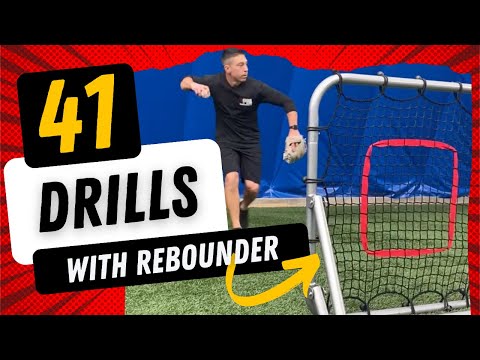
Making Complicated Drills Easier
Complicated drills can be scary, especially for younger or less experienced players. Rebounders make these drills easier by breaking them down into smaller, more manageable parts. For example, a player can focus only on catching the ball in the right way before moving on to more complicated plays.
As a result, rebounders don’t just enhance skill development, they also boost player confidence. By mastering the simpler parts of a drill, athletes feel more ready and motivated to take on more difficult tasks. For those interested in refining their skills further, exploring beginner baseball hitting drills can be a great next step.
Why Use Rebounders?
Rebounders can be a game-changer for athletes hoping to step up their baseball or softball game. One of the main benefits is that they provide consistent opportunities to practice. You can use a rebounder to practice any time you want, without needing someone else there to throw the ball. This can be a great confidence boost, especially for young athletes who are excited about improving and want to do it on their own time. For more tips on enhancing your skills, check out these kids indoor baseball drills.
Another benefit is the immediate feedback that rebounders give. When you toss a ball at a rebounder, the way it comes back to you tells you right away how accurate and strong your throw was. This immediate feedback is key to making fast corrections and enhancements to your technique. For more on improving your skills, check out these innovative fielding drills and techniques.
Moreover, rebounders are flexible tools that can be utilized to hone a variety of skills, ranging from pitching to fielding. This adaptability implies that players can improve various parts of their game using just one piece of equipment, making it a cost-saving training solution. For those interested in enhancing their fielding skills, consider exploring innovative fielding drills and techniques.
- Boosts the strength and precision of your throw
- Augments your fielding capabilities and response time
- Offers immediate feedback for enhancing technique
- Enables practice without a partner
- Adaptable for various training situations
Adding a rebounder to your training regimen not only aids in skill development but also bolsters your self-assurance. The knowledge that you can train effectively on your own provides a significant mental edge, particularly in high-stress game scenarios.
Instantaneous Feedback for Enhanced Learning
One of the major advantages of using a rebounder is the instantaneous feedback it provides. As soon as you toss the ball, you can see how it comes back and adjust your approach as needed. This immediate feedback is critical for learning as it enables on-the-spot error correction. Rather than waiting for a coach’s feedback, athletes can self-evaluate and make any needed adjustments immediately. For more innovative training tools and techniques, explore innovative fielding drills and equipment that can enhance your practice sessions.
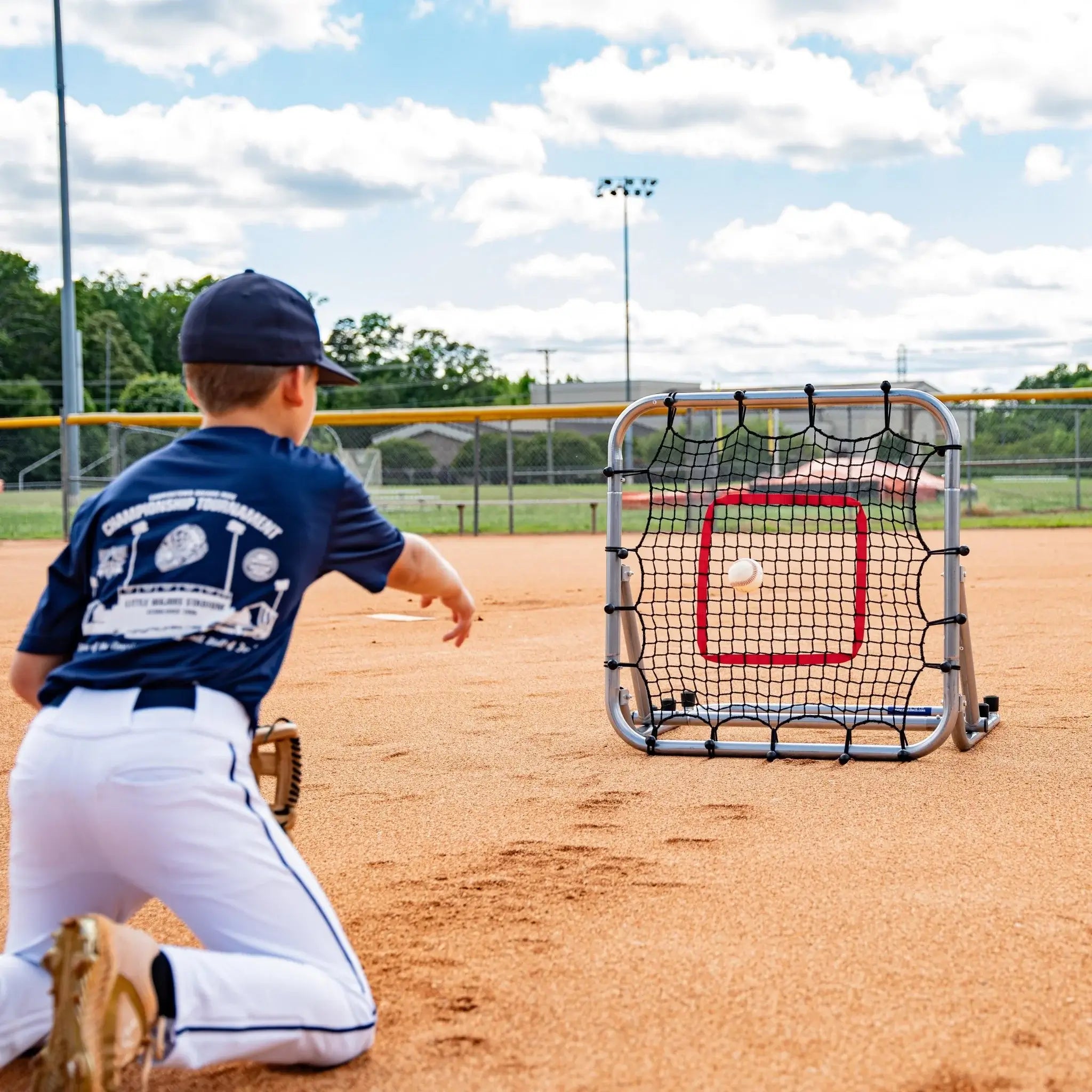
Easy-to-Use and Adaptable for Players at Any Level
Rebounders are not only for seasoned players; they are perfect for athletes at any level. Whether you’re just starting out and learning the basics or you’re a seasoned player looking to perfect your skills, a rebounder can be adjusted to fit your training requirements. This versatility makes it a great tool for individual growth and skill improvement. For more ideas on how to incorporate a rebounder into your training, check out ten ways to use a baseball rebounder.
Plus, the luxury of owning a rebounder allows you to train whenever you’re available, easily incorporating practice into your daily routine. This adaptability is especially useful for youth athletes juggling academics and athletics.
Triumphs and Testimonials
A multitude of sportspeople have noticed marked enhancements in their play after adding rebounder training to their regimens. These triumphs underscore the potency of rebounders in fostering indispensable abilities and augmenting execution.
Performance Improvements in Action
Consider a young baseball player who had difficulty with their throwing accuracy. After a few months of using a rebounder, they saw a significant increase in both their accuracy and speed. The repeated practice helped them adjust their mechanics and gain confidence in their skills. For more techniques, explore ten ways to use a baseball rebounder effectively.
Takeaways and Proven Strategies
These success stories show us that the secret to success is consistency and dedication. Regular practice with a baseball rebounder, along with a readiness to learn from feedback, can lead to substantial improvements in skill. Athletes are urged to set specific goals for each session and monitor their progress over time to get the most out of rebounder training.
Adding Rebounders to Your Current Training Routine
Adding a rebounder to your existing training routine can be done smoothly and to your advantage. By setting aside specific times for rebounder practice, you can make sure that you are continually improving your skills. This addition should supplement, not substitute, other forms of training, like team practices and strength conditioning.
For rebounder training to be effective, you need a well-thought-out plan. This plan should detail the specific skills you’re looking to enhance and the methods you’ll use to track your progress. The key to success is consistency, so be sure to adhere to your plan and make necessary adjustments based on your progress.
Creating a Successful Training Regime
A successful training regime should incorporate a range of drills that focus on different skills. For example, you could allocate specific days to enhancing your throwing speed and others to improving your fielding accuracy. By varying your practice sessions, you guarantee a comprehensive development of your skills.
Finding the Right Balance Between Intensity and Frequency
Finding the right balance between intensity and frequency in your training can be a bit of a juggling act. It’s important not to overdo it as this can lead to fatigue and potential injury. Listen to your body and adjust your workouts accordingly. Start with shorter, more frequent sessions and gradually increase the intensity as your skills improve.

In the process of choosing a rebounder, you should take into account its durability, size, and the kind of feedback it gives. A rebounder that is solid and well-built will be able to endure regular use and provide a dependable practice experience. The size of the rebounder should be suitable for your training area and the particular skills you want to work on. For innovative ideas on how to enhance your training, explore innovative fielding drills and equipment.
What to Look for to Maximize Performance
When choosing a rebounder, look for models that have adjustable angles and resistance levels to add variety and challenge to your practice sessions. Also, consider how easy it is to set up and move if you plan on frequently moving the rebounder or taking it to different practice locations.
Picking the right rebounder is the first step in effective training and skill development, ensuring you get the most out of your practice sessions. For additional tips, check out these indoor baseball drills that can complement your training regimen.
Steering Clear of Selection Errors
If you choose the wrong rebounder, you might end up frustrated and not get the results you want. A common error is picking a rebounder that’s too small, which restricts the variety of drills you can do. Another mistake is choosing a rebounder made from weak materials, which means you’ll have to replace it often and spend more money. To make an informed choice, consider exploring innovative fielding drills and equipment that can enhance your training experience.
When you’re making your choice, put quality and functionality before price. Spending a bit more up front on a durable, versatile rebounder will be worth it in the long run with reliable performance and durability. For more insights, check out these tips on becoming a baseball player.
Final Thoughts: Why Rebounder Techniques are the Key to Success
Rebounder training is a revolutionary method for baseball and softball athletes. Adding rebounders to your training routine unlocks a variety of opportunities for skill development and performance enhancement. The capability to train on your own, get immediate feedback, and recreate game-like situations makes rebounders a priceless resource for athletes of any age or skill level.
By adopting rebounder training methods and giving them your all, you can drastically improve your performance on the field. Whether you’re looking to throw harder or become a better fielder, a rebounder can help you get there in a productive and effective manner.
Keep in mind, the secret to victory is being consistent and having an open mind to learn and change. With a rebounder on your team, you have the tools to take your game to the next level.
Commonly Asked Questions
Rebounder training is a great method for improving a wide range of baseball and softball skills. Here are some commonly asked questions about this training technique:
Why do rebounders make your throws more accurate?
Rebounders make your throws more accurate by giving you instant feedback on your throws. When you throw the ball at the rebounder, the way it bounces back shows how precise your throw was. This feedback lets you make fast corrections and improve your technique, which results in more accurate throws as time goes on. For more insights on improving your technique, check out these innovative fielding drills and equipment.
Who can use rebounder training?
Rebounder training can be used by athletes of all ages. Whether you’re just starting out or you’ve been playing for years, you can benefit from the regular practice and skill improvement that rebounders provide. For young athletes, it’s important to incorporate indoor baseball drills that match their age and skill level. Make sure to adjust the difficulty and intricacy of drills to fit the athlete’s age and skill level.
What’s the recommended frequency of rebounder training for athletes?
To get the most out of rebounder training, athletes should strive to include it in their regimen at least 2-3 times per week. This regularity provides ample opportunity for skill refinement and practice while avoiding the potential for overuse injuries. As their skills get better, athletes can slowly ramp up the intensity and length of their workouts.
Can rebounders be used by players in any field position?
Absolutely, rebounders are adaptable tools that can be advantageous for players in any field position. Regardless if you’re a pitcher, catcher, or outfielder, rebounders can aid in enhancing your throwing, catching, and reaction abilities. By modifying the angle and distance of the rebounder, you can customize drills to fit your unique positional requirements.
Are rebounders a substitute for traditional training methods?
Rebounders are a great tool, but they should be used to supplement, not replace, traditional training methods. Team practices, strength conditioning, and other traditional training methods are still necessary for complete skill development. Rebounders enhance these methods by providing extra opportunities for focused, independent practice.
How can players stay safe during rebounder training?
Players can stay safe during rebounder training by warming up before each session and always using the correct throwing form. This will help to prevent strains and other injuries. Additionally, the rebounder should be checked often for signs of wear and tear. It should always be in good condition before it’s used.
What kind of maintenance do rebounders need?
Rebounders don’t require a lot of maintenance, but it’s still a good idea to regularly check them to make sure they’re in good shape. Keep the net clean and clear of any debris, and check for any signs of wear or damage. If any parts are worn out, replace them as soon as possible to keep the rebounder working well.
- Regularly check the rebounder for any damage.
- Keep the net clean to avoid the accumulation of debris.
- Immediately replace any parts that are worn out.
By adhering to these upkeep suggestions, you can guarantee that your rebounder will continue to be a dependable training instrument for many years.
How can rebounders help with injury recovery?
Rebounders can be beneficial in injury recovery by providing a controlled environment for athletes to practice. This helps prevent overexertion while still allowing for skill practice. Rebounders can also be used to gradually reintroduce athletes to full-speed drills, which can help build confidence and strength.
It’s important for athletes on the mend from an injury to stick to a set rehab plan and to check in with their doctors before they start up with rebounder training again. Doing so makes sure they can get back to being fully active in a way that’s safe and works well.

Leave a Reply