Quick Overview
- Fast pitch softball drills can noticeably enhance a player’s strength and precision.
- Keeping a balanced swing is vital for a consistent hitting performance.
- Understanding the kinetic chain can assist players in using their entire body for stronger hits.
- Drills like tee work and live pitching are crucial for improving hitting skills.
- Strength training goes hand in hand with hitting drills by boosting muscle strength and stamina.
Introduction to Fast Pitch Softball Hitting Drills
Fast pitch softball is a thrilling sport that demands both strength and accuracy. Hitting drills are a critical part of training for any dedicated player. These drills aid in improving swing mechanics, boosting power, and enhancing overall performance on the field. In this article, we’ll delve into various drills and techniques that can elevate your hitting skills.

Regardless of whether you’re a newbie or a veteran, understanding and practicing these drills can make a huge difference. Let’s explore the world of fast pitch softball hitting and see how you can become a more explosive hitter.
Why Hitting Drills are Important
Hitting drills aren’t just about repetition; they’re about building muscle memory and honing your skills. Here’s why they’re so beneficial:
- Increased Power: Drills help players generate more power by focusing on mechanics and muscle engagement.
- Improved Accuracy: Consistent practice leads to better hand-eye coordination and more accurate hits.
- Enhanced Timing: Timing is crucial in fast pitch softball, and drills can help players develop a better sense of rhythm.
- Better Focus: Regular drills improve mental focus and concentration during games.
- Confidence Boost: Mastering drills builds confidence, which translates to better performance on the field.
Importance of Swing Balance
A balanced swing is vital for any softball player. Without balance, even the most powerful swing can result in a weak hit. Balance ensures that a player can transfer energy efficiently from their body to the bat. It also helps maintain control over the bat, allowing for more precise hits.
Balance is all about the right stance, weight distribution, and follow-through. Players should pay attention to their posture and make sure their body is lined up right before they swing. If players work balance-focused drills into their practice, they can get better at swing mechanics and perform better overall.
Drills to Boost Your Hitting Power
Power is an essential element in fast pitch softball hitting. The capacity to hit the ball with force and distance can shift the game’s tide. Let’s look at some drills that can boost your hitting power.
Using a Tee to Improve Power
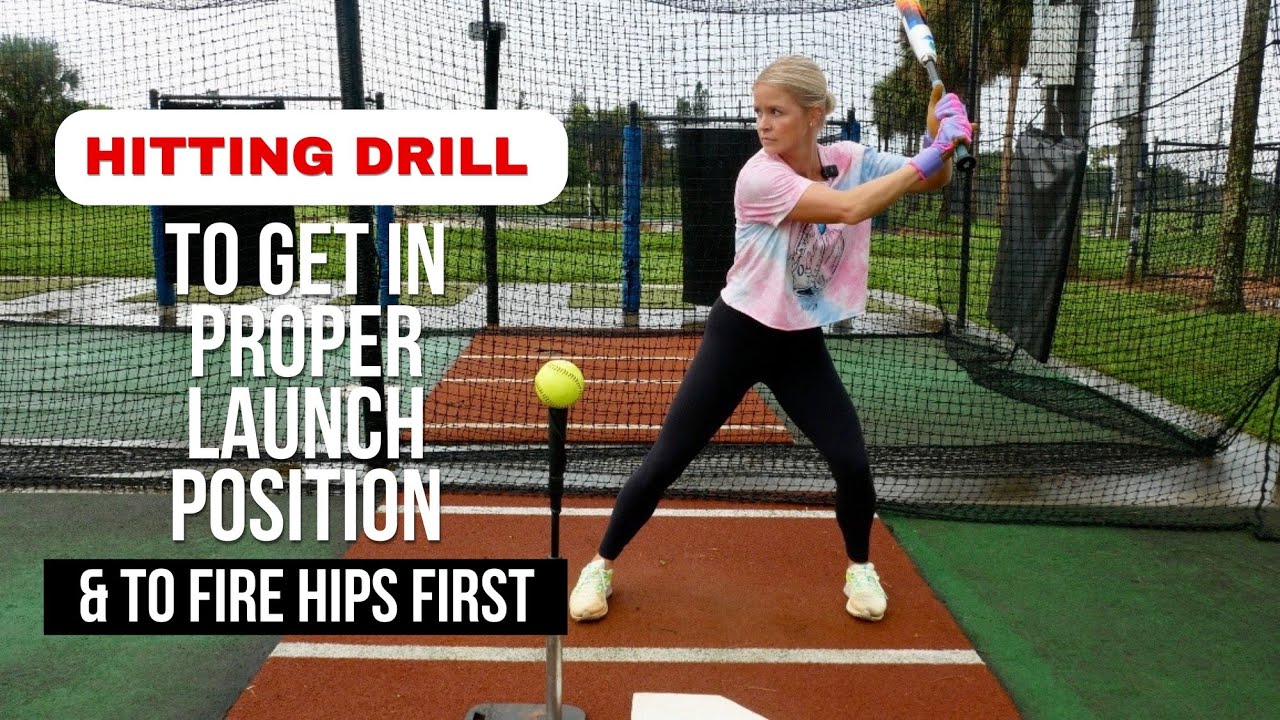
Using a tee is a basic drill that allows players to concentrate on their swing techniques without the stress of a moving ball. Here’s how to maximize the benefits of using a tee:
- Adjust the tee to various heights to mimic different pitch locations.
- Keep your stance balanced and your grip on the bat correct.
- Try to hit the ball with the bat’s sweet spot for the most power.
- Do the drill often to create muscle memory and increase consistency.
Drills with Live Pitching
Drills with live pitching are necessary for learning timing and adapting to real game situations. These drills give the experience of facing a pitcher, helping players adapt to different pitch speeds and types. Here are some suggestions for effective drills with live pitching:
Here are some tips to improve your fast pitch softball hitting:
- Find a partner or coach who can throw pitches at different speeds and in different locations.
- Concentrate on following the ball from the moment it leaves the pitcher’s hand until it reaches the plate.
- Work on various hitting situations, such as bunting or hitting to the opposite field.
Practicing with live pitching drills can increase a player’s confidence and get them ready for the unpredictability of real games.
Merging Force with Precision
In fast pitch softball, the aim isn’t solely to hit the ball with force; it’s also to hit it accurately. Merging force with precision enables players to strategically position the ball, thereby enhancing their likelihood of reaching base. This fusion necessitates both physical power and mental concentration.
Players need to learn how to control their strength while also controlling their swing. This balance can be achieved through committed practice and the correct drills. By focusing on both of these aspects, players can become more versatile hitters, able to adapt to different game situations.
The Importance of Timing and Rhythm in Hitting
Timing and rhythm are the backbone of a good swing. They are the difference between a swing that hits the ball out of the park and one that doesn’t even make contact. Timing is all about syncing your body’s movements with the ball’s arrival, and rhythm is all about the fluid, steady motion of your swing. To enhance your skills, consider exploring baseball hitting programs that focus on increasing contact and power.
Players can use a metronome or music to enhance their timing and rhythm and establish a steady swing tempo. They can also learn a lot from watching videos of professional players and observing how they time their swings with the pitch. For additional insights, check out these baseball hitting programs that focus on increasing contact and power.
Exercises to Improve Bat Trajectory
The trajectory the bat follows as it travels through the hitting zone is referred to as the bat trajectory. An accurate bat trajectory ensures that the bat collides with the ball squarely, increasing the likelihood of a strong hit. Here are some exercises to enhance your bat trajectory:
- Shadow Swing: Swing as if you’re hitting a ball, but without the ball. Make sure your bat path is straight and level.
- Tee Drill: Set up a tee and try to hit the ball squarely, making any necessary adjustments to your bat path.
- Mirror Drill: Stand in front of a mirror and watch yourself swing in slow motion. Make any necessary adjustments to your bat path.
These drills can help players develop a consistent and effective bat path, which can lead to more successful hits.
Boosting Muscle Power for Better Performance
Strength training is a crucial part of a softball player’s regimen. Muscular strength provides the energy needed for explosive hits and rapid movements on the field. By concentrating on particular muscle groups, players can improve their performance and decrease the likelihood of injury. For more tips on enhancing your game, explore our softball training equipment guide.
Workouts for Powerful Forearms
Powerful forearms are key to keeping a tight grip on the bat and creating energy in the swing. Here are some workouts to increase forearm power:
Here are some exercises you can do to improve your grip strength and overall hitting power:
- Wrist Curls: Grab a pair of dumbbells and do some wrist curls. Make sure to focus on both the up and down movements.
- Grip Squeezes: Use a grip strengthener or a tennis ball to do grip squeezes. Hold each squeeze for a few seconds.
- Reverse Curls: Do reverse curls with a barbell or dumbbells to target the forearm extensors.
Importance of the Romanian Deadlift
The Romanian deadlift is an excellent exercise that focuses on the hamstrings, glutes, and lower back. These muscles are crucial for producing power in the swing. Here’s how to do the Romanian deadlift:
- Position yourself with your feet shoulder-width apart, clutching a barbell in front of your thighs.
- Keep a slight bend in your knees and hinge at the hips to drop the barbell down your legs.
- Keep your back straight and lower the barbell until you feel a stretch in your hamstrings.
- Return to the starting position by pushing through your heels and extending your hips.
This exercise not only builds strength but also improves flexibility, which is crucial for a powerful and controlled swing.
Developing Powerful Glutes and Hamstrings
- Squats: Squats are a basic exercise for developing lower body power. Concentrate on correct form to get the most out of the exercise.
- Lunges: Do lunges to work the glutes and hamstrings, adding weights for more resistance.
- Leg Curls: Use a leg curl machine or resistance bands to target and strengthen the hamstrings.
By developing these muscles, players can increase their power and stability, both of which are critical for effective hitting.
These exercises, when combined with regular hitting drills, form a comprehensive training regimen that improves both strength and skill.
Modifying Drills for Young Athletes
It’s crucial to modify drills to suit the age and abilities of young athletes. This keeps them interested and driven while they master the basic principles of hitting. Here are a few drills that are appropriate for youngsters.
Appropriate Drills for Ages 10 and Up
Young players can take advantage of simplified versions of the drills we mentioned earlier. For example, tee work is a great place to start because it allows young players to focus on their swing without the stress of a moving ball. Here are some more drills for young players:
- Soft Toss: A coach or teammate can toss the ball to the player, providing them with the opportunity to practice their timing and swing mechanics.
- Bunting Practice: Young players can be taught the basics of bunting, which can help them improve their hand-eye coordination and control.
- Target Practice: Targets can be set up for players to aim at, which can encourage them to concentrate on accuracy and placement.
These drills can help young players develop important skills while making practice sessions enjoyable and engaging. For additional training tips, check out these softball training tips.
Advancement and Skill Building
It’s crucial to slowly up the ante of drills as young players mature and get better. This guarantees they keep getting better and are tested at the right level. Coaches and parents can assist by utilizing softball field drills tailored for different age groups.
- Continuously evaluating each player’s abilities and tailoring drills to match.
- Offering helpful criticism to assist players in honing their techniques.
- Inspiring players to establish individual objectives and monitor their development over time.
Creating a nurturing and demanding atmosphere allows young players to enhance their abilities and lay the groundwork for future triumphs.
Staying Motivated and Improving Constantly
Staying motivated is the key to constantly improving in softball. Players need to remain focused and driven to reach their maximum potential. Here are some strategies to keep motivation high:
Establishing Attainable Goals
Establishing attainable and realistic goals can provide players with a sense of purpose and direction. Goals should be specific, measurable, and time-bound. For instance, a player might aim to increase their batting average by a certain percentage within a season.
Players are motivated to keep going and can keep track of their progress by setting both short and long-term goals. Celebrate small victories along the way to reinforce their commitment and dedication to improvement.
Monitoring Improvement in Training
It’s important to monitor your improvement in training to get better. This allows you to see what areas require additional attention and which exercises are working best. To monitor improvement, maintain a training diary where you record your performance in each exercise, any problems encountered, and your feelings during training. This reflection can be very enlightening over time.
Moreover, video analysis can be a beneficial tool. By capturing your swings and analyzing them, you can watch your form and technique in action. You can compare these videos over time to notice improvements and identify areas that require more attention. This visual feedback can be highly motivating as you watch your progress develop. For additional resources, explore softball training tools that can complement your video analysis.
Promoting Teamwork
Softball is a team sport, and it’s important to instill a sense of teamwork in your players. Encourage them to cheer each other on during drills and games. You can also pair players up for certain drills, which can help them learn from each other and build a sense of community.
Hold team meetings where players can talk about strategies, exchange ideas, and set team goals. These gatherings can build a supportive atmosphere where everyone feels appreciated and driven to contribute to the team’s success.
Commonly Asked Questions
We will tackle some frequently asked questions about fast pitch softball hitting drills and techniques. These answers will help clear up any confusion and guide you on your training path.
Why are balanced swing techniques so important?
Balanced swing techniques are crucial as they give players the ability to manage their swing and optimize power in an efficient manner. A balanced swing contributes to stability throughout the movement, resulting in more regular and precise hits. Additionally, it decreases the chance of injury by making sure the body is correctly positioned during the swing. To further enhance your skills, consider exploring power training programs designed for baseball and softball players.
How many times a week should hitting drills be practiced?
Players should try to practice hitting drills multiple times a week, three to four times is ideal. Being consistent is the key to developing muscle memory and improving your technique. However, it’s also important to balance practice with rest to avoid burnout and let your body recover. For more tips on improving your team’s performance, check out these softball hitting tips.
Which workouts can boost a batter’s hitting strength?
Workouts that focus on the core, legs, and upper body can greatly boost hitting strength. Core workouts like planks and Russian twists improve rotational power, while squats and lunges enhance leg strength. Upper body exercises, including push-ups and dumbbell presses, fortify the arms and shoulders, leading to a stronger swing. For more comprehensive training, consider these batting practice training equipment options.
What makes the kinetic chain so vital in softball hitting?
When we talk about the kinetic chain, we’re referring to the series of movements that channel energy from the body to the bat. This is so important because it lets players harness the power of their whole body instead of just their arms. A kinetic chain that’s well-coordinated leads to a swing that’s both more powerful and more efficient. For more insights, check out these softball hitting tips.
Getting a handle on and rehearsing the kinetic chain enables players to take advantage of their potential by utilizing all aspects of their body adequately during a swing. This prompts more grounded hits and improved by and large execution.
What are some ways young players can enhance their swing balance?
There are several ways young players can enhance their swing balance. One of the most effective ways is by concentrating on their posture and stance. Beginning with a solid foundation, with feet positioned shoulder-width apart and knees slightly bent, can provide the stability necessary for a balanced swing. Drills that emphasize weight transfer, such as the “step and swing” drill, can also be beneficial for young players as they can help them learn how to effectively shift their weight.
Moreover, slow-motion swing drills can assist young athletes in concentrating on keeping their balance throughout the swing. Encouraging them to picture their swing and focus on staying balanced can result in noticeable progress over time.
Balance boards and other tools can be used during practice to improve a young player’s balance. These tools test their stability, which can help them improve their swing.
Improving your softball swing requires a combination of strength, technique, and practice. Many players find that incorporating specific drills can significantly enhance their performance at the plate. For those looking to refine their skills, exploring various softball training tips can provide valuable insights into effective practice routines and strategies.
How does strength training affect hitting performance?
Strength training is essential to hitting performance because it builds the muscles needed for strong swings. It improves a player’s capacity to create force and efficiently transfer it through the bat. Additionally, stronger muscles provide better support and lower the chances of injury during high-intensity games.
What’s the best way to modify drills for young players?
For young players, the best way to modify drills is to simplify them and focus on the basics. Using lighter equipment and less intense drills makes sure that young players can participate safely and effectively. For instance, using a lighter bat or softer balls can help them focus on their technique without feeling overwhelmed.
Adding fun elements to drills, like games or challenges, can also help to keep young players engaged and motivated. The goal is to create a positive learning environment where they feel encouraged to practice and get better.
How can you stay motivated during practice?
Setting clear, achievable goals can help maintain motivation during practice. Celebrating small wins and progress can keep players engaged and excited about their development. It can also be beneficial to mix up practice routines to prevent boredom and keep things fresh.
Creating a supportive team environment where players encourage and inspire each other can also help improve motivation. Regularly checking progress and recognizing improvements, no matter how minor, creates a sense of achievement and inspires players to continue striving. For more on enhancing team dynamics, explore our softball field drills guide.
Explosive fast pitch softball hitting drills are essential for players looking to improve their game. By focusing on balanced swing techniques, athletes can enhance their batting performance significantly. For those interested in further improving their skills, exploring softball training tools can provide additional support and practice opportunities.

Leave a Reply