Stand with your feet shoulder-width apart and hold the bat tightly for better control.
Use your whole body to create power, not just your arms.
Visualize your success and keep a positive mindset to improve performance.
Regularly engage in strength training to increase your hitting power.
Learn pitcher patterns to adapt your strategy and increase hitting distance.
How to Consistently Hit Over 300 Feet
Hitting a baseball over 300 feet is an incredible achievement that requires a combination of technique, strength, and mental focus. It’s not just about swinging harder; it’s about swinging smarter. Let’s take a closer look at the techniques and strategies that can take your hitting game to the next level.
Why It’s Crucial to Hit the Ball Farther
Hitting the ball farther in baseball can be a game-changer. It not only increases your chances of scoring but also puts pressure on the opposing team. When you consistently hit the ball over 300 feet, you become a valuable asset to your team, capable of turning the tide of a game.
Crucially, the ability to hit the ball further can not only boost your self-confidence but also intimidate the opposition’s pitcher. This psychological advantage can often be the difference in a close game. In addition, there’s nothing quite like the thrill of seeing the ball fly over the field and the crowd loves it too.
Why Hitting the Ball Further in Baseball is Beneficial
Crushing the ball further down the field opens up more opportunities for scoring runs. A long-distance hit can turn a single into a double, or a double into a triple. This doesn’t just boost your personal batting average, but it also enhances the overall performance of your team. Plus, if you’re known for consistently hitting the ball a long way, you’ll start to earn a reputation as a power hitter, which can draw the attention of scouts and coaches.
Essential Skills for Power Hitting
In order to consistently hit over 300 feet, there are several essential skills you need to master. These skills revolve around perfecting your stance, grip, and swing mechanics. Let’s delve into these in more detail.
Mastering Your Stance and Grip
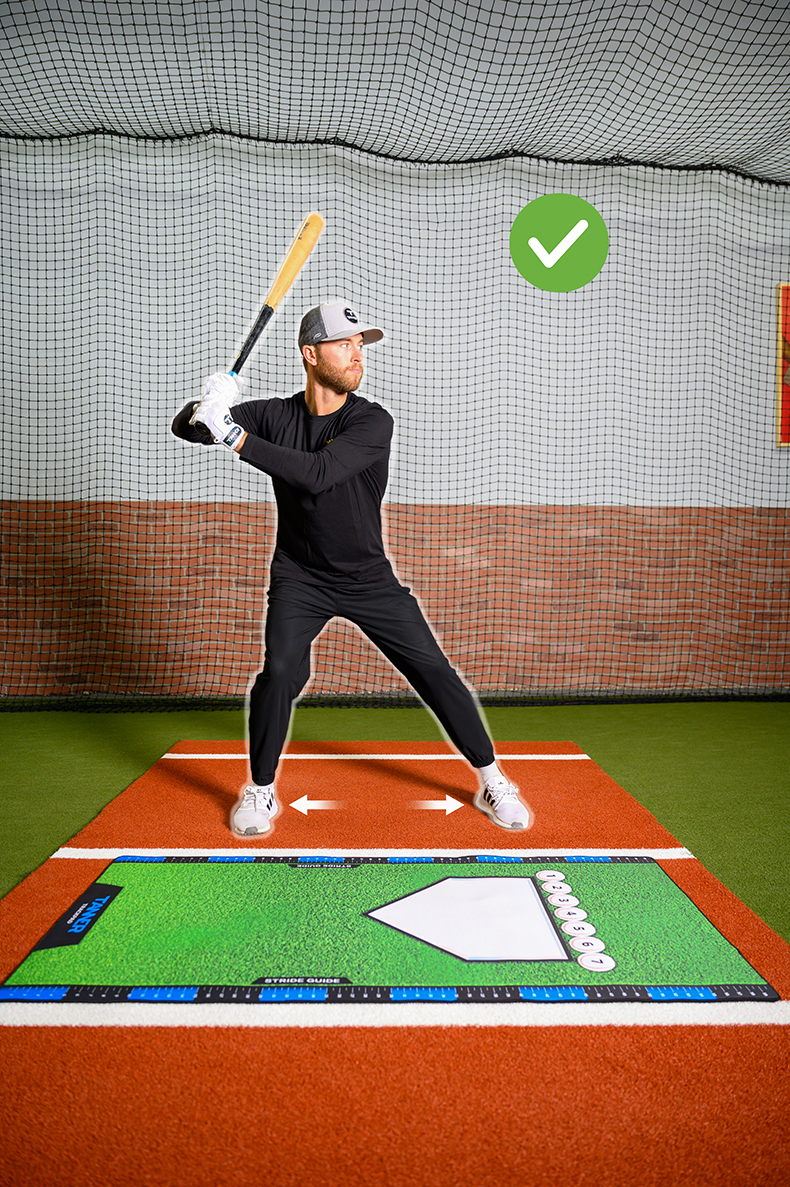
Having a solid stance is key to a forceful swing. Stand with your feet as wide as your shoulders, with a slight bend in your knees, and your weight evenly distributed. This stance will allow you to turn effectively and produce more power. Your front foot should be angled slightly towards the pitcher to allow your hips to open during the swing.
Just as crucial is how you hold the bat. Grip the bat with strength but without too much tension, as a more relaxed grip provides superior control and bat speed. Your knuckles should line up in a straight line, and your grip should feel natural and relaxed. A solid grip can stop the bat from slipping and guarantee maximum contact with the ball. For more tips on improving your swing, check out this guide on hitting training.
Unlocking the Power in Your Swing
Power doesn’t come from swinging harder. It comes from using your whole body, from your legs to your core, to hit the ball. Begin by transferring your weight from your back foot to your front foot during your swing. This weight shift creates momentum, which increases your swing speed.
Also, make sure you are using your core muscles to add more power to your swing. Your core serves as a pivot point when you turn your hips and shoulders, increasing the power created by your legs. Keep in mind, a strong swing is the result of your whole body working together smoothly.
Using Your Whole Body for the Best Results
When it comes to getting the most out of your hitting distance, you need to use your whole body. Make sure you coordinate the movement of your hips, shoulders, and arms. Your hips should start the movement when you begin your swing, and then your shoulders and arms should follow. This creates a motion that’s like a whip, which gives the bat the force it needs to go through the strike zone. For more tips, check out these youth baseball hitting techniques.
Additionally, holding a firm stance during your swing guarantees that your power is aimed at the ball. Keep your head still and your gaze on the ball to improve your precision and timing. By using your body to its full capacity, you can reliably achieve those desired 300-foot hits.
Psychological Approaches for Regular Distance
Even though physical methods are crucial, the psychological part of hitting is something that cannot be ignored. Building a resilient mentality is crucial for maintaining regularity and overcoming hurdles at the plate.
Creating the Mentality of a Slugger
“The mind is the root of all. If you think it, you can be it.” – Buddha
Embracing the mentality of a power hitter means having faith in your skills and maintaining concentration when the pressure is on. Envision your triumph before you even approach the plate. See the ball flying past the outfield fence in your mind’s eye, and hear the crowd’s applause. This positive visualization can enhance your self-assuredness and prime your brain for the task at hand.
Moreover, keep your cool, no matter what’s happening in the game. Stress and uncertainty can mess with your game, so use relaxation techniques like deep breathing to stay focused. Remember, a strong mind goes hand in hand with a strong swing.
Boosting Your Physical Fitness to Improve Your Game
Being able to hit a baseball over 300 feet is about more than just swinging a bat. It requires strength, agility, and endurance. Here’s how you can boost your physical fitness to improve your performance on the field.
Workouts to Build Strength
Building strength is key to developing the muscle power that’s necessary for hitting far. Concentrate on workouts that focus on your core, legs, and upper body. Squats and deadlifts are great for building leg strength, which is key for generating power from the ground up. Add bench presses and rows to develop upper body strength, which is important for swinging the bat with force.
Additionally, add rotational exercises such as Russian twists and medicine ball throws to boost your core strength. A robust core stabilizes your body during the swing, enabling you to transfer energy effectively from your legs to your arms.
Keeping Agile and Flexible
While often overlooked, agility and flexibility are just as important as strength when it comes to power hitting. Drills that improve agility, such as ladder drills and cone drills, can help you improve your footwork and balance. This is critical for maintaining a steady stance and making quick movements during your swing.
Doing flexibility exercises such as dynamic stretches and yoga will increase your range of motion, which will help you avoid injuries and give you a smoother swing. Regular stretching can help you keep a consistent swing path and improve your performance.
Why Stamina Matters in Power Hitting
It might not be obvious, but stamina has a big impact on your ability to hit far, especially as a game goes on. Doing cardio exercises like running or biking can increase your endurance, which helps you stay powerful and concentrated during long innings. For more tips on improving your power hitting, check out these baseball hitting tips.
Moreover, by boosting your stamina, your muscles can bounce back more quickly, giving you the ability to keep swinging hard without tiring out. So, adding stamina-building workouts to your regimen can help you regularly knock the ball over 300 feet.
Applying Tactical Field Plans
Physical strength and power are important, but knowing and applying tactical field plans can make you stand out from the crowd. Being able to read the game and adjust your plan is key to hitting the ball as far as possible. For those looking to refine their skills, exploring beginner baseball hitting drills can provide valuable insights.
Moreover, learning to predict the pitcher’s patterns and adjusting your stance and swing can make a world of difference. Let’s delve deeper into these strategies.
Get to Know the Pitcher
Every pitcher has their own style and rhythm. If you watch closely, you can start to predict what kind of pitch is coming next. Keep an eye on the pitcher’s grip, how they’re standing, and the angle of their arm. These can all give you hints about what’s coming next.
Knowing the pitcher’s habits can help you position yourself better and prepare for the swing you need to make. This knowledge could be what stands between you and a game-changing 300-foot drive, instead of just a routine hit.
Changing Your Batting Approach for Distance
Changing your batting approach involves more than just changing your swing. You need to consider the game situation, the pitcher’s style, and your own strengths and weaknesses. Sometimes, moving a little forward or back in the batter’s box can help you make better contact with the ball. For those looking to enhance their hitting skills, exploring youth hitting drills can be beneficial.
Also, instead of just trying to hit the ball as hard as you can, concentrate on timing and accuracy. A swing that is timed perfectly and hits the ball at just the right spot can send it much further than a swing that is more powerful but not timed as well.
How to Stand for the Best Power
Where you stand in the batter’s box can make a big difference in your ability to hit a 300-foot home run. Try out different spots to see what gives you the most power. Some batters do better when they’re up close to the plate, while others hit harder when they’re standing farther back. For more insights, check out this guide on youth baseball hitting techniques.
Make sure you’re standing in the right place based on what kind of pitch you think is coming and how the pitcher usually throws. If you’re in the right place, you can hit the ball solidly, which will let you hit it as hard and far as possible.
Training Exercises for Boosting Your Long-Range Hits
Practice makes perfect. By incorporating specific drills into your training routine, you can hone your skills and improve your long-range hits. Here are some drills that emphasize power and accuracy.
Power-Boosting Drills
Drills that focus on power generation are meant to build up your swing’s strength and speed. A great example of this is the weighted bat swing drill. By swinging a bat that’s just a bit heavier than what you’re used to, you’ll build up muscle strength and increase the speed of your bat swing.
Take 10 swings with a heavier bat.
Then, take 10 swings with your regular bat.
Throughout the process, pay attention to your form and technique.
You might also want to try the resistance band swing. Tie a resistance band to the end of your bat and swing against the resistance. This drill will make your muscles stronger and your swing better. For more hitting training tips, check out this resource.
With regular practice of these exercises, you’ll be able to increase your power and consistently hit over 300 feet.
Practicing Real-Game Scenarios
Practicing real-game scenarios can get you ready for the unpredictability of a real game. Create situations that mirror different game scenarios, like dealing with different types of pitches or hitting when the pressure is on.
Training in conditions that mimic the real deal can help you build the mental toughness and flexibility you need to deliver your best performance when it counts. This method not only improves your abilities but also boosts your self-assurance as a slugger.
Enhancing Bat Speed and Accuracy
Boosting bat speed and accuracy is key to hitting the ball far on a regular basis. Bat speed is how fast you can swing the bat through the hitting zone, while accuracy ensures you hit the ball squarely. Let’s look at how to improve these vital parts of your swing.
If you’re looking to boost your bat speed, concentrate on workouts that develop dynamic power. Plyometric workouts, like box jumps and medicine ball slams, can help you increase your fast-twitch muscle fibers, which in turn can lead to swifter swings. Furthermore, practicing with a bat that’s lighter than what you’re used to can help you increase your swing speed, as it trains your muscles to move more quickly. For more tips, check out these youth baseball hitting techniques to enhance your skills.
Accuracy, however, is all about timing and control. Practice drills that focus on hand-eye coordination, like hitting off a tee or using a pitching machine. These drills help you concentrate on making regular contact with the ball, enhancing your precision and timing.
Wrapping Up on Boosting Your Hitting Distance
Being able to consistently hit a baseball over 300 feet is no small feat. It takes commitment, practice, and strategy. By concentrating on the basics of power hitting, maximizing your physical fitness, and applying strategic field tactics, you can increase your hitting distance and become a force to be reckoned with.
Keep in mind, the path to being a power hitter isn’t just about physical might. It’s about developing a strong mentality, getting to know the game, and continuously honing your skills. Stay dedicated to your training, and don’t hesitate to adjust your strategies as you learn and evolve. For more insights, check out these hitting training tips.
Remember, everyone has their own strengths and weaknesses, so don’t be afraid to be yourself. Focus on what makes you a great player and you’ll be an asset to your team. With a little grit and a lot of determination, you can achieve the amazing goal of consistently hitting over 300 feet.
Common Questions and Answers
It’s time to answer some of the most frequently asked questions about hitting a baseball over 300-feet. These answers will give you a better understanding of what it takes to improve your hitting distance.
What’s the best bat size and weight to hit over 300 feet?
The best bat size and weight will depend on your strength, height, and what feels comfortable to you. In general, you want a bat that you can control and that will allow you to generate bat speed. For most adult players, this is usually a bat that is 32-34 inches long and weighs 28-31 ounces. It’s important to choose a bat that feels comfortable and balanced when you hold it.
Does my batting order affect my ability to hit home runs?
Where you bat in the order can affect your mentality when you step up to the plate. Power hitters are usually put in the middle of the order to maximize their ability to drive in runs. However, no matter where you are in the order, concentrating on your technique and game plan can help you hit home runs on a regular basis. Adjust your mentality based on the game’s situation and your role on the team.
Do certain pitches make it easier to hit the ball farther?
Fastballs, because they come in at a higher speed, can provide the power necessary for a long hit if the batter makes solid contact. Also, pitches that are a bit higher in the strike zone can be easier to hit for distance. However, it’s important to be ready for all types of pitches and adjust your swing as needed.
Does the bat’s material affect how far you can hit?
Yes, the bat’s material can influence how well you hit. Aluminum and composite bats are often chosen because they are light and strong, which can lead to quicker swings and longer hits. However, even though wooden bats are heavier, they can still be useful if you know how to use them correctly. In the end, the best bat material for you is one that fits your playing style and gives you the right mix of speed and control.
Does the weather affect how far I can hit the ball?
Yes, things like wind and temperature can make a difference in how far the ball goes. If you have a strong wind at your back, it can help push the ball further. But if the wind is coming at you, it can make the ball not go as far. Also, when it’s hot out, the ball can be more elastic and that can sometimes make it go further. So, it’s good to keep these things in mind and maybe adjust how you’re playing depending on the weather.
For instance, a player realized that modifying their swing to accommodate the wind’s direction on particularly windy days helped them keep their hitting distance.
How does what I eat and drink affect my ability to hit?
What you eat and drink is really important for keeping the energy and strength you need to hit far. Eating a balanced diet with lots of protein, carbs, and good fats can help your muscles grow and recover. Drinking enough water and eating nutrient-dense foods make sure you have the energy to perform your best.
How many times a week should I practice to get better at hitting long distances?
Consistency is the secret to getting better. Try to get in several practice sessions each week, focusing on both your technique and strength training. Mix up your practice sessions with a variety of drills to work on different parts of your swing and keep things interesting. Practicing regularly will help you build muscle memory and feel more confident when you step up to the plate.
What are some common errors I should steer clear of to consistently hit over 300 feet?
Don’t try to swing too hard, as this can result in a loss of control and poor contact. Instead, concentrate on keeping a smooth, controlled swing that uses your whole body. Also, don’t overlook the mental part of hitting; maintaining a positive and focused attitude can greatly affect your performance.
Finally, pay close attention to your stance and grip. If you don’t position yourself correctly, you might not be able to generate enough power. Regularly check your form and make any necessary adjustments to make sure you’re hitting as hard as you can. For more detailed guidance, explore these youth baseball hitting techniques to refine your skills.


Leave a Reply