Key Points
- Hand-eye coordination is a fundamental skill for hitting in baseball, so it’s important to help young players develop this skill.
- Teaching young players the correct stance and grip is essential for building a strong foundation for their swing.
- Use drills such as hitting off a tee and soft toss to help improve accuracy and timing.
- Fostering a positive attitude and self-belief can help young players overcome obstacles.
- Monitor progress regularly and celebrate improvements to keep motivation levels high.
Building the Foundations of Successful Youth Baseball Hitting
When coaching young baseball players, laying down solid foundations is key. This means focusing on both the physical and psychological aspects of the game. A successful hitter isn’t just someone who can swing a bat, they also need to understand the mechanics, have confidence in their abilities, and approach each at-bat with a positive attitude.
The Importance of Hand-Eye Coordination
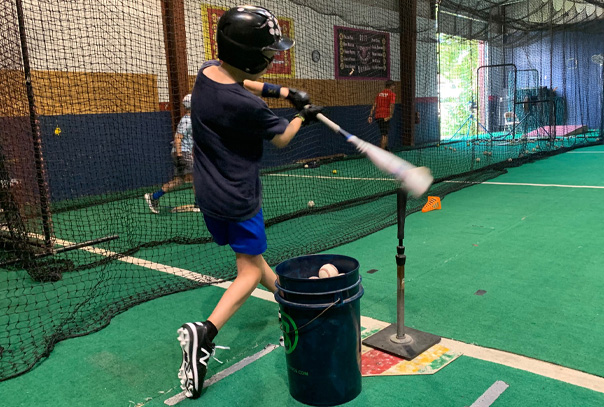
When it comes to hitting, hand-eye coordination is king. Without it, consistently hitting the ball becomes a major challenge. To help young players improve their hand-eye coordination, introduce drills that require them to keep their eyes on the ball as they hit it with the bat. For example, you might use small balls or wiffle balls during batting practice, which will encourage players to concentrate on hitting the ball accurately.
- Begin with bigger balls and slowly reduce the size as their coordination gets better.
- Employ balls of different colors and have the players shout out the color as they take a swing.
- Introduce games that require catching and throwing to further enhance their coordination.
Apart from that, always bear in mind that patience is a virtue. The progress may be slow, but with regular practice, there will be notable improvements over time.
Boosting Self-Assurance in Youthful Batters
Confidence can be the difference between success and failure for a young player. It’s vital for coaches to create a space where players are comfortable making errors and learning from them. This involves giving useful feedback and applauding minor successes. For instance, if a player has a hard time with striking out, concentrate on the positive parts of their swing or their dedication in practice.
One useful strategy is to establish attainable objectives. Instead of only concentrating on hits, inspire players to strive for making contact or maintaining good form. Accomplishing these smaller objectives can increase self-assurance and result in greater achievements. For more tips, check out this guide on improving hitting and fielding for young players.
Building Confidence and Positive Attitude
Confidence and a positive attitude are inseparable. Show your young players that stepping up to the plate with a positive outlook can change their game. Get them to picture themselves succeeding and to concentrate on the things they can control, like their effort and attitude. Make sure they understand that failure is a part of the learning process and that even the best players strike out sometimes.
Moreover, fostering a sense of team spirit and friendship can make playing the game more enjoyable for a player. When players cheer each other on, they become more resilient and are more likely to have fun playing the game, which in turn leads to improved performance.
Key Mechanics for Youth Baseball Hitting
For any young player, understanding what makes a good swing is critical. This means breaking down the swing into its most basic parts and making sure each one is done correctly. Players can develop a powerful and consistent swing by focusing on mechanics.
Right Position and Hold of the Bat
The position and hold form the basis of a good swing. A correct position ensures balance and stability, while a right hold allows for control and power. Begin by teaching players to stand with their feet as wide as their shoulders, knees slightly bent, and weight evenly distributed. The hold should be firm but relaxed, with the knuckles aligned and the bat held comfortably.
A quick and easy way to test their grip is to have them hold the bat with one hand and lift it. If they can hold it steady without it feeling forced, they’re probably holding it right. Encourage them to keep practicing this until it feels second nature. For more tips, check out these successful coach tips and techniques.
Improving Swing Path and Follow-Through
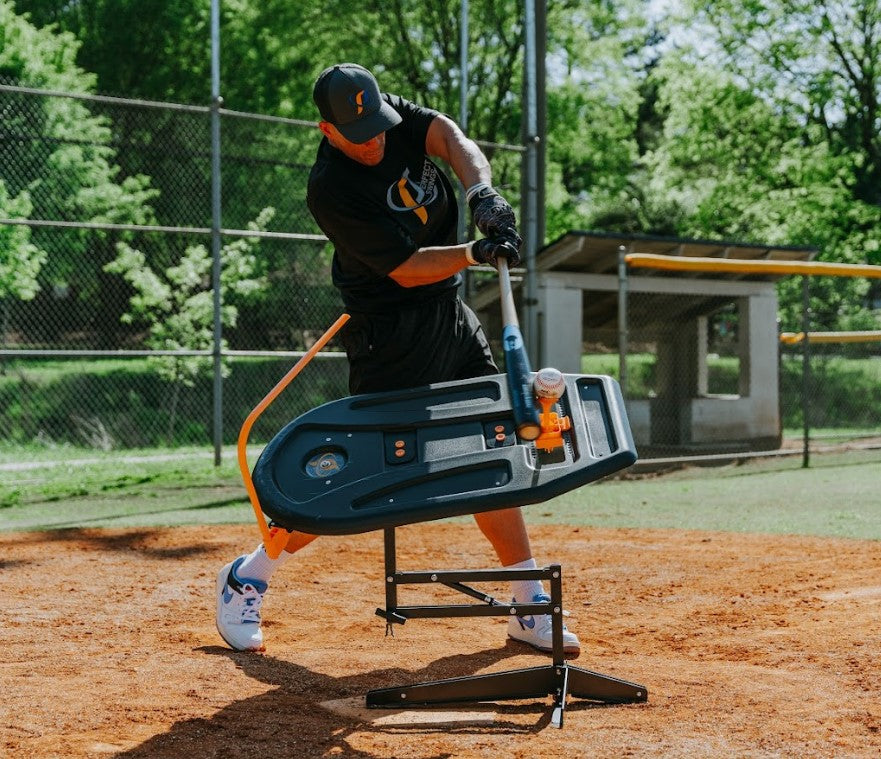
The swing path refers to the trajectory of the bat from the beginning to the end of the swing. A good swing path will allow the bat to hit the ball squarely, which is key for making good contact. Encourage your players to begin their swing with a small rotation of the hips, followed by a smooth extension of the arms. The follow-through should be natural and the bat should end up high. For additional tips, explore successful coach tips to improve your players’ hitting techniques.
Strengthen this by using exercises that concentrate on swinging through the ball instead of halting at contact. Soft toss exercises, where a coach lightly tosses the ball underhand, are perfect for practicing this part of the swing. For more tips on enhancing your hitting technique, explore these baseball drills for slow swings.
Improve Accuracy with Soft Toss Drills
Soft toss drills are a great way to improve hitting accuracy. These drills are simple and can be adjusted to work on specific parts of the swing. They also take the pressure off the hitter by removing the need to hit live pitches. In a soft toss drill, a coach or another player tosses the ball underhand from the side. This lets the hitter concentrate on timing and making contact with the ball.
Perform this drill by positioning the person tossing the ball at a 45-degree angle to the batter, about 10 feet away. This angle helps the batter practice hitting the ball to all parts of the field. Encourage players to focus on keeping their eyes on the ball and following through in the target area. This drill is especially good for improving the swing path and making consistent contact.
Experience Real-Game Scenarios with Live Pitching Practice
Drills like soft toss and hitting off a tee are certainly useful, but they can’t quite match the real-world experience of facing live pitching. Live pitching practice can help young players work on their timing and adjust to different pitch speeds and types, simulating the conditions they’ll face in a real game. To get the most out of live pitching practice, try throwing a variety of pitches, including fastballs, change-ups, and breaking balls.
During these sessions, include feedback to help players know what they are doing well and what they need to work on. For example, if a player is always missing pitches on the outside, encourage them to change their stance or the path of their swing. This hands-on approach makes sure that players are not just practicing but also learning and adjusting.
Typical Errors and How to Fix Them
Even the most gifted young batters mess up from time to time. Identifying and fixing these slip-ups is a key part of their growth. By tackling typical errors, coaches can help players enhance their game and boost their self-assurance. For more targeted practice, consider using fast-fix drills to address specific issues like slow swings.

Preventing Over-Swinging
Over-swinging is a prevalent problem among youthful players who are enthusiastic about hitting the ball forcefully. While power is critical, maintaining control and balance throughout the swing is equally important. To prevent over-swinging, stress the significance of a smooth, controlled swing. Encourage players to concentrate on making solid contact instead of attempting to hit home runs every time. For additional tips, explore these fast-fix drills to improve swing speed and accuracy.
Keeping Your Eye on the Ball
One of the most important things to remember when hitting is to keep your eye on the ball. This is a basic skill, but it’s easy to lose focus, especially when the pitcher is throwing fast or tricky pitches. To help your players stay focused, remind them to watch the ball from the moment it leaves the pitcher’s hand to the moment it hits the bat. You can also use drills to help them improve their focus, like using smaller balls or balls of different colors that require more concentration to hit. For more insights on effective hitting techniques, you can explore the best hitting approach for youth players.
Another technique that works well is visualization. Have your players imagine the ball coming at them and making contact. This mental rehearsal can help them concentrate better during real at-bats. For more strategies, explore mental toughness training that can enhance their focus and performance.
Fixing Bad Bat Path Problems
A bad bat path can result in weak contact or missed swings. To fix this, practice drills that focus on a straight and level swing path. One helpful drill is the “bat path trainer,” where players swing through a series of markers or cones set up to guide their swing path. This visual aid assists players in understanding the correct path and making the needed adjustments.
Moreover, using video analysis can be a highly effective way to spot and rectify problems with bat path. By watching videos of their swings, players can pinpoint exactly what they need to work on and strive to make those improvements. For additional insights, you might explore fast fix baseball drills that can complement video analysis.
Boosting Drive and Regularity
Drive and regularity are fundamental elements in the growth of a young player. Without these, even the most skilled players might find it difficult to achieve their full potential. As a result, it’s vital for coaches to create a setting that promotes both. For more insights, explore mental toughness training strategies that can help enhance these crucial aspects.
First, establish realistic and attainable goals. These goals should be individualized and appropriate for each player’s abilities. Whether it’s raising their batting average or learning a new skill, having goals provides players with a target to aim for and a feeling of achievement when they reach it.
Furthermore, consistency in practice is key. Inspire players to practice consistently, even beyond scheduled team practices. This doesn’t mean practicing for hours every day, but rather keeping a regular routine that strengthens skills and develops muscle memory.
- Advocate for brief, concentrated training sessions.
- Vary the exercises to keep training stimulating.
- Offer positive feedback to increase self-assurance.
Establishing Attainable Objectives for Enhancement
Goal-setting is a powerful tool for monitoring progress and inspiring young athletes. These objectives should be feasible and achievable, enabling athletes to witness noticeable advancements over time. For example, an objective could be to raise the hit count during training by a specific percentage or to enhance swinging techniques.
Help your players set both short-term and long-term goals. Short-term goals provide a quick boost of motivation, while long-term goals help players stay focused on their overall growth. Regularly revisit these goals and tweak them as necessary to keep the progress going. For more insights on the best hitting approach, check out this discussion on teaching youth players in baseball.

Keeping Track of Progress and Celebrating Wins
Keeping track of progress is crucial for keeping motivation high and ensuring that players are on the right track. Use tools like scorecards or performance charts to keep track of accomplishments and areas that need work. Going over these records with players helps them see how far they’ve come and where they need to concentrate their efforts. For additional strategies, consider exploring mental toughness training for kids to enhance their focus and resilience.
It’s also crucial to celebrate achievements, no matter how minor they may be. Applaud players for their dedication and progress, whether they’ve hit a new record or nailed a tough drill. This acknowledgment raises spirits and motivates players to keep pushing themselves.
Building a Nurturing Atmosphere
For young players to excel, they need a nurturing atmosphere. This involves cultivating a team spirit where players feel appreciated and backed by their coaches and fellow players. Promote open dialogues and create a feeling of fellowship among players. For more insights on fostering team spirit, explore coaching kids in baseball.
Moreover, keep the parents in the loop by updating them about their kid’s progress and how they can help them grow. When the players feel that they are supported not just on the field but also off it, they are more likely to enjoy the game and stay dedicated to enhancing their skills. For additional tips on supporting young athletes, check out these guides for coaching kids.
Conclusion: Encouraging Development in Young Batters
Encouraging young batters to improve and grow in baseball involves a combination of detailed teaching, positive feedback, and a nurturing atmosphere. Coaches can help players achieve their best by concentrating on establishing a solid base, enhancing techniques, and promoting a positive attitude. For those looking to enhance their coaching strategies, exploring successful coach tips and techniques can be incredibly beneficial. Keep in mind, every player’s path is different, and patience is crucial in nurturing their growth.
As mentors, we have a duty to not only teach our players the skills they need, but also instill a passion for the game. By establishing attainable objectives, monitoring improvement, and acknowledging accomplishments, we pave the way for our young athletes to flourish. Seeing a player excel and develop is one of the most gratifying parts of being a coach.
Commonly Asked Questions
There are often questions from coaches and parents about how to best help young players improve their hitting. Here are some typical questions and responses to assist you.
“What is the appropriate age for a child to start learning how to hit?”
Kids as young as 5 or 6 can start to learn the basic mechanics of hitting. At this age, it’s best to stick to simple concepts like how to hold the bat, how to stand, and how to hit the ball. As they get older and their coordination improves, they can start to learn more advanced techniques.
How frequently should young players practice their hitting?
Regular practice is key to improving skills. Here’s a rough guide to how often they should be practicing:
- For beginners: 1-2 sessions each week
- For those with some experience: 3-4 sessions each week
- For experienced players: 4-5 sessions each week
These sessions don’t need to drag on for hours; short, concentrated practices can also be very beneficial.
What gear do young players need for hitting practice?
Using the correct gear can significantly improve the quality of practice. Key items include:
- A bat that is the right size for the player’s age and strength
- Gloves for batting that provide grip and comfort
- Baseballs or wiffle balls to be used in drills
- A tee for batting to practice while stationary
- A helmet for batting to ensure safety
These tools are the basics needed for a productive practice session.
What can parents do to help their child improve at hitting?
Parents are key in their child’s improvement. Here are some ways they can assist, including utilizing indoor baseball drills designed to enhance hitting skills.
- Encourage your player to practice often and even provide them with extra practice time at home.
- Show up to their games and practices to show them that you care and are interested in their progress.
- Give them positive feedback and celebrate their accomplishments.
- Talk to their coaches to understand what they should be working on and how they can improve.
Parents can make a big difference in their child’s experience and development by being involved and supportive.
What can young players do to mentally cope with striking out?
Striking out is a part of the game, and it’s essential to build mental toughness. You can help your players do this by encouraging them to explore mental toughness training strategies.
- Concentrate on the procedure, not just the end result.
- Envision victory and beneficial results.
- Take something away from each plate appearance and recognize what needs to be better.
- Keep a positive mindset and swiftly bounce back from errors.
These methods assist players in cultivating a solid mental game and enhancing their overall performance. For more tips on improving your game, check out these successful coach tips.
Do players need private lessons to get better at hitting?
Private lessons can help, but they’re not a must for everyone. They offer one-on-one coaching and concentrated time, which can speed up the learning process. But, regular practice and good coaching in a team environment can also make a big difference. Think about private lessons if a player is having a hard time with certain things or wants to get better faster. For players looking to improve their swing, consider exploring fast fix baseball drills that can help address slow swings.
How can I tell if my kid is getting better?
There are many ways to gauge improvement, like a boost in self-assurance, enhanced technique, and a better game performance. Keep tabs on their progress by keeping an eye on shifts in batting averages, contact rates, and input from their coaches. Both small and big improvements should be celebrated to inspire continued hard work. For more insights, check out the best hitting approach to teach youth players.
What are some enjoyable drills that will keep young players interested in practice?
It’s important to keep practice enjoyable to keep interest and motivation levels high. Here are some drills that will keep players engaged:
- Home Run Derby: This is a fun competition where players try to hit the ball as far as they can.
- Target Practice: Place cones or markers in the field and have players aim for them.
- Relay Races: Add some running and fielding to your hitting practice to mix things up.
- Baseball Bingo: Make bingo cards with different hitting results and have players try to get them.
These drills are a great way to make practice more fun and reinforce important skills. For more ideas, check out these baseball drills for slow swings.

Leave a Reply